

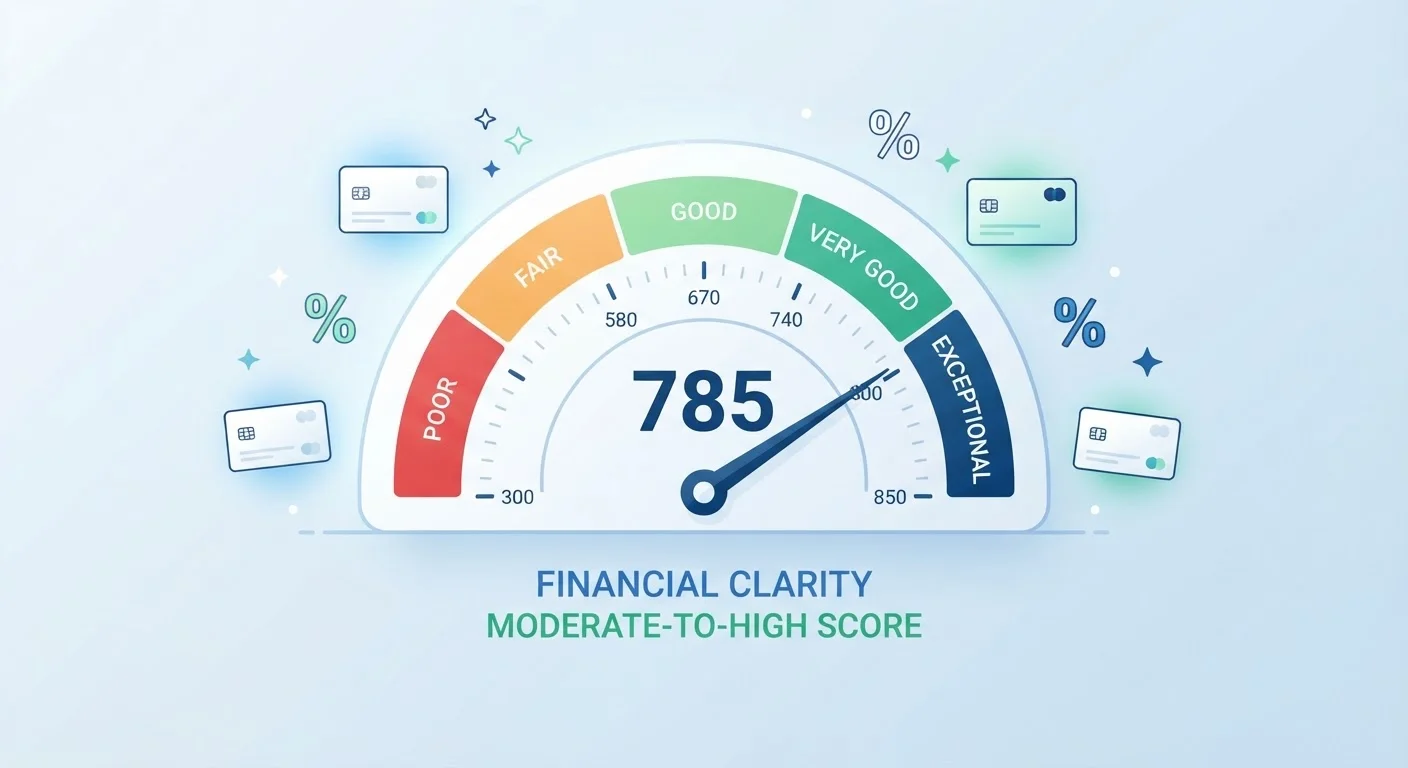
Key Takeaways
Credit Utilization
Credit utilization is the percentage of your available revolving credit that you're currently using. It's calculated by dividing your total credit card balances by your total credit limits. For example, if you have a $1,000 balance across cards with a combined $5,000 limit, your utilization is 20%. It's one of the most influential factors in your credit score.
Credit scoring models typically evaluate utilization both at the aggregate level (all revolving accounts combined) and at the individual account level, so a maxed-out single card can hurt even if your overall ratio looks healthy.
Why Utilization Carries So Much Weight
When people think about credit scores, they often focus on payment history - and rightfully so, since it's the single largest factor in most scoring models. But the second-largest factor, credit utilization, is frequently overlooked despite accounting for roughly 30% of a typical FICO score. That makes it one of the most actionable numbers in your financial life.
The logic behind it is straightforward: lenders view someone carrying a large proportion of their available credit as a higher risk. It suggests financial strain, potential over-reliance on borrowed money, or reduced capacity to absorb unexpected expenses. A low utilization ratio, by contrast, signals that a borrower isn't stretched thin - even if they have access to significant credit.
What makes this factor particularly notable is how quickly it can shift. Unlike payment history, which reflects years of behavior, utilization is recalculated every billing cycle based on what's currently reported. That means a meaningful score improvement is possible without waiting months or years.
~30%
Share of FICO score tied to credit utilization
According to FICO's published scoring criteria, amounts owed - which includes credit utilization - is the second-largest factor in a standard FICO score.
<10%
Utilization typical of highest-scoring consumers
FICO data indicates that consumers with scores above 800 tend to carry very low utilization ratios, often in the single digits.
1-2
Billing cycles for utilization changes to reflect
Because utilization is based on currently reported balances, score changes from paying down debt can appear within one to two billing cycles, making it one of the faster-moving credit factors.
How Utilization Is Actually Calculated
The math itself is simple: divide your total revolving credit balances by your total revolving credit limits, then multiply by 100 to get a percentage. If you carry $2,500 in balances across cards with a combined $10,000 in limits, your aggregate utilization is 25%.
But scoring models don't only look at the big picture. Each individual account is evaluated on its own utilization ratio as well. That means if one card has a $4,500 balance against a $5,000 limit - even if your overall ratio looks acceptable - that single account can weigh on your score.
It's also worth understanding what counts as revolving credit. Credit cards and lines of credit are included; installment loans like auto loans or mortgages are generally not factored into utilization calculations. Your mortgage balance doesn't affect this ratio, but your home equity line of credit typically does.
For more context on how this fits alongside other lending metrics, see our piece on debt-to-income ratio - a separate but complementary number that lenders review when evaluating creditworthiness.
Practical Ways to Manage Your Utilization
The most direct way to lower your utilization is to reduce balances. But there are a few less obvious levers worth knowing about.
- Time your payments strategically. Your issuer typically reports your balance to credit bureaus on your statement closing date - not your payment due date. Paying down your balance before the statement closes means a lower figure gets sent to the bureaus, which translates directly into a lower reported utilization.
- Request a credit limit increase. If your spending stays flat but your limit rises, your utilization ratio falls. Many issuers allow periodic limit increase requests, sometimes without a hard inquiry on your credit report - though this varies by lender and situation.
- Spread balances across cards deliberately. If one card is carrying a disproportionate balance, shifting some of it to a card with more available room can reduce per-account utilization, even if your aggregate stays the same.
- Avoid closing old cards you're not using. Closing a card eliminates its credit limit from your total available credit, which can push your aggregate utilization higher. This is one of the most persistent credit misconceptions - people assume unused cards are neutral or harmful, but they often help the utilization ratio.
Check Your Statement Closing Date
Your credit card balance is typically reported to the bureaus on your statement closing date - not your payment due date. If you want a lower utilization to show up on your credit report, aim to pay down your balance before the statement closes each month. You can usually find your closing date on your monthly statement or by logging into your card account online.
These strategies work in combination, and consistent attention to utilization is part of building a sustainable credit profile over time. For a broader look at behaviors that quietly erode scores, see our guide on credit mistakes worth rethinking.
This article is for general informational and educational purposes only and does not constitute personalized financial or credit advice. For guidance specific to your situation, consult a qualified financial professional.