

Key Takeaways
Safari
A safari is a guided wildlife-viewing journey, typically in sub-Saharan Africa, where travelers observe animals in their natural habitat from designated vehicles or on foot. The word comes from the Arabic and Swahili word for 'journey.' Modern safaris range from budget camping trips to luxury lodge experiences, but all center on scheduled game drives - excursions into wildlife areas at times when animals are most active.
Most regulated safari areas operate within national parks, private game reserves, or conservancies, each with distinct rules on vehicle access, off-road driving, and proximity to wildlife.
What a Game Drive Actually Looks Like
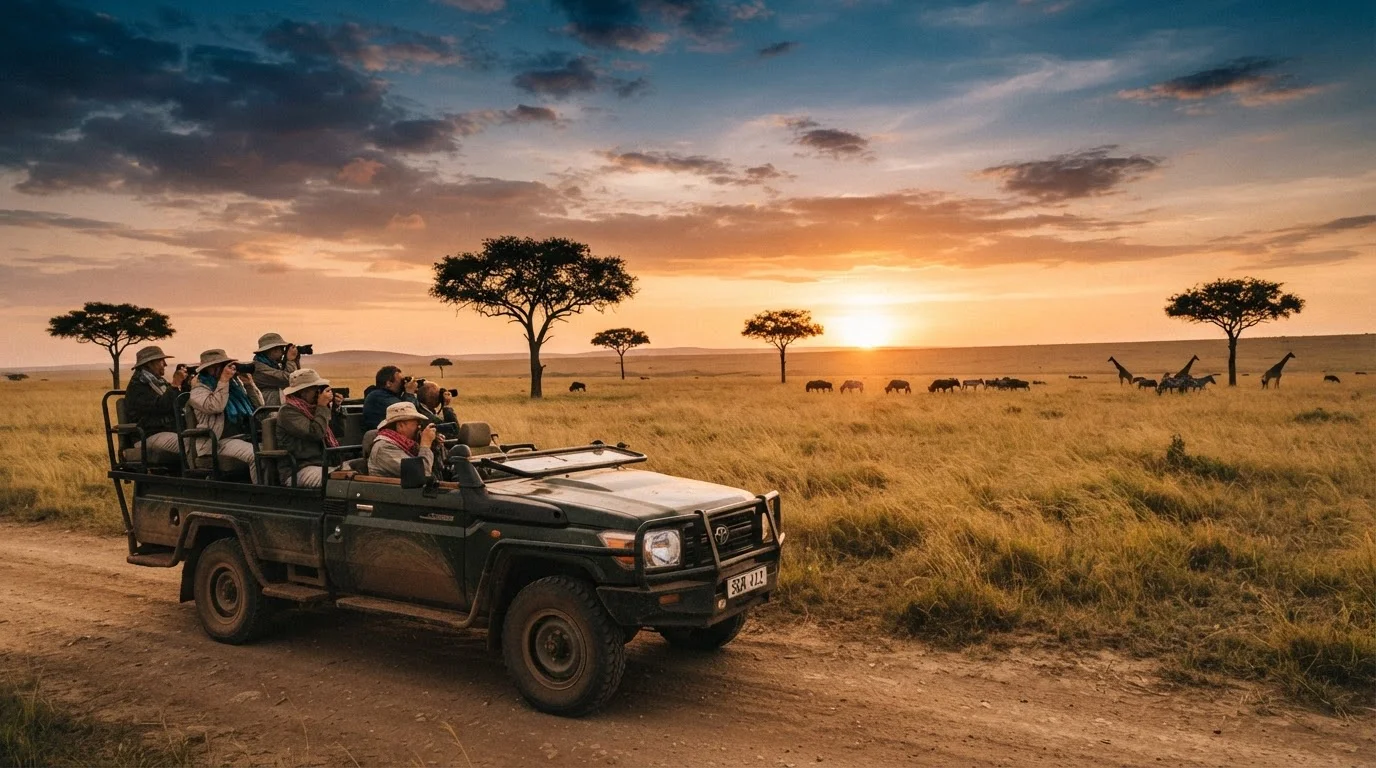
The core activity on virtually every safari is the game drive - a guided excursion in an open or roofed 4x4 vehicle into wildlife areas. Most operations run two drives per day: one at dawn (departing as early as 5:30 a.m.) and one in the late afternoon, continuing into dusk. These windows align with peak animal activity; midday heat pushes most wildlife into shade and stillness.
A typical drive lasts three to four hours. Your guide controls the vehicle, identifies tracks and animal behavior, and communicates with other guides over radio to locate priority sightings. You'll stop, observe, and wait - patience is genuinely part of the experience. Wildlife does not perform on cue, and a morning's drive might yield extraordinary encounters or relatively quiet bush. Both are authentic safari experiences.
First-timers often underestimate the physical demands: long hours seated on bumpy terrain, early mornings, and variable weather. Dusty dry-season drives and muddy wet-season tracks each present their own conditions. Going in with realistic expectations - rather than expecting a highlight reel - leads to far greater satisfaction.
Accommodation Tiers: What You're Paying For
Safari accommodation exists on a wide spectrum. Understanding what each tier actually delivers helps you match your expectations - and budget - to reality.
- Budget camping: Communal facilities, shared tents or basic structures, often in public campgrounds within or adjacent to parks. Meals may be self-catered or simple. Best suited for travelers comfortable with rustic conditions.
- Tented camps (mid-range): Permanent or semi-permanent canvas structures with en-suite bathrooms, beds, and often a dining area. These offer a genuine bush atmosphere without sacrificing basic comfort. Most include guided game drives.
- Luxury lodges and camps: Private plunge pools, gourmet food, spa services, and dedicated ranger-and-tracker teams. These properties frequently sit on private conservancies, enabling exclusive wildlife access. The premium reflects both the infrastructure and the exclusivity of the land.
All-inclusive pricing is common in mid-range and luxury tiers, bundling accommodation, meals, and game drives. Always clarify what is and isn't included - park fees, laundry, and premium beverages are frequently excluded even at higher price points.
~350,000
Wildebeest crossing the Mara River annually
The Serengeti-Mara migration is widely cited as one of the largest overland wildlife movements on Earth, though exact annual numbers vary by wildlife census.
6-8 weeks
Recommended lead time for travel vaccinations
The U.S. CDC advises travelers to see a travel medicine provider at least 4-6 weeks before departure to allow time for multi-dose vaccines to take effect.
15-20 kg
Typical luggage limit on light aircraft transfers
Small charter planes used to reach remote safari camps commonly impose strict soft-bag-only weight limits; excess baggage fees or denied boarding can apply.
Wildlife Sightings: Managing Honest Expectations
No reputable operator can guarantee specific sightings. Animals move across vast territories, seasons shape migration patterns, and weather influences behavior unpredictably. What guides can do is position you in the right places at the right times, drawing on deep local knowledge.
The famous "Big Five" - lion, leopard, elephant, buffalo, and rhinoceros - are collectively present in many East and Southern African parks, but sighting all five in one trip is not a given. Rhinos in particular are critically endangered and sparsely distributed; some parks have none at all. A responsible guide will tell you the honest odds upfront.
Seasonal timing genuinely matters. The Great Migration in the Serengeti-Mara ecosystem, for example, follows a broad annual cycle, but the exact timing and location of river crossings varies year to year. Travelers planning around specific events should research seasonal patterns carefully. Our guide on researching unfamiliar destinations can help you build a reliable picture before committing to dates.
Health Preparation: What You Need to Start Early
Health preparation for a safari destination is not optional or last-minute. Most East and Southern African wildlife areas fall within malaria transmission zones, and the appropriate prophylaxis - as well as the right vaccination schedule - must be arranged well ahead of departure. This is general information only; consult a qualified travel medicine provider or your healthcare professional for advice tailored to your situation.
Common pre-travel health considerations for safari destinations include:
- Malaria prevention medication (type and timing depend on destination and individual health profile)
- Yellow fever vaccination, which is required for entry in some countries and recommended in others
- Routine vaccines updated as needed (hepatitis A and B, typhoid, tetanus)
- Travel health insurance that covers medical evacuation - a practical necessity in remote areas far from advanced medical facilities
Our pre-trip health and safety checklist covers the broader steps every traveler should complete before departure, including how to locate travel medicine clinics in your area.
This article is for general informational purposes only and is not medical advice. Always consult a licensed healthcare provider before making any health decisions related to travel.
Practical Steps Before You Commit
Booking a safari is a significant financial and logistical commitment. Before confirming anything, ground your decision in solid preparation.
Verify that any operator you consider is licensed by the relevant national tourism or wildlife authority in the destination country. Read itineraries carefully - understand exactly how many game drives are included, what park fees cover, and whether internal charter flights (common in Tanzania and Kenya) are bundled or separate.
Travel insurance with medical evacuation coverage is strongly recommended for remote safari locations. Confirm entry requirements - visa rules, proof of vaccination requirements, and passport validity minimums - directly with the destination country's embassy or official government tourism authority, as these change. The U.S. Department of State's country-specific pages are a reliable starting point.
For a full planning framework from scratch, see our introduction to travel planning for first-timers, and use the pre-trip preparation checklist to track every task as your departure date approaches.
Confirm Entry Requirements With Official Sources
Visa rules, vaccination proof requirements, and passport validity minimums for African safari destinations can change without much notice. Always verify current entry requirements directly with the destination country's embassy or the U.S. Department of State's travel information pages before booking - not just at departure time.