

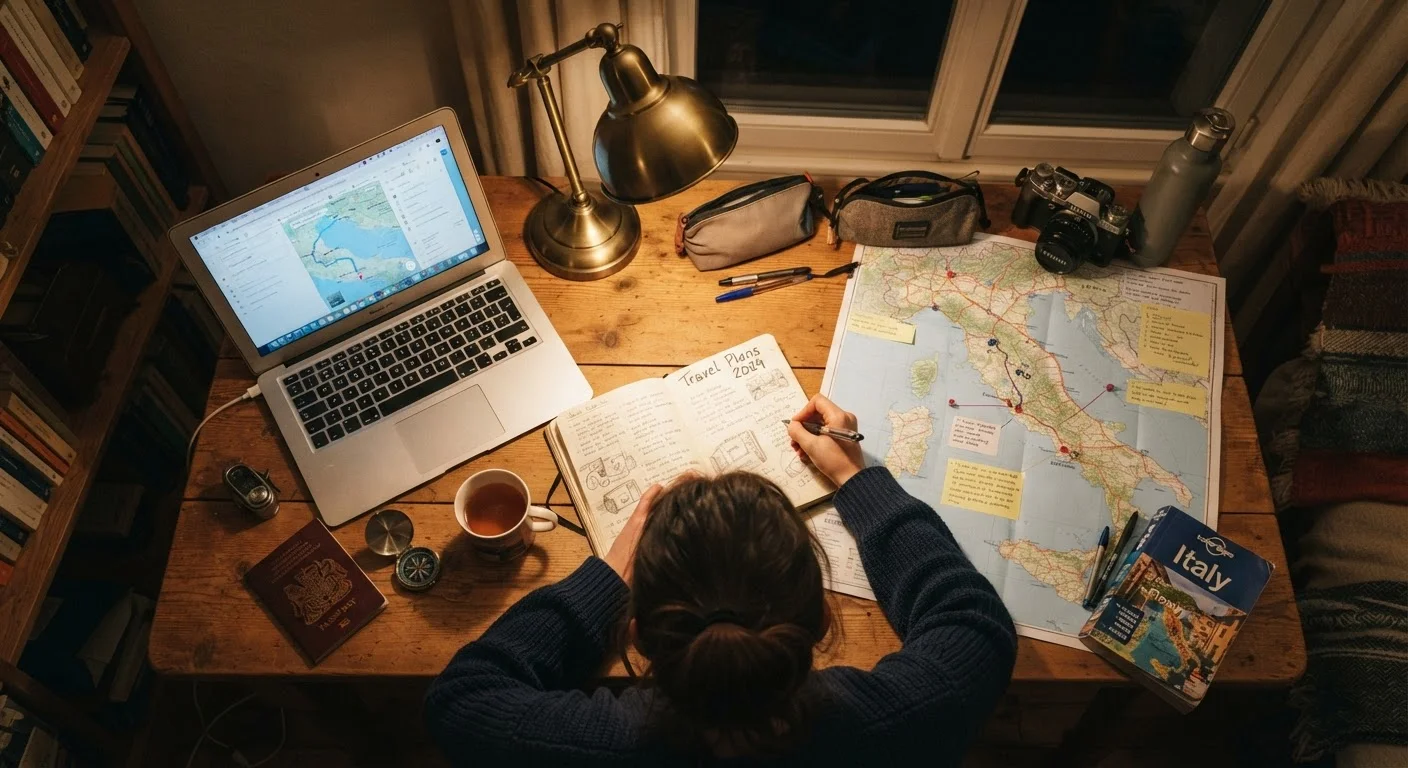
Key Takeaways
Why Most Destination Research Falls Short
Scrolling through curated Instagram grids and skimming blog posts titled "Top 10 Things to Do in " might feel like research, but it rarely tells you what you actually need to know before you arrive. Experienced travelers treat destination research the way a journalist might approach a story: with multiple source types, healthy skepticism, and an eye for what's missing from the frame.
The good news is that building a reliable picture of an unfamiliar place doesn't require hours of obsessive tab-opening. It requires knowing which sources to consult and in what order. If information overload is already a concern, the systematic approach outlined here can help you stay focused.
“The traveler sees what he sees. The tourist sees what he has come to see.”
— G.K. Chesterton, Author and essayist
Start With Official and Governmental Sources
Before you think about neighborhoods, restaurants, or packing lists, go to the U.S. Department of State's travel advisory page for your destination. These advisories use a four-level system and include entry requirements, local law summaries, and health notices. The CDC's Travelers' Health page adds vaccination recommendations and disease outbreak alerts specific to your destination.
This step takes roughly ten minutes, but it anchors everything else. Travelers who skip it sometimes discover mid-planning that visa processing times are longer than expected, or that certain medications they carry are restricted at their destination. Entry rules, visa requirements, and health advisories can and do change - always verify with official government sources close to your departure date.
Layer In Journalism, Community Knowledge, and Local Voices
Once you've established the official baseline, widen your lens. Long-form travel journalism - from publications with editorial standards and on-the-ground reporters - often surfaces context that guidebooks miss: political tensions that affect tourism, seasonal disruptions, or neighborhood dynamics that shift year to year.
From there, community forums (dedicated subreddits, travel-focused Facebook groups, and forums like Lonely Planet's Thorn Tree) are genuinely useful, but filter carefully. Sort for recent posts and look for contributors who describe a trip profile similar to yours - a solo budget traveler and a family of four will have very different useful experiences of the same city. For destination-specific deep dives, pieces like this practical Paris primer or this look at common NYC mistakes show how layered, honest reporting differs from promotional content.
Understand the Geography Before You Plan the Itinerary
Many travelers build itineraries before they understand basic geography, leading to days that zigzag inefficiently across a city or region. Open a map early - not to pin attractions, but to orient yourself. Where is the airport relative to the city center? Which neighborhoods cluster together? How does public transit flow?
For more complex destinations - a country with significant regional variation, an unfamiliar transit network, or a destination requiring special physical preparation like a safari - this geographic understanding is especially critical. Understanding what a safari actually involves, for instance, means grasping that game-drive timing, camp location, and seasonal conditions shape what you'll see far more than any to-do list.
Research With Your Specific Travel Profile in Mind
Generic destination guides are written for a generic traveler who doesn't exist. Experienced researchers filter everything through their own profile: travel style (independent vs. guided), physical considerations, group composition, budget range, and trip goals. A museum-focused art traveler researching Lisbon needs completely different information than a hiking-focused adventurer planning the same trip.
This also applies to safety and connectivity. If you're traveling with devices carrying sensitive personal or professional data, the digital safety considerations outlined here are worth folding into your pre-trip research, not an afterthought. For broader planning frameworks - budgeting, logistics, timing - the Trip Planning Tips hub offers structured guidance that complements destination-specific research.
This article is for general informational purposes. Entry requirements, health advisories, and travel conditions change frequently - always verify current information through official government and provider sources before you travel.