

Key Takeaways
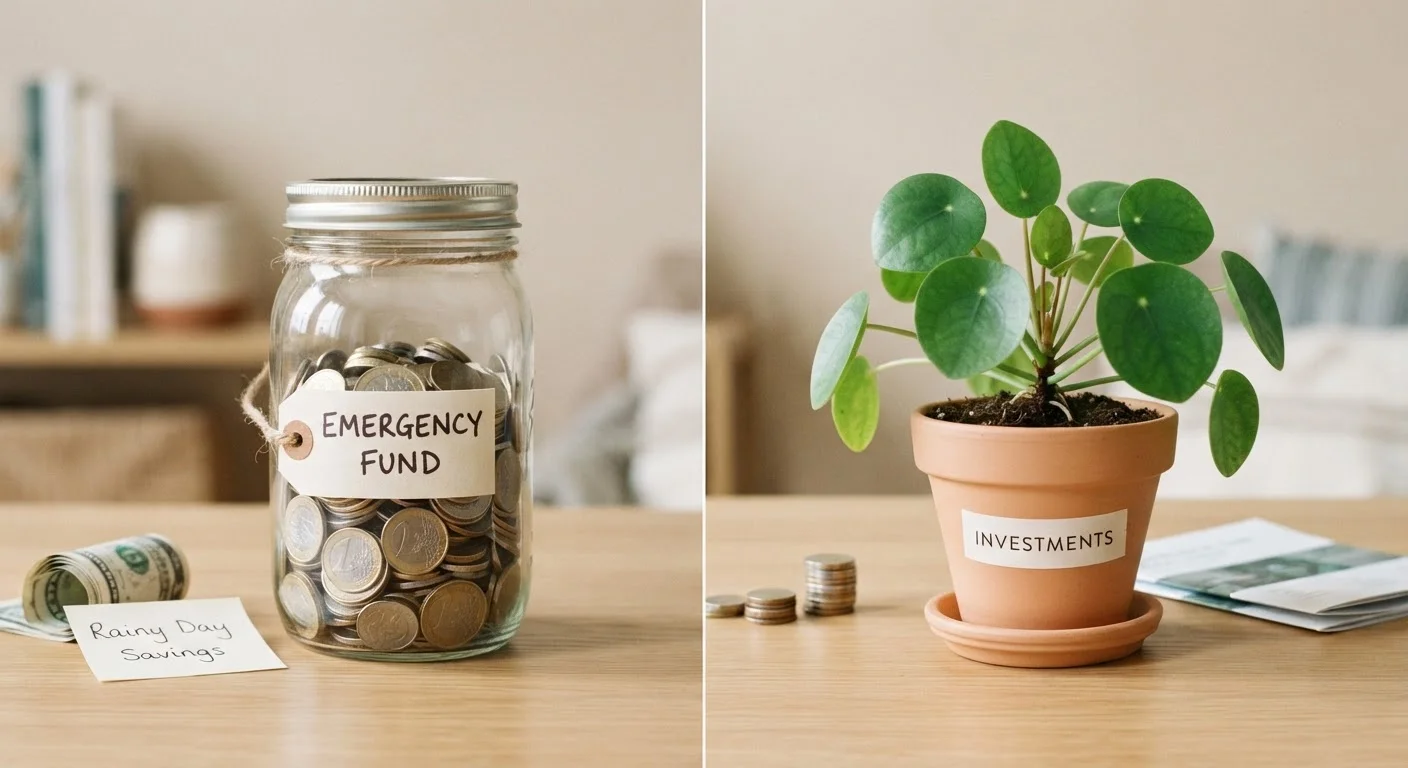
Option A
Emergency Fund
The financial safety net that protects everything else.
Best for: Anyone who needs a liquid, accessible cash reserve to cover unexpected expenses without going into debt.
Option B
Investment Account
The long-term wealth-building engine for money you won't need soon.
Best for: Individuals with stable income, no high-interest debt, and a cash cushion already in place who are ready to grow wealth over time.
If you have little to no cash savings
Emergency Fund
Without a cash cushion, any unexpected expense can force you into high-interest debt or premature investment withdrawals - both of which set back your financial progress significantly.
If you carry high-interest consumer debt
Emergency Fund
Paying down high-interest debt while building a modest starter fund (roughly one month of expenses) typically yields a better financial outcome than investing while that debt accrues.
If your emergency fund is fully funded and your income is stable
Investment Account
With your safety net secured, redirecting surplus dollars toward tax-advantaged or long-term investment accounts lets compound growth work in your favor over time.
If your employer offers a 401(k) match
Investment Account
A full employer match is effectively part of your compensation. Most financial educators suggest capturing that match even while building your emergency fund, since forgoing it means leaving earned money on the table.
If you are a homeowner with variable maintenance costs
Emergency Fund
Homeowners face higher and less predictable emergency costs than renters. A larger cash reserve - often on the higher end of the three-to-six-month range - is generally advisable before investing aggressively.
Why the Order of Operations Matters
When money is tight, every dollar has to earn its keep. The temptation to start investing early is understandable - markets have historically grown over long periods, and time in the market is often cited as one of the most powerful forces in wealth building. But investing before you have a financial safety net is a bit like building a house without a foundation: the structure may look fine until conditions turn against you.
The core issue is liquidity - meaning how quickly and cheaply you can access your money. Emergency funds live in cash or near-cash accounts, available within days. Investment accounts hold assets that fluctuate in value and may take time to sell, and selling at the wrong moment can mean locking in a loss. If a job loss or medical bill forces you to liquidate investments during a market downturn, you may walk away with less than you put in.
Before diving into the comparison, it helps to get clear on what each tool is designed to do. Our plain-language glossary of savings and investing terms covers concepts like APY, liquidity, and compound interest that come up throughout this discussion.
| Criterion | Emergency Fund | Investment Account |
|---|---|---|
| Primary purpose | Cover unexpected expenses without debt | Grow wealth over time |
| Liquidity | High - accessible within days | Variable - may take days to sell; penalties may apply |
| Risk to principal | Very low (FDIC/NCUA insured) | Moderate to high - value can fall |
| Typical return | Modest interest (savings rate) | Higher potential, but not guaranteed |
| Time horizon | Immediate / short-term | Years to decades |
| Tax advantages | None; interest is taxable income | Possible - via 401(k), IRA, or Roth accounts |
| When to prioritize | Before and during early financial building | After emergency fund is funded and debt is managed |
The Emergency Fund: Your Financial First Responder
An emergency fund is a dedicated pool of cash set aside exclusively for genuine, unexpected expenses - job loss, a medical emergency, a major car repair, or a sudden home system failure. It is not a vacation fund or a down-payment account. Its single job is to prevent a financial shock from cascading into debt or asset liquidation.
The commonly cited target is three to six months of essential living expenses: rent or mortgage, utilities, groceries, insurance, and minimum debt payments. Households with variable income, dependents, or homeownership responsibilities often benefit from targeting the higher end of that range. For a practical look at what housing-specific emergencies can cost, see our guide on building an emergency fund specifically for your home.
Where you keep this money matters. The fund should sit in an account that is liquid (accessible within a few days), insured (typically FDIC-insured at a bank or NCUA-insured at a credit union), and ideally earning some interest without locking up your money. High-yield savings accounts and money market accounts are two common choices - each with trade-offs worth understanding before you open one.
Where to Keep Your Emergency Fund
High-yield savings accounts and money market accounts are two popular options for emergency funds - both offer better interest than a standard checking account while keeping your money accessible. They differ in how they're structured and what limits may apply to withdrawals. Our side-by-side comparison of high-yield savings and money market accounts explains the key differences so you can choose the right home for your cash cushion.
This article is for general informational purposes only and does not constitute personalized financial advice. Consult a licensed financial professional before making decisions specific to your situation.
The Investment Account: Where Long-Term Wealth Is Built
An investment account - whether a taxable brokerage account, a 401(k), or an IRA - is designed to grow money over years or decades. Unlike a savings account, the value of invested assets can rise or fall depending on market conditions. That variability is the price of potentially higher long-term returns.
Time horizon is central to understanding investment accounts. A dollar invested today in a diversified portfolio has historically had more opportunity to recover from downturns and compound over time than a dollar invested five years from now. This is why financial educators often emphasize starting early - but "early" assumes you have the stability to leave that money alone.
Tax-advantaged accounts like IRAs and employer-sponsored 401(k) plans add another layer of incentive. Contributions to traditional accounts may reduce your taxable income now; Roth accounts offer tax-free growth in exchange for after-tax contributions. Understanding the distinction matters before you choose - our Traditional IRA vs. Roth IRA comparison breaks down the tax mechanics in detail. When you're ready to go further, this practical introduction to personal investing walks through account types, asset classes, and risk without pressure.
~57%
Americans unable to cover a $1,000 emergency from savings
A Bankrate survey found that a majority of U.S. adults could not pay for an unexpected $1,000 expense from savings alone, highlighting the emergency fund gap.
3-6 months
Recommended emergency fund coverage in expenses
Most personal finance frameworks suggest covering three to six months of essential living costs, with higher targets for variable-income or single-earner households.
Decades
Time horizon where investment risk typically becomes manageable
Historically, diversified portfolios held over long periods have been more likely to recover from downturns, though past performance does not guarantee future results.
Making the Decision: A Practical Framework
For most people starting out, the recommended sequence looks like this:
- Build a starter emergency fund of roughly one month of essential expenses - enough to cover a common setback without reaching for a credit card.
- Capture any employer 401(k) match if one is available. Most financial educators treat this as a priority because forgoing a match means leaving part of your compensation unclaimed.
- Pay down high-interest debt aggressively. Debt carrying double-digit interest rates typically costs more than a diversified portfolio is likely to earn.
- Complete your emergency fund to the three-to-six-month target.
- Invest consistently in tax-advantaged accounts, then taxable accounts, based on your goals and timeline.
This is a general framework, not a universal prescription. Individual circumstances - income stability, dependents, existing debt, employer benefits - can shift the order meaningfully. Use tools like a financial readiness checklist to assess where you actually stand before committing dollars to the market. And if you haven't yet mapped out your income and spending, building your first budget is the logical place to start - because both an emergency fund and an investment account require knowing how much you can consistently set aside each month.