

| Typical closing cost range | 2%-5% of the loan amount (Consumer Financial Protection Bureau (CFPB)) |
| Closing Disclosure delivery deadline | 3 business days before closing (TRID rule, CFPB) |
| Standard appraisal cost | $300-$600 (varies by property) (Industry general range) |
| Who typically pays closing costs | Primarily the buyer; some seller-paid costs vary by negotiation and market |
| Most negotiable closing cost category | Lender origination and underwriting fees |
| Owner's title insurance | Optional but generally advisable for buyer protection |
What Closing Costs Are - and Why They Matter
When you buy a home, the purchase price is only part of what you'll pay on closing day. Closing costs are the collection of fees and prepaid expenses due at the final settlement - the moment ownership legally transfers from seller to buyer. For most buyers, these costs total between 2% and 5% of the loan amount, which on a $350,000 mortgage can mean $7,000 to $17,500 in additional cash needed at signing.
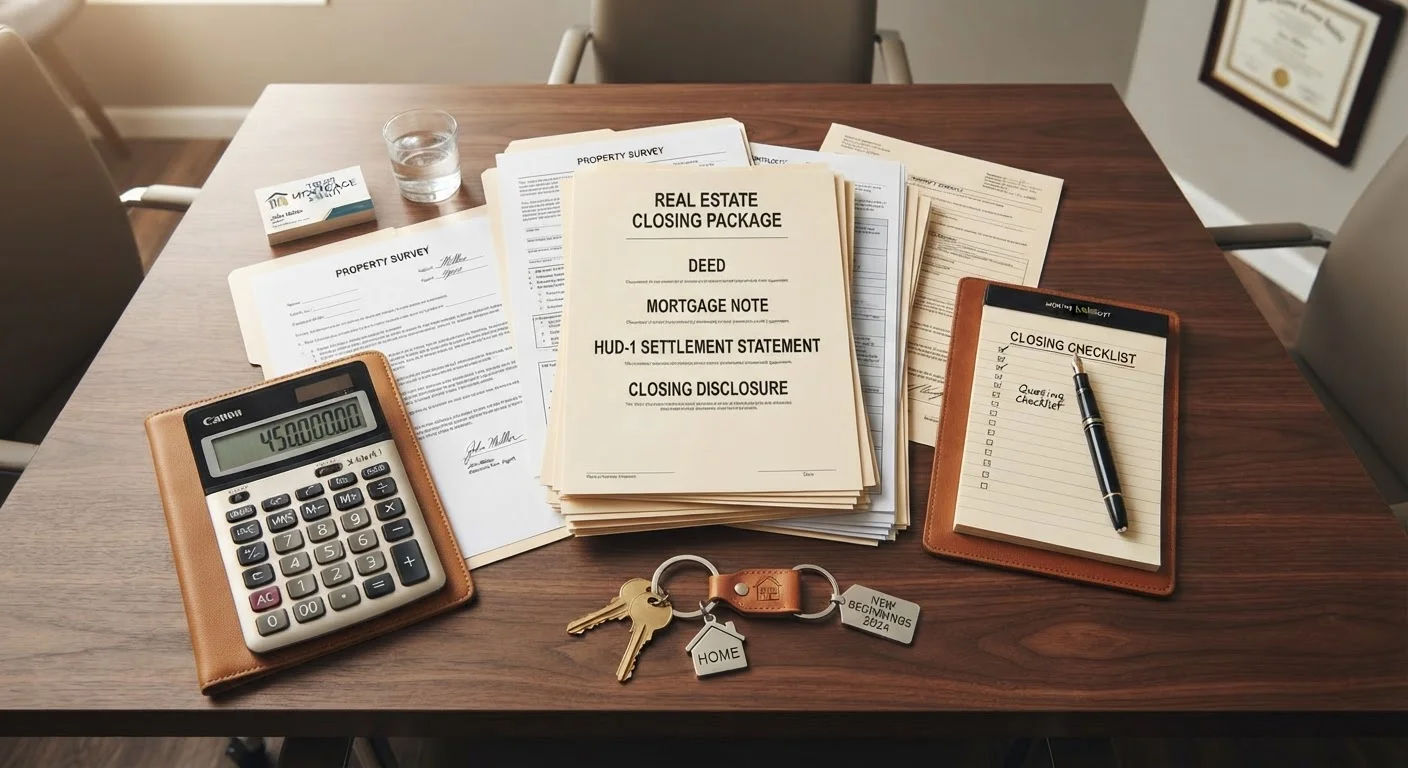
Understanding every line item on your Closing Disclosure - the federally required document lenders must provide at least three business days before closing - is one of the most practical ways to avoid sticker shock. For a broader look at what financial obligations follow after closing, see the true costs of homeownership beyond the mortgage.
| Typical closing cost range | 2%-5% of the loan amount (Consumer Financial Protection Bureau (CFPB)) |
| Closing Disclosure delivery deadline | 3 business days before closing (TRID rule, CFPB) |
| Standard appraisal cost | $300-$600 (varies by property) (Industry general range) |
| Who typically pays closing costs | Primarily the buyer; some seller-paid costs vary by negotiation and market |
| Most negotiable closing cost category | Lender origination and underwriting fees |
| Owner's title insurance | Optional but generally advisable for buyer protection |
Lender Fees: What Your Mortgage Costs to Originate
The largest cluster of closing costs typically comes from your lender. These fees compensate the lender for evaluating, underwriting, and funding your loan.
Closing Disclosure
A federally required five-page form that details the final terms and costs of your mortgage. Lenders must provide it at least three business days before closing so you can review it before signing.
Origination Fee
A fee charged by a lender to process your mortgage application and create the loan. It is typically expressed as a percentage of the loan amount.
Escrow Account
A neutral holding account managed by a third party (or your lender after closing) to collect and disburse funds for property taxes and insurance on your behalf.
Title Insurance
A one-time premium policy that protects against financial loss from defects in a property's title - such as undisclosed liens or ownership disputes - discovered after purchase.
Discount Points
Upfront fees paid to a lender at closing in exchange for a lower mortgage interest rate. One point equals 1% of the loan amount.
Transfer Tax
A state or local government tax imposed when real estate changes ownership, usually calculated as a percentage of the sale price. Who pays it is often negotiated between buyer and seller.
- Origination fee: Charged by the lender to process and administer the loan. Usually expressed as a percentage of the loan amount (often around 0.5%-1%), though some lenders charge a flat fee instead.
- Discount points: Optional prepaid interest you buy upfront to lower your mortgage rate. One point equals 1% of the loan amount. Whether points make financial sense depends on how long you plan to stay in the home.
- Underwriting fee: Covers the lender's cost to verify your financial information and approve the loan. Typically a flat fee ranging from a few hundred to over a thousand dollars.
- Credit report fee: A small charge (often $25-$50) for pulling your credit during the application process.
- Rate lock fee: Some lenders charge to guarantee your interest rate while the loan is being processed. Many do not.
Lender fees are among the most negotiable closing costs. You can and should compare Loan Estimates from multiple lenders before committing - federal law requires lenders to provide this standardized document within three business days of your application.
Third-Party and Government Fees You'll Encounter
Beyond lender fees, closing involves costs from outside parties - service providers, government agencies, and insurers - most of whom you may never meet in person.
- Title search fee: Pays a title company or attorney to examine public records and confirm the seller has clear, transferable ownership of the property.
- Title insurance (lender's policy): Protects the lender against title defects discovered after closing. Almost always required. An owner's title insurance policy - which protects you - is separate and optional but generally advisable.
- Appraisal fee: Covers a licensed appraiser's independent estimate of the home's market value, required by most lenders. Typically $300-$600 but can run higher for complex properties.
- Home inspection fee: Usually paid before closing, not at it, but still part of the transaction's out-of-pocket costs. A standard inspection commonly runs $300-$500.
- Survey fee: Some lenders or states require a property survey to confirm boundaries and identify encroachments. Costs vary widely by region and lot complexity.
- Recording fees: Charged by the county or municipality to officially record the deed and mortgage documents in public land records.
- Transfer taxes: Many states and localities impose a tax when real estate changes hands, calculated as a percentage of the sale price. Who pays - buyer, seller, or both - varies by location and negotiation.
Being prepared with knowledge of these fees also helps when structuring your offer. See how offer strategy can affect what you ultimately pay.
Prepaid Items and Escrow Deposits
A portion of your closing costs aren't really fees - they're prepaid expenses and reserve deposits that ensure your ongoing obligations are funded from day one.
- Prepaid homeowners insurance: Lenders typically require you to pay the first year's premium upfront at closing so coverage is active when you take ownership.
- Prepaid mortgage interest: Interest accrues from the day you close to the end of that calendar month. The earlier in the month you close, the more you'll owe in prepaid interest.
- Escrow reserves: Most lenders collect an initial cushion - usually two to three months of property taxes and homeowners insurance - to seed your escrow account. This ensures funds are available when those bills come due.
These prepaid items are not optional if your lender requires escrow, but they're not lost money - they fund real obligations you'd owe regardless. Understanding ongoing property tax and insurance costs is part of the fuller picture of homeownership expenses.
Seller Concessions Can Offset Buyer Costs
In some markets and transactions, buyers negotiate for the seller to cover a portion of closing costs - called seller concessions. Lender rules cap how much sellers can contribute based on loan type and down payment size. If closing costs are a barrier, discuss concession strategies with your real estate agent and lender early in the process.
This article is for general informational purposes only and does not constitute financial, legal, or tax advice. Consult a licensed real estate professional, mortgage lender, or attorney regarding your specific situation.