

Key Takeaways
Start here
What a Purchase Offer Actually Is
Next
The Core Elements of Every Offer
Then
Contingencies: Your Built-In Protections
Also important
Earnest Money and What It Signals
Before you sign
Common Mistakes Buyers Make at the Offer Stage
What a Purchase Offer Actually Is
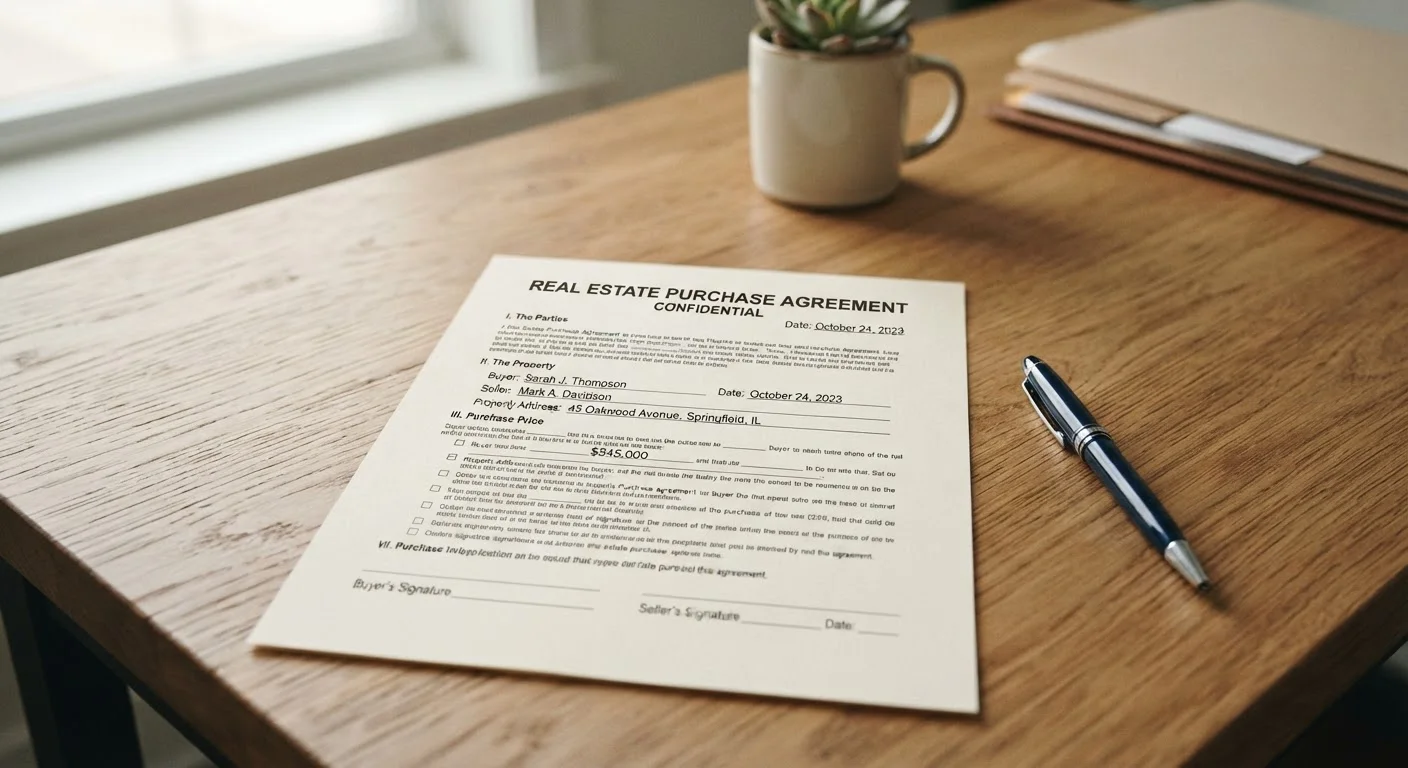
When you decide to buy a home, submitting an offer is not simply naming a price - it is presenting a legally binding contract. Once both parties sign, you and the seller are obligated to the terms unless a specific clause allows either side to exit. Understanding this upfront changes how you approach the entire document.
A purchase offer (also called a purchase agreement or sales contract) typically runs several pages and is drafted using standardized forms approved by state real estate boards. Your agent will help prepare it, but you are the one signing it - and responsible for understanding what it says. For a full walkthrough of where this step fits in the broader process, see our home buying process guide.
Contingency
A condition written into the purchase contract that must be met for the sale to move forward. If the condition is not met, the buyer can typically withdraw without penalty.
Earnest Money
A good-faith deposit made by the buyer shortly after an offer is accepted. It is held in escrow and credited toward the purchase at closing.
Escrow
A neutral third-party arrangement where funds or documents are held until all conditions of the sale are satisfied by both parties.
Clear Title
Legal ownership of a property that is free of liens, disputes, or claims by other parties, allowing it to be transferred cleanly to the buyer.
Appraisal
An independent assessment of a property's market value, typically required by a lender before approving a mortgage loan.
Pre-Approval
A lender's written statement indicating how much they are willing to lend a buyer based on a preliminary review of income, credit, and assets.
The Core Elements of Every Offer
While formats differ by state, every purchase offer contains a common set of components:
- Purchase price: The amount you are offering to pay. This is your opening position, not necessarily the final one.
- Property description: The legal address and parcel identification number - not just the street address.
- Closing date: The target date for transferring ownership. Sellers often care as much about timing as price.
- Inclusions and exclusions: A list of what stays with the home (fixtures, appliances) and what the seller is taking.
- Financing terms: Whether you are paying cash or financing, and if financing, the loan type and amount. A pre-approval letter often accompanies this section.
- Offer expiration: A deadline - usually 24 to 72 hours - by which the seller must respond before the offer lapses.
Each of these elements is negotiable. Before touring properties, use our room-by-room walkthrough checklist to ensure you have the information you need to set realistic terms.
Contingencies: Your Built-In Protections
Contingencies are conditions that must be met for the sale to proceed. If a contingency is not satisfied, the buyer can typically withdraw and recover their earnest money deposit. These clauses are your primary risk-management tools.
Inspection Contingency
Allows you to hire a licensed home inspector and, if serious defects are found, negotiate repairs, a price reduction, or exit the contract entirely. This is one of the most important protections a buyer has.
Financing Contingency
Protects you if your mortgage loan is not approved. Even with a pre-approval letter, final loan approval depends on appraisal and underwriting. Without this contingency, losing financing could mean losing your deposit.
Appraisal Contingency
If the home appraises below the agreed purchase price, this contingency lets you renegotiate or walk away. Without it, you would either need to pay the difference in cash or lose your earnest money.
Title Contingency
Ensures the seller can deliver clear, marketable title - free of liens or ownership disputes - before you are obligated to close.
Ask Your Agent to Explain Every Blank
Before signing, ask your real estate agent to walk through each section of the offer form line by line. Standard state forms can still contain clauses that significantly affect your rights. If any language is unclear, ask for a plain-language explanation or consult a real estate attorney.
In competitive markets, some buyers waive contingencies to make their offer more attractive. Understand that waiving a contingency eliminates the protection it provides. For more on how offer structure affects outcomes, see why buyers lose the home they wanted.
Earnest Money and What It Signals
Earnest money is a deposit - typically 1% to 3% of the purchase price - paid shortly after an offer is accepted. It is held in escrow (a neutral third-party account) and signals that you are a serious buyer. It is not an additional cost; it is generally applied toward your down payment or closing costs at settlement.
The key risk: if you back out of the deal for a reason not covered by a contingency, the seller may be entitled to keep the deposit as compensation for taking the home off the market. The contract will specify which circumstances allow the seller to retain it. Familiarize yourself with terms like escrow and earnest money using the real estate glossary every buyer should know.
Common Mistakes Buyers Make at the Offer Stage
Even well-prepared buyers can stumble when it comes time to commit in writing. Watch for these pitfalls:
- Relying on verbal agreements: If it is not in the contract, it does not exist legally. Promises made outside the written document are rarely enforceable.
- Skipping the fine print on inclusions: Assuming the washer and dryer come with the home - only to find they were excluded - is a frustratingly common surprise.
- Setting an unrealistic closing date: Mortgage processing takes time. A closing date that is too aggressive can cause the deal to fall apart.
- Waiving contingencies without understanding the risk: In a competitive market this may feel necessary, but buyers should make this choice with full awareness of what they are giving up.
A purchase offer is a far more consequential document than it may initially appear. Approaching it with the same careful attention you would give any major legal contract - ideally with qualified professional guidance - is essential to a sound transaction.
This article provides general educational information about real estate purchase contracts and is not a substitute for legal or professional real estate advice. Contract terms, required contingencies, and legal obligations vary by state and individual circumstance. Consult a licensed real estate agent or attorney before signing any purchase agreement.