

Key Takeaways
Why Rental Applications Trip Up Qualified Renters
A strong income and a clean rental history don't automatically guarantee approval. Landlords and property managers often screen dozens of applications per vacancy, and procedural missteps - not financial ones - can eliminate an otherwise well-qualified applicant before their full picture is ever considered.
Understanding how applications are evaluated helps renters present themselves clearly and completely. Most rejections don't happen because an applicant is a bad tenant; they happen because the application left questions unanswered or created avoidable doubts.
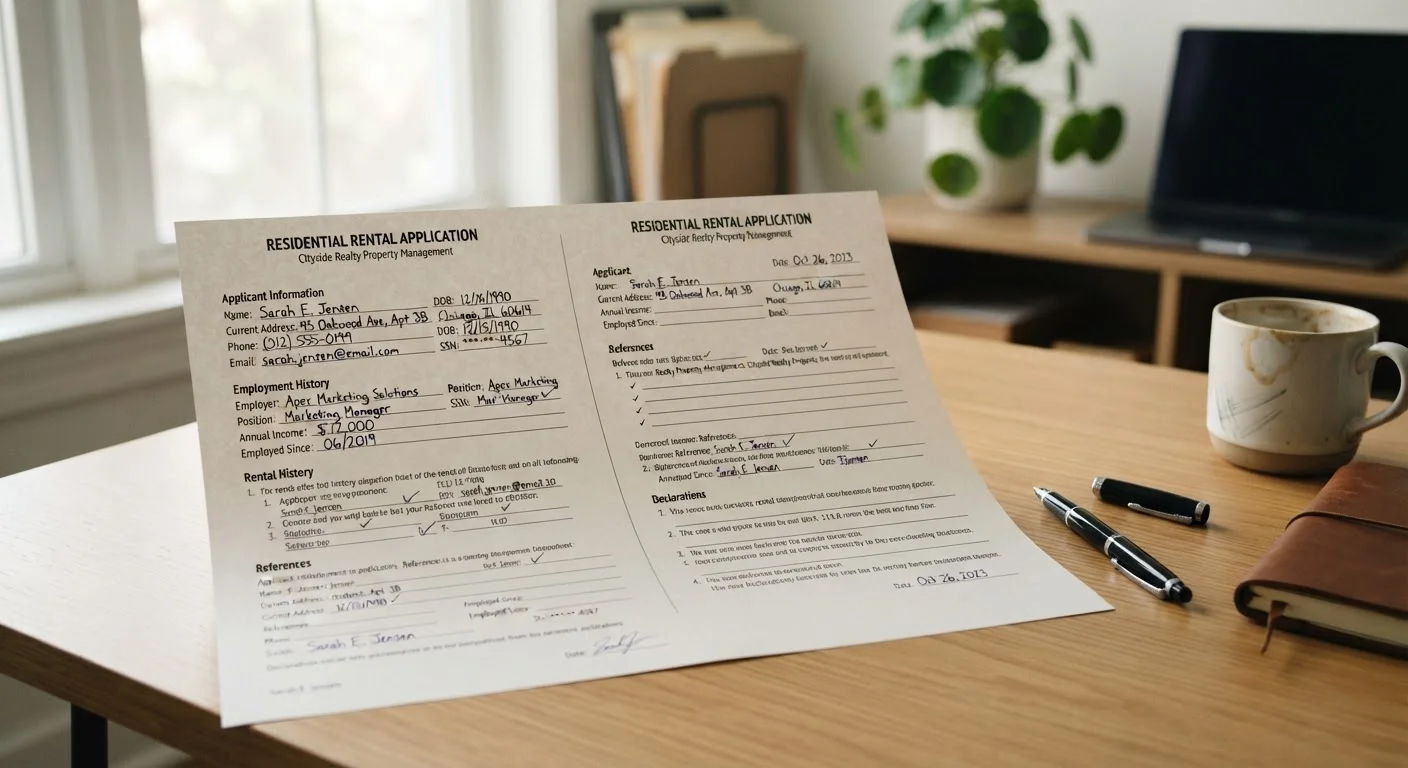
Leaving fields blank or submitting an incomplete application.
Why it happens: Applicants often skip fields they consider optional or assume a landlord will follow up for missing details.
Providing income or employment information that doesn't match supporting documents.
Why it happens: Applicants sometimes estimate figures from memory or round up income, not realizing landlords will verify these numbers against pay stubs, tax returns, or employer letters.
Failing to address a weak or thin credit history before applying.
Why it happens: Many renters assume their credit score will speak for itself, for better or worse, and don't think to contextualize it.
Listing references who aren't prepared or who give lukewarm responses.
Why it happens: Applicants often list references without notifying them in advance, leaving references caught off guard and unable to speak confidently.
Applying to only one unit and waiting passively for a decision.
Why it happens: Renters sometimes avoid applying broadly out of concern for application fees or a belief that showing interest in multiple properties looks bad.
Slow or inconsistent communication with the landlord or property manager.
Why it happens: Applicants may not check email frequently or assume the landlord will wait for them to gather documents.
How to Strengthen Your Application Beyond the Basics
Once you've avoided the most common errors, a few proactive steps can further distinguish your application. If your credit history has blemishes - whether from a past hardship or a pattern of small habits - it's worth reviewing our guide to credit score mistakes that quietly drag down your score before you apply. Resolving even minor issues in advance sends a signal of financial responsibility.
It also helps to understand your rights throughout the process. Many renters don't realize they can request a copy of the screening report used against them if rejected, or that some jurisdictions limit how landlords may weigh criminal history. See tenant rights most renters don't know they have for a fuller picture of protections that apply during and after the application stage.
Know What Landlords Are Legally Allowed to Ask
Fair housing laws prohibit landlords from screening applicants based on race, color, national origin, religion, sex, familial status, or disability. Some states and cities add further protections, such as source-of-income rules. If you believe you were denied housing unlawfully, you can file a complaint with the U.S. Department of Housing and Urban Development (HUD) or your state's fair housing agency. For a closer look at how rental law actually works, see common myths about tenant rights, fact-checked.
This article is for general informational purposes only and does not constitute legal or financial advice. Tenant rights and landlord screening practices vary by state and locality. Consult a qualified attorney or housing counselor for guidance specific to your situation.