

Key Takeaways
Why Advance Planning Makes All the Difference
Traveling with a chronic condition - whether that's diabetes, heart disease, asthma, epilepsy, an autoimmune disorder, or another ongoing health challenge - is entirely achievable. Millions of Americans do it every year. What separates a smooth trip from a stressful one is almost always the groundwork laid weeks before departure.
Disruptions to routine are a fact of travel: delayed flights, unfamiliar food, physical exertion, climate changes, and irregular sleep all place extra demands on your body. When you're managing a chronic condition, those variables become planning considerations rather than mere inconveniences. The steps below walk you through the key actions to take, from your first provider conversation to the moment you clear customs.
What you will need
For a broader pre-departure review, our pre-departure checklist for international travel is a useful companion resource.
This Is Not Medical Advice
This article provides general travel planning information only. It is not a substitute for personalized guidance from a licensed healthcare provider. Always consult your doctor, specialist, or pharmacist before making any changes to your medications, treatment plan, or travel arrangements related to a health condition.
What to Do and What to Bring
The practical side of traveling with a chronic condition comes down to two things: knowing what to do before you go, and having the right tools and documents with you when you get there.
Letter from your healthcare provider
Documents your condition and medications for airport security, customs, and foreign healthcare providers.
Extra prescription supply (minimum 2-week buffer)
Protects against delays, lost luggage, or unexpected trip extensions.
Insulated medication travel case
Maintains safe storage temperatures for insulin or other temperature-sensitive medications.
Medical ID bracelet or card
Alerts emergency responders to your condition if you are unable to communicate.
Destination-specific emergency contacts list
Includes local hospitals, embassy contacts, and your insurance's 24-hour travel assistance line.
Schedule a Pre-Travel Medical Appointment
Book an appointment with your managing provider at least four to six weeks before departure - more lead time if you're traveling internationally. Use this visit to discuss your itinerary, time zone changes, activity levels, and any environmental factors (altitude, heat, humidity) that could affect your condition.
Ask your provider to update your prescriptions, draft a travel letter summarizing your diagnosis and medications, and flag any destination-specific risks. This is also the moment to ask about routine and destination-specific vaccines relevant to your health status.
Secure Adequate Medication Supplies
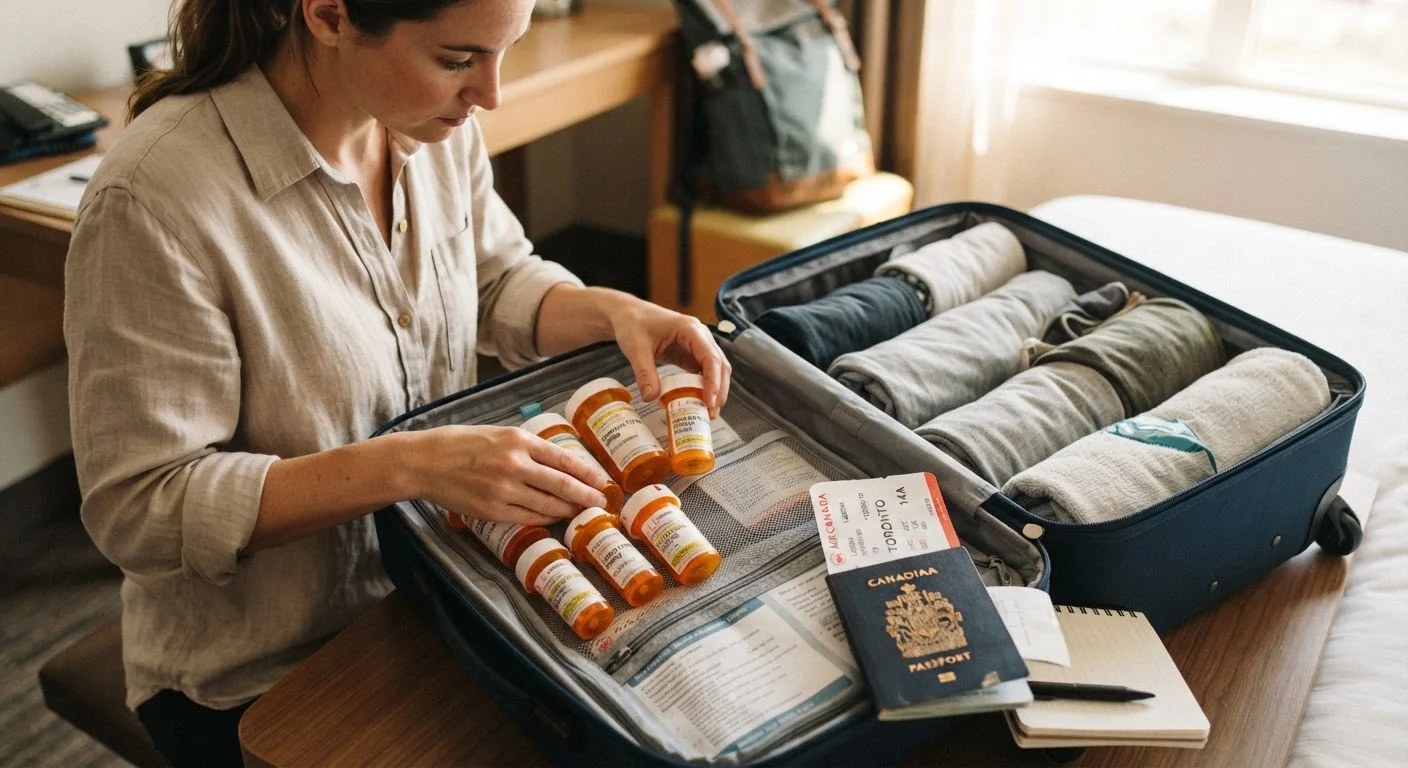
Request enough of each medication to cover your trip plus a buffer of at least two weeks. If your insurer limits early refills, ask your provider to write a vacation override or extended-supply prescription. Always carry medications in their original, pharmacy-labeled containers - loose pills in a weekly organizer won't satisfy airport security or customs inspectors.
Split your supply: keep half in your carry-on bag and the other half accessible in checked luggage. Never put your entire medication supply in a single bag that could be lost or delayed.
Assemble Your Health Documentation
Prepare a travel health folder (physical and digital) that includes: your provider's letter, copies of all prescriptions with generic drug names, your insurance cards and policy number, a list of emergency contacts, and your destination country's emergency services number. If you use medical devices - a glucose monitor, nebulizer, or CPAP machine - include documentation for those as well.
A well-prepared travel medical kit should complement your documentation, covering both condition-specific supplies and general first-aid items.
Research Healthcare Access at Your Destination
Identify the nearest hospital or urgent care facility to each place you'll be staying. Note whether your travel insurance - particularly any coverage for pre-existing conditions - is accepted there, or whether you'll need to pay out of pocket and file for reimbursement later. The U.S. Department of State's country information pages are a reliable starting point for understanding local medical infrastructure.
For international trips, check whether your specific medications are available locally under their generic names, in case you need an emergency refill. Pharmacy regulations and drug availability differ significantly by country.
Plan for Time Zone and Schedule Changes
Crossing multiple time zones can disrupt medication schedules, particularly for drugs that must be taken at consistent intervals (insulin, immunosuppressants, certain heart medications). Ask your provider for explicit instructions on how to adjust timing during the transition - do not assume that simply shifting by the number of hours crossed is safe for your specific regimen.
Set phone alarms labeled with both your home time zone and local time during the adjustment period to reduce the chance of missed or doubled doses.
Prepare for Airport Security and Customs
TSA allows medications in quantities greater than 3.4 oz in carry-on bags, but they must be declared at the checkpoint. Notify security officers about any liquids, injectables, or medical devices before screening begins. Carry your provider's letter and prescription labels to streamline the process.
For international travel, research the destination country's import rules for each of your medications well in advance. Some countries require advance written permission to bring controlled substances across the border - applications can take weeks to process.
Build Flexibility Into Your Itinerary
Over-scheduling can be exhausting and counterproductive for travelers managing chronic conditions. Build in rest days, keep activity levels realistic, and identify quiet spots near major attractions where you can take a break if needed. Share your daily plan with a travel companion or a trusted contact at home who knows your condition.
Review our pre-trip preparation checklist and the pre-trip health and safety checklist to make sure no logistical detail has been overlooked before you leave home.
Pack a Medication Summary Card
Write out your condition, current medications (generic names, not just brand names), dosages, allergies, and your provider's contact information on a single card. Keep one copy in your wallet, one in your carry-on, and email a digital copy to a trusted contact at home. Generic drug names are especially useful when seeking care or refills abroad.
Prescription Rules Vary Internationally
Medications that are legal in the United States may be controlled, restricted, or outright banned in other countries. Before traveling internationally, check the destination country's embassy website and verify your specific medications with the relevant foreign authority. Carrying prohibited substances across a border - even unintentionally - can have serious legal consequences.
This article is for general informational and educational purposes only and is not a substitute for professional medical advice, diagnosis, or treatment. Always seek the guidance of your physician, specialist, or other qualified health provider with any questions you may have regarding your condition or travel plans.