

Key Takeaways
Travel Advisory Level
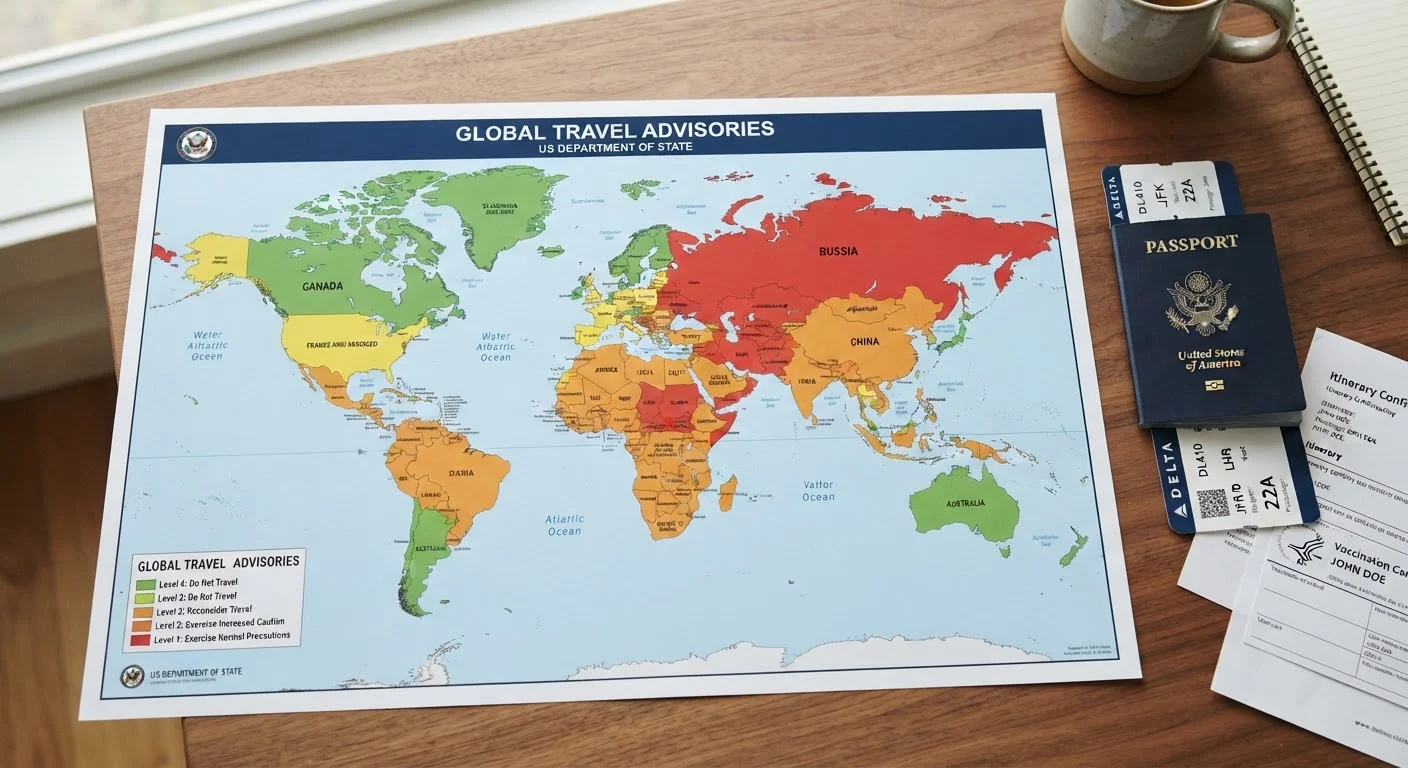
A Travel Advisory Level is a rating assigned by the U.S. Department of State to countries and regions around the world, communicating the degree of risk American travelers may face there. The system uses four numbered tiers - from Level 1 (Exercise Normal Precautions) to Level 4 (Do Not Travel) - to give travelers a quick sense of safety conditions. These ratings are based on factors like crime rates, terrorism threats, civil unrest, natural disasters, and health emergencies.
Advisory levels apply to entire countries but can include sub-national distinctions - meaning one region of a country may carry a higher level than the country overall. Travelers should read the full advisory text, not just the headline level number.
The Four Tiers: What Each Level Means
The U.S. State Department's travel advisory system is built around four clearly defined levels. Understanding what each one signals is the first step in using them effectively for trip planning.
- Level 1 - Exercise Normal Precautions: The lowest risk designation. Conditions are generally safe, though as with any destination, travelers should stay aware of their surroundings and follow common-sense practices.
- Level 2 - Exercise Increased Caution: There are identifiable risks - elevated crime, pockets of unrest, or specific security concerns - that merit extra vigilance. Travel is not discouraged, but planning should account for these hazards.
- Level 3 - Reconsider Travel: Serious risks are present. The State Department strongly advises reconsidering whether travel is necessary. This level often reflects significant crime, terrorism activity, civil instability, or health emergencies.
- Level 4 - Do Not Travel: The highest-risk designation. Life-threatening dangers - armed conflict, widespread lawlessness, or extreme health crises - make travel inadvisable. U.S. government personnel may themselves be restricted from traveling there.
For a broader look at planning terminology alongside advisories, see key travel planning terms every traveler should know.
Sub-National Advisories Matter
The State Department frequently assigns different advisory levels to specific regions within a single country. A country's overall level reflects a general baseline, but travelers should always check whether their specific destination - a city, province, or border region - carries a separate designation. These sub-national distinctions are listed clearly within the full advisory text on travel.state.gov.
What Drives a Rating Change?
Advisory levels are not static - they respond to real-world conditions as they evolve. The State Department's Overseas Security Advisory Council and regional bureaus continuously monitor a range of risk factors:
- Security threats: Terrorist activity, kidnapping risk, and armed conflict can push a rating up quickly.
- Crime environment: Persistent violent crime or targeting of foreign nationals influences ratings at all levels.
- Civil unrest: Protests, coups, elections, or political instability can trigger rapid reassessments.
- Health emergencies: Disease outbreaks or public health infrastructure failures are factored into advisories - sometimes prompting Level 4 designations independently of security concerns.
- Natural disasters: Earthquakes, hurricanes, or flooding that damage infrastructure or overwhelm emergency services can prompt upgrades.
Because conditions can shift fast, checking an advisory once during initial planning is not enough. Recheck close to your departure date and enroll in the State Department's Smart Traveler Enrollment Program (STEP) to receive automatic alerts for your destination.
200+
Countries and territories with State Dept. advisories
The U.S. State Department maintains active travel advisories for more than 200 countries and territories worldwide, accessible at travel.state.gov.
4
Distinct advisory risk levels in the system
The current four-level system was introduced in 2018, replacing a less standardized format that mixed terms like 'travel warning' and 'travel alert' in ways many travelers found confusing.
Millions
Americans enrolled in STEP annually
The Smart Traveler Enrollment Program (STEP) allows U.S. citizens traveling or living abroad to register their trip with the nearest U.S. Embassy or Consulate.
How to Actually Use Advisories When Planning
Advisory levels are tools for informed decision-making, not pass/fail judgments. Here's how to apply them practically:
Read the full text, not just the number. The level is a headline. The detailed advisory beneath it tells you which regions within a country carry elevated risk, what specific threats to watch for, and what the State Department recommends. A country rated Level 2 overall might have a Level 4 designation for a particular northern province - a distinction that matters enormously if you're heading there.
Cross-reference with other sources. The State Department advisory is one input, not the final word. Check your destination country's local news, travel forums with recent firsthand accounts, and the advisories issued by other governments such as the UK Foreign Office or Global Affairs Canada - different governments sometimes assess the same destination differently.
Consider how a rating affects logistics. Travel insurance coverage, airline change policies, and your employer's duty-of-care obligations may all hinge on the advisory level for your destination. Verify these details before booking, not after.
Register your trip. The STEP program is free and lets the U.S. Embassy locate and assist you in an emergency. It takes minutes to set up and is worth doing for any international trip regardless of advisory level.