

Key Takeaways
Why a Framework Beats a Packing List
Most travelers approach packing the same way every time: scramble to find a list online, toss in whatever seems right, then panic at the airport when the bag won't close. A packing framework works differently. Instead of starting from scratch each trip, it gives you a repeatable structure-categories, slot counts, and decision rules-that adapts to any destination or duration.
Think of it as the difference between following a recipe once and actually learning to cook. Once the framework is internalized, you can pack a carry-on for a three-day city break or a ten-day international trip with equal confidence. This approach pairs naturally with the broader planning habits covered in Travel Planning From Scratch, where packing is just one piece of a well-organized journey.
The Core Categories That Structure Every Pack
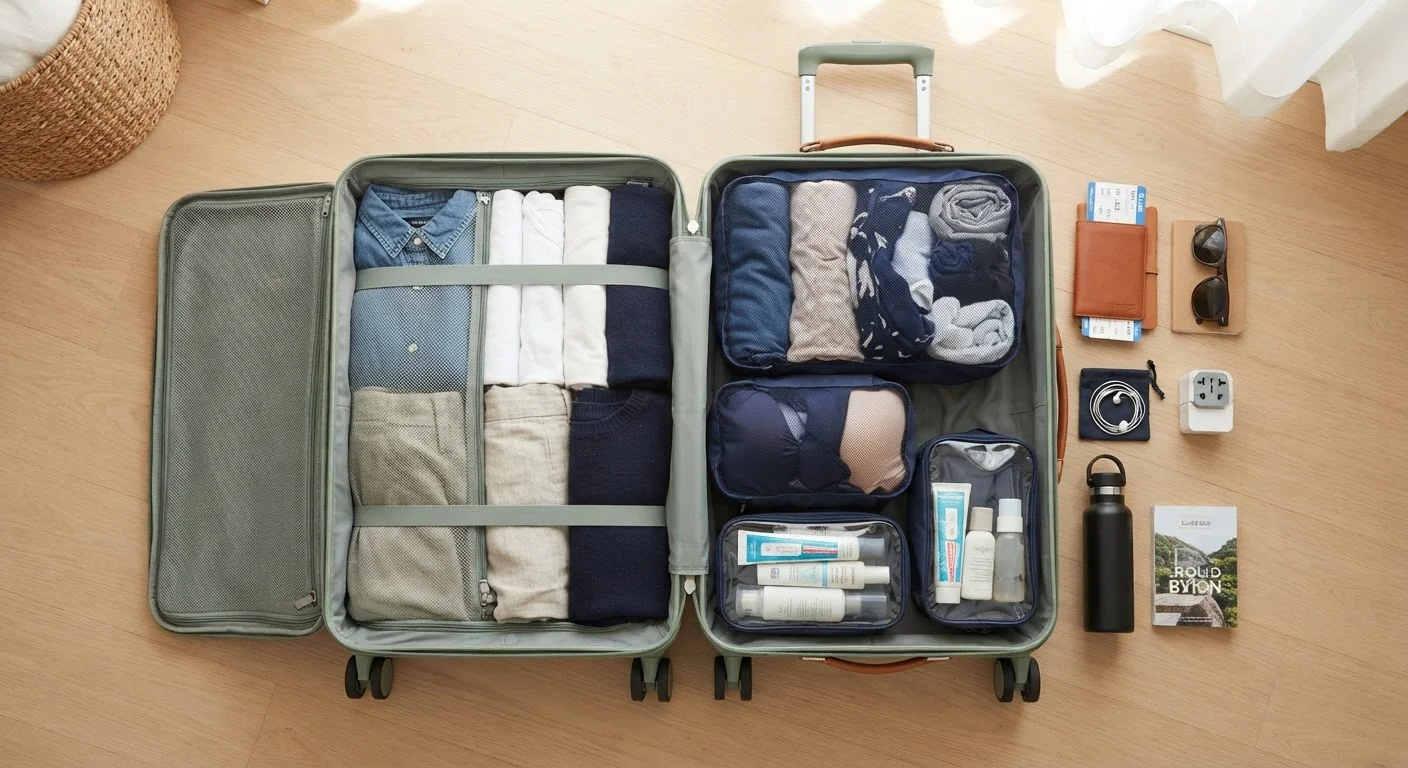
Frequent travelers don't think in terms of a random item list-they think in zones. A solid carry-on framework divides everything into four core categories:
- Clothing core: Bottoms, tops, and a single layering piece, chosen around one cohesive color palette so everything mixes and matches.
- Hygiene and health: TSA-compliant liquids (3.4 oz or under, in a clear quart-sized bag), medications, and any personal care essentials that can't be easily replaced at a destination.
- Documents and valuables: Passport, ID, travel insurance confirmation, and payment cards-ideally in a slim organizer that lives in your personal item, not buried in your main bag.
- Tech and cables: Devices, chargers, adapters, and earbuds grouped in one pouch so nothing gets left on a hotel nightstand.
Once you assign every item to a category, packing becomes an audit rather than an exercise in memory. Before you zip up, you check each zone rather than trying to recall a mental list.
Build outfits around a single, versatile color palette before you choose individual items.
When every piece coordinates with every other piece, you can mix and match your way through more days with fewer clothes. This single habit is responsible for more space savings than any compression trick.
Use packing cubes to assign physical space to each category-not just mental space.
Packing cubes enforce your category structure in a tangible way. When a cube is full, that category is closed-no exceptions. This prevents the 'just one more thing' spiral that turns a carry-on into a checked bag.
Apply the one-in, one-out rule: for every item added late, remove an equivalent one.
Late additions are where packing frameworks collapse. Having a mandatory trade-off rule forces a genuine evaluation of whether the new item is worth it, rather than defaulting to 'I'll make it fit.'
Pre-pack your hygiene kit as a permanent, ready-to-go pouch between trips.
Rebuilding your toiletry bag from scratch before every trip wastes time and introduces errors. A dedicated travel-size kit that lives in your luggage means one less checklist category to manage.
Wear your bulkiest items on travel days rather than packing them.
Boots, heavy jackets, and thick sweaters are carry-on killers. Items worn on the plane don't count against your bag's weight or volume, freeing up critical space for everything else.
The Rules Frequent Travelers Actually Follow
Beyond categories, the framework runs on a handful of rules that prevent bag bloat:
One discipline worth calling out: verify your airline's carry-on size allowance before every trip. Domestic U.S. carriers, international airlines, and budget carriers all have different published limits, and overhead bin space can vary by aircraft type. Checking in advance-rather than assuming-saves real headaches at the gate. For a broader look at the logistical details that can make or break a trip, see The Underrated Logistics That Determine Whether a Trip Runs Smoothly.
Refining Your System Over Time
The most valuable thing you can do after any trip is spend five minutes debriefing your bag. What did you never touch? What did you wish you'd brought? Jot it down and update your master packing template accordingly. Over several trips, you'll end up with a personalized framework that's tighter and more reliable than any generic list you could find online.
If you want to make sure packing fits into your overall pre-departure routine, the Pre-Trip Preparation Checklist covers every task from passport checks to travel insurance-organized by how far out you are. And if keeping trip costs in check is a parallel concern, Building a Travel Budget That Actually Holds Up walks through how to plan realistically from flights to daily expenses.
~$35-$100
Typical round-trip checked-bag fee on major U.S. carriers
Checked baggage fees vary by airline and route; many U.S. carriers charge per bag each way, making carry-on travel a consistent cost-saver for frequent flyers.
22 × 14 × 9 in
Common domestic U.S. carry-on size limit
This is a widely cited guideline, but individual airline policies differ-always confirm dimensions directly with your carrier before traveling.