

Key Takeaways
Why Most Drivers Never Open the Manual
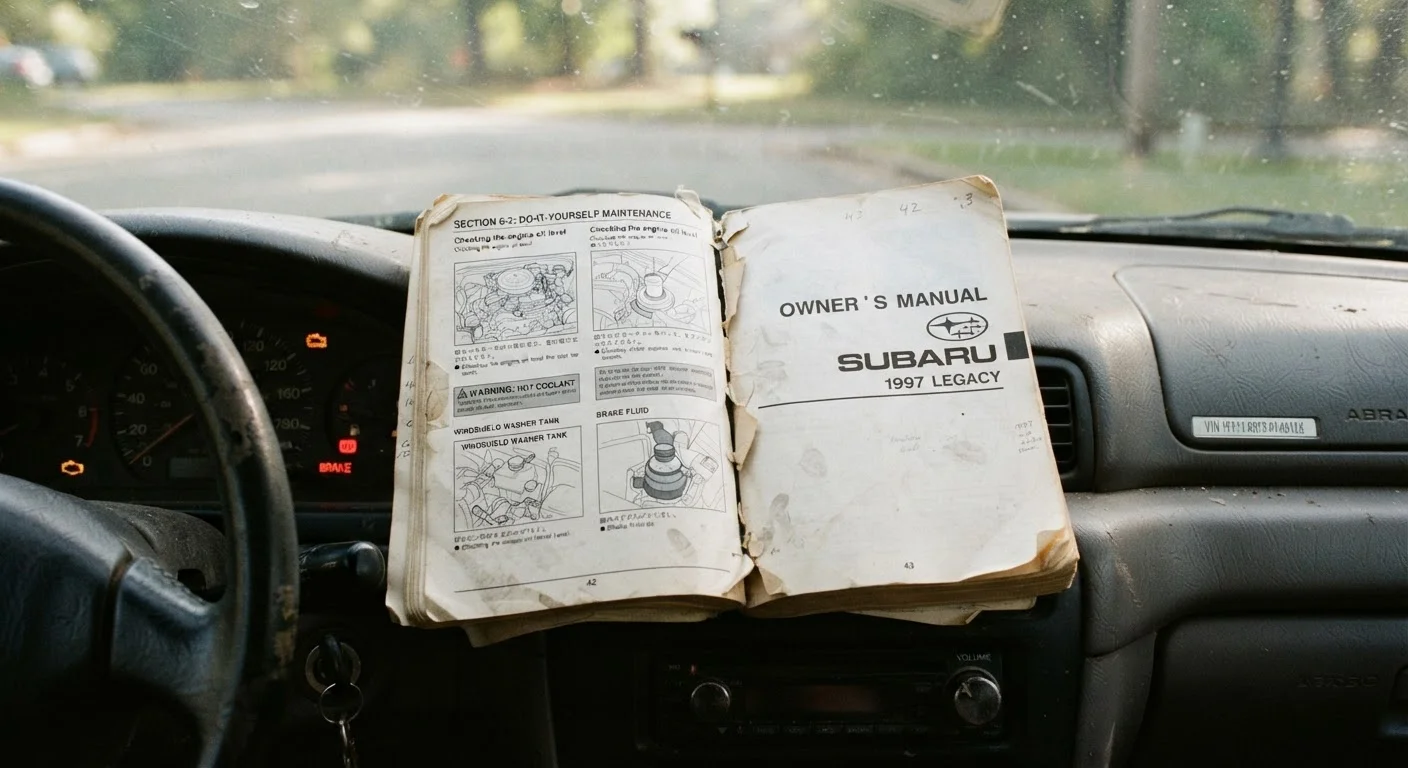
The owner's manual is one of the only documents that comes with a vehicle and is written specifically for that exact make, model, year, and engine configuration. Yet surveys consistently show the vast majority of drivers never read past the first few pages - if they open it at all. The result is that drivers rely on generic advice, shop recommendations, or habit to make decisions that the manual would answer directly.
Generic maintenance guidance - the kind you'll find on a quick internet search - is written for the average car. Your car is not average. It has a specific engine with specific tolerances, designed by engineers who determined what fluids, intervals, and load limits it needs. That information lives in your glove box. This guide walks you through how to find it and actually use it. For a broader look at keeping every system on your vehicle in good shape, see our comprehensive maintenance overview.
What You Need Before You Start
Before working through the steps below, gather the following:
What you will need
If your physical manual is missing, visit your manufacturer's official website. Most automakers host free PDF versions organized by year, make, and model. Some also offer dedicated owner portal apps.
How to Use Your Owner's Manual Effectively
Follow these steps to extract the most useful information your manual contains. You don't need to read it cover to cover - you need to know where the critical sections are and what to do with them.
Locate the Table of Contents and Index
Owner's manuals are organized into major sections: instruments and controls, operation, maintenance, and emergency procedures. Before anything else, flip to the table of contents and scan the section headings. Then check the index at the back for specific terms - "oil viscosity," "tire pressure," "brake fluid" - so you know exactly which page to turn to when you have a question.
Find and Read the Maintenance Schedule
This section - sometimes called the "Scheduled Maintenance Guide" or "Service Intervals" - is the most immediately actionable part of the manual. It lists every service your vehicle requires, organized by mileage or time intervals, whichever comes first. Common entries include engine oil and filter changes, tire rotations, air filter replacement, spark plugs, transmission fluid, and coolant. Note the intervals that apply to your current mileage and flag any you may have missed.
Many manuals list two schedules: one for "normal" driving conditions and one for "severe" conditions, which typically includes frequent short trips, towing, dusty environments, or extreme temperatures. Honest assessment of your driving patterns matters here - many urban commuters technically qualify for the severe schedule even if they don't think of themselves as hard drivers. For more on how oil change intervals are determined, see what oil change interval numbers actually mean.
Record Your Vehicle's Fluid Specifications
Locate the fluids section of the manual. Write down or photograph the following specifications: engine oil viscosity grade and API certification, coolant type (many modern vehicles require specific extended-life formulations), brake fluid specification (DOT 3, DOT 4, or DOT 5.1), transmission fluid type, and power steering fluid if applicable. These specs are non-negotiable - substituting an incompatible fluid can cause damage that isn't immediately obvious. Our guide to car fluids every driver should know explains what each fluid does and what to look for when checking them.
Review the Warning Light Reference Chart
Most manuals include a full-color or illustrated guide to every warning and indicator light the vehicle can display. Locate this section and note which lights indicate immediate stop-vehicle situations (oil pressure, engine temperature, brake system) versus advisory alerts that can be addressed at your next service appointment. Understanding this distinction prevents both unnecessary roadside panics and genuinely dangerous delays.
Note Load, Towing, and Fuel Requirements
If you tow a trailer, carry heavy loads, or are unsure what fuel grade your engine requires, these answers are in the manual. Using a lower octane fuel than the manufacturer specifies in a vehicle that requires premium can affect engine performance and, in some cases, long-term engine health. Maximum towing and payload capacities are legal and safety limits - exceeding them affects braking, handling, and structural integrity. Knowing these figures is especially relevant when evaluating a vehicle's suitability for your needs before purchase.
Keep a Digital Backup of Key Pages
After working through your manual, photograph the maintenance schedule, fluid specifications, and tire pressure pages and store them in a dedicated folder on your phone or cloud storage. If your manual is ever lost or damaged, you'll have the critical specifications immediately accessible. Many manufacturers also allow you to register your vehicle on their website to access digital manual resources.
Common Mistakes the Manual Helps You Avoid
Two of the most consequential errors everyday drivers make are using the wrong engine oil specification and inflating tires to the wrong pressure. Your manual specifies the exact oil viscosity grade - such as 0W-20 or 5W-30 - and whether your engine requires conventional or synthetic formulation. That distinction matters more than many drivers realize; see how conventional and synthetic oils differ for a detailed breakdown. Similarly, the correct tire inflation figure for your vehicle appears on a sticker inside the driver's door jamb and in the manual - not on the tire sidewall, which shows the maximum pressure the tire can hold, not the recommended operating pressure. For a full reference on tire specs, consult our tire pressure and tread depth field guide.
The manual also clarifies which warning lights require immediate action versus which can wait until your next scheduled service. Treating every warning light as an emergency - or ignoring all of them - are both avoidable mistakes.
Some Warning Lights Require Immediate Action
Red warning lights - particularly those for oil pressure, engine temperature, and brake system - generally indicate a condition that can cause serious damage or a safety hazard if you continue driving. If one of these illuminates, pull over safely as soon as possible and consult your manual or a qualified mechanic before proceeding. Do not assume a red light can wait until a scheduled service appointment.
If you're navigating maintenance on a higher-mileage vehicle, keep in mind that some manufacturer intervals may warrant adjustment. Our article on maintenance priorities after 100,000 miles covers how needs evolve as a vehicle ages.