

Autos

Seasonal Car Care: Preparing Your Vehicle for Winter and Summer Extremes

Share
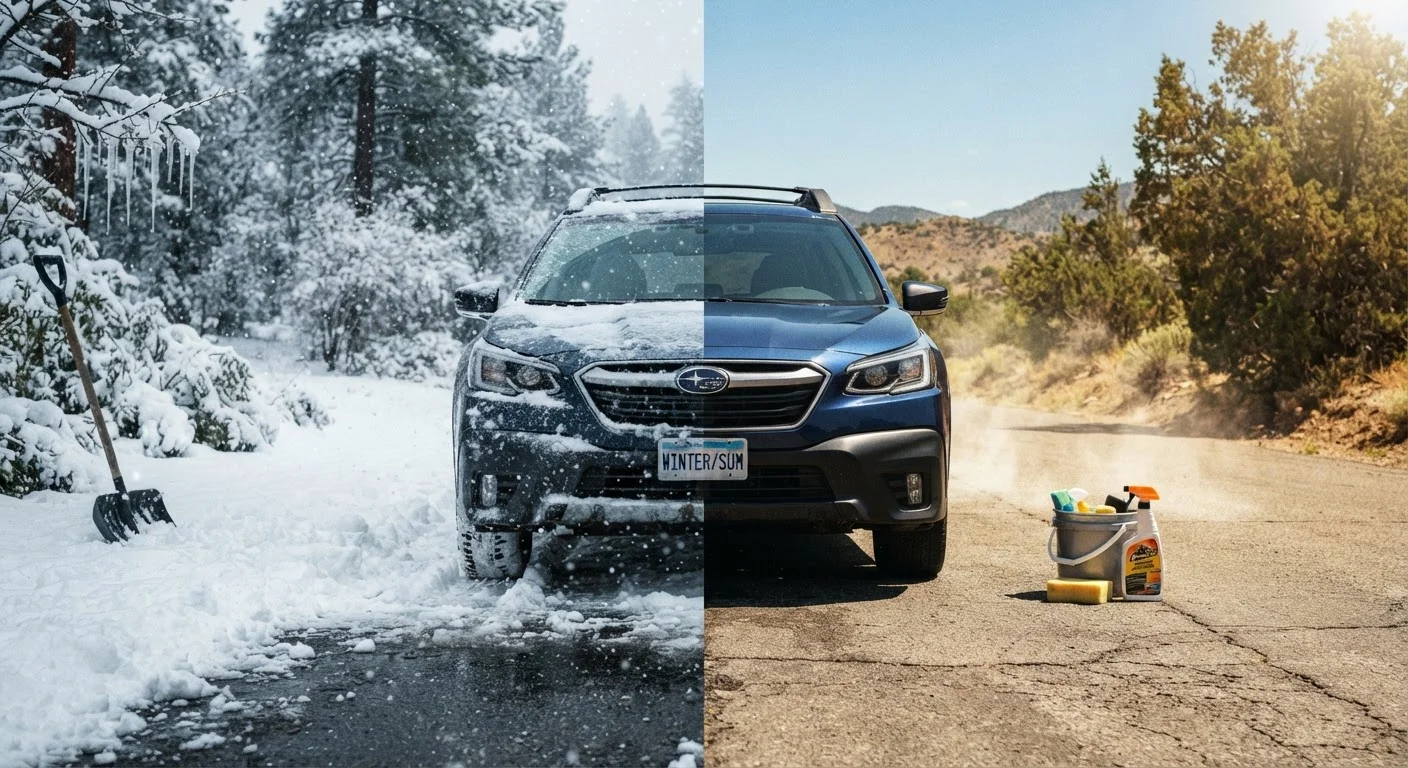
A car shown half in winter snow and half in summer sun, representing seasonal vehicle preparation

Key Takeaways

Winter and summer each stress different vehicle systems — one checklist doesn't fit both seasons.
Battery, tires, and fluids are the highest-priority items before either extreme.
Many seasonal checks are visual and take only a few minutes to complete yourself.
A qualified mechanic should handle anything involving brakes, suspension, or systems you're unsure about.
Catching small problems before a season hits is almost always cheaper than repairing a breakdown.
45–90 min

Summary

22 items · 45–90 minutes

Why Seasonal Preparation Actually Matters

Your vehicle doesn't experience summer and winter as inconveniences — it experiences them as sustained mechanical stress. High ambient temperatures accelerate fluid breakdown, overwork the cooling system, and can cause tire pressure to spike dangerously. Freezing temperatures, on the other hand, thicken engine oil, drain battery voltage, and turn any existing brake or tire wear into a genuine safety hazard.

The good news is that most seasonal vulnerabilities are predictable. Running through a structured checklist before temperatures swing to either extreme gives you the chance to address small issues before they compound into expensive failures — or worse, a roadside emergency. This is especially true if you drive a higher-mileage vehicle; see our guide to maintenance priorities after 100,000 miles for additional considerations that apply as cars age.

Use the checklist groups below as a working reference — one for transitioning into winter, one for summer. You don't need a mechanic's credentials to perform the visual inspections, but know when to hand a task off. If you're uncertain about what you're looking at, a professional assessment is always worth the cost.

Required

Tire pressure gauge

Accurately measure tire inflation before and after temperature changes for both winter and summer prep.

Required

Battery load tester or voltmeter

Assess battery health and cold-cranking capacity before winter temperatures arrive.

Required

Coolant test strips

Verify antifreeze concentration and confirm protection level against your region's lowest expected temperature.

Optional

Tread depth gauge

Measure remaining tire tread to determine whether tires are safe for wet or icy road conditions.

Optional

Flashlight or work light

Illuminate hard-to-see areas under the hood and around tires during inspection.

Winter Preparation Checklist

Cold weather is hardest on battery chemistry, tire rubber, and lubricating fluids. Start your winter prep at least two to three weeks before sustained freezing temperatures arrive in your area — repair shops get busy fast once the first cold snap hits.

Winter: Battery and Electrical

Test battery voltage and cold-cranking amps — a battery that barely starts your car at 70°F can fail completely at 20°F. Must
Inspect battery terminals for corrosion and clean them if buildup is present. Must
Check that all exterior lights — headlights, brake lights, and turn signals — are functioning, since winter brings reduced daylight and lower visibility. Must

Winter: Tires and Brakes

Measure tread depth on all four tires; worn tires have significantly reduced grip on wet or icy roads. Must
Check tire pressure after the temperature drops, since pressure decreases roughly 1 PSI for every 10°F drop in ambient temperature. Must
If you live in a region with regular snow or ice, evaluate whether winter-specific tires are appropriate for your conditions. Should
Have brake pad thickness and rotor condition inspected by a qualified technician if you haven't done so in the past year. Must

Winter: Fluids and Visibility

Verify that engine coolant (antifreeze) is mixed to the correct ratio for your climate's lowest expected temperature — check with a test strip or have a shop verify it. Must
Top off or replace windshield washer fluid with a formula rated for below-freezing temperatures. Must
Inspect wiper blades for cracking or streaking; consider switching to winter-rated blades in heavy-snow regions. Should
Confirm engine oil viscosity is appropriate for cold starts — consult your owner's manual for low-temperature recommendations. Should

Winter: Emergency Preparedness

Assemble or refresh a winter emergency kit including a blanket, jumper cables or a jump starter, ice scraper, and a small bag of traction sand or kitty litter. Should
Keep your fuel tank at least half full during cold periods to reduce condensation in the fuel system and ensure you have range if roads are closed. Nice to have

Summer: Cooling System

Inspect coolant level and condition — degraded coolant loses its ability to prevent overheating and corrosion. Must
Check that the radiator and cooling fan are free of debris and operating correctly; a blocked radiator significantly reduces heat dissipation. Must
Inspect radiator hoses and belts for cracking, swelling, or fraying, as heat accelerates deterioration of rubber components. Must

Summer: Tires and Fluids

Check tire pressure in the morning before driving, since heat causes pressure to rise — overinflated tires reduce traction and are more prone to blowout. Must
Inspect tread depth and sidewalls for any signs of bulging or cracking that heat may have worsened. Must
Verify engine oil level and condition; high operating temperatures in summer can cause oil to break down faster between change intervals. Should
Check brake fluid level and color — dark or cloudy brake fluid has absorbed moisture and may perform less reliably under heat load. Should

Summer: Comfort and Visibility

Run the air conditioning system before peak summer heat to confirm it's cooling effectively — recharging refrigerant takes time to schedule. Should
Replace wiper blades if they show any streaking or skipping, since summer thunderstorms demand reliable visibility. Should
Inspect the cabin air filter if your A/C airflow seems weak — a clogged filter reduces system efficiency noticeably. Nice to have

Don't Rely on Visual Checks Alone for Brakes

Brake pads and rotor wear can't always be assessed without removing the wheel. If your vehicle pulls to one side when braking, produces grinding or squealing sounds, or feels soft underfoot, have the system inspected by a licensed technician before winter driving begins. Winter road conditions leave no margin for degraded stopping performance.

Once you've addressed your vehicle mechanically, your habits behind the wheel matter just as much as your equipment. Our guide to driving in rain, fog, and snow walks through how to adapt your technique for reduced traction and visibility.

Summer Preparation Checklist

Heat is a silent accelerant for mechanical wear. Coolant degrades, tire pressure climbs, and belts and hoses become brittle under sustained high temperatures. Summer prep should happen before the hottest months in your region — typically late spring for most of the continental US.

Engine Overheating Can Cause Severe, Costly Damage

If your temperature gauge climbs toward the red while driving in summer heat, do not continue driving and do not open the radiator cap while the engine is hot. Pull over safely, turn off the engine, and allow the vehicle to cool completely before inspecting. Continuing to drive an overheating engine can warp the cylinder head or cause engine failure — repairs that can run into thousands of dollars. Have the cooling system inspected by a qualified mechanic before returning to the road.

For a broader look at how all these systems work together year-round, the complete road-readiness maintenance guide covers every major vehicle system in depth.

Autos Editorial Team is the collective byline for our editorial team and contributor network. Articles published under this byline or an editorial pen name are researched, written, and reviewed according to our editorial standards for clarity, consistency, and independence before publication.

View all articles by Autos Editorial Team →
Disclaimer: The content on this site is provided for informational purposes only and should not be considered a substitute for professional advice. While we strive to provide accurate and up-to-date information, we make no guarantees regarding its completeness or accuracy. Always consult a qualified professional for advice specific to your circumstances before making any decisions.