

Key Takeaways
Why Weather Demands a Different Driver
Driving in clear conditions builds habits that can work against you the moment weather changes. Speeds, following distances, and braking behaviors calibrated for dry pavement become dangerous on wet, foggy, or icy roads. The physics are unforgiving: reduced traction, limited sight lines, and unpredictable road surfaces require deliberate, proactive adjustments - not reactive ones.
Understanding what each condition actually does to your vehicle's handling - and to other drivers' behavior around you - is the foundation of staying safe. For a broader framework on anticipating road hazards, see our guide on defensive driving principles.
Driving in Rain: Traction Loss Happens Faster Than You Expect
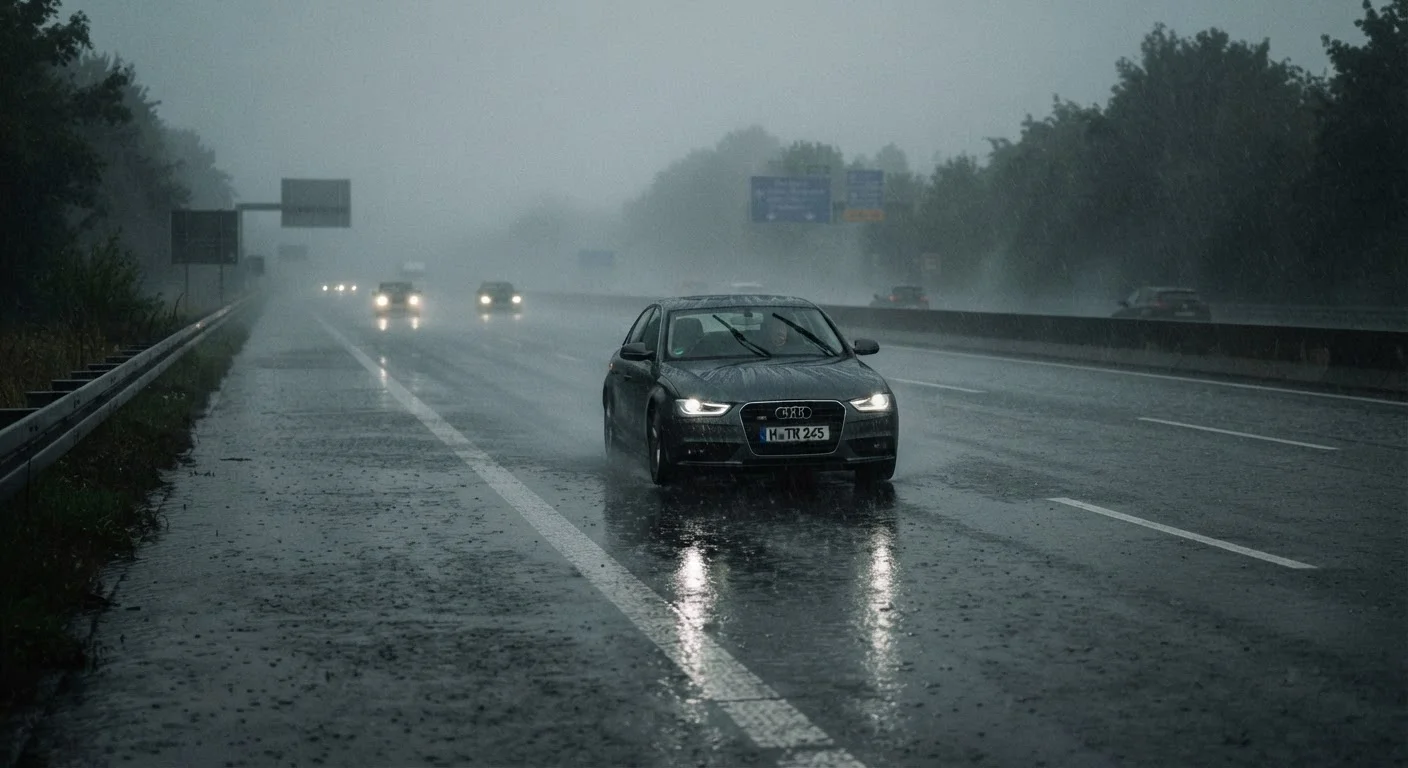
Even light rain can make roads dangerously slippery, especially in the first 15-30 minutes of a storm when oil and rubber residue float to the surface before washing away. Hydroplaning - where tires lose contact with the road and ride on a thin film of water - can occur at highway speeds with worn tread.
~1.2M
Weather-related crashes in the U.S. annually
According to the Federal Highway Administration, approximately 1.2 million crashes per year involve adverse weather, with wet pavement being the most common contributing factor.
75%
Weather crashes on wet pavement
The Federal Highway Administration estimates that roughly 75% of weather-related crashes occur on wet pavement rather than snow or ice.
Before any wet-weather trip, verify your wiper blades, tire tread depth, and lighting are in good working order. The pre-trip safety walkthrough covers exactly these items.
Navigating Fog: When Visibility Drops Below a Quarter Mile
Fog creates a unique danger because drivers routinely overestimate how far they can see - and therefore drive faster than conditions allow. The rule most safety authorities reinforce: drive so that you can stop within your visible distance. If you can only see 100 feet ahead, your speed should allow you to stop in that distance.
Always use low-beam headlights in fog. High beams scatter off moisture particles and actually reduce your effective visibility while also blinding oncoming drivers. Use fog lights if your vehicle has them - they are mounted lower and cast light beneath the fog layer. Increase following distance substantially, and use the right lane edge line as a guide rather than focusing on the vehicle immediately ahead, which can lead to tailgating in chain-reaction crashes.
“Fog is treacherous precisely because drivers feel enclosed and secure. That false sense of intimacy with the road makes people forget how quickly conditions can change beyond their sight line.”
— National Safety Council Road Safety Division, Traffic Safety Research Organization
Winter Driving: Ice, Snow, and the Limits of Driver Skill
Snow-covered and icy roads reduce tire grip dramatically. Even all-wheel drive (AWD) vehicles - which improve acceleration traction - do not reduce stopping distance on ice. Braking is governed by tire-to-road friction, and no drivetrain configuration changes that fundamental equation.
Reduce speed well below posted limits. Accelerate and decelerate gradually to avoid wheel spin or lockup. If your vehicle is not equipped with winter tires, recognize that all-season tires have meaningful traction limitations in temperatures below roughly 45°F. Bridges and overpasses freeze before road surfaces because cold air circulates beneath them - treat them as potentially icy even when the road approaching them seems clear.
If you begin to skid, steer gently in the direction you want to go and avoid abrupt braking. If your vehicle has anti-lock brakes (ABS), apply firm, steady pressure - ABS will modulate automatically. Also be aware that reduced visibility and fatigue are compounding factors in winter driving; drowsy driving research shows how impairment stacks with environmental hazards.
Preparing Your Vehicle Before Conditions Deteriorate
Safe adverse-weather driving begins before you turn the key. Tires in poor condition cannot compensate for driver skill. Headlights, taillights, and defrosters that malfunction in cold weather remove critical safety margins. Check fluid levels - washer fluid rated for freezing temperatures, and coolant - before winter arrives. Keep an emergency kit in your vehicle that includes a scraper, small shovel, jumper cables, and a reflective triangle.
The car maintenance hub provides practical guidance on keeping your vehicle reliable through seasonal changes. For a complete picture of what to check before any challenging drive, the pre-trip walkthrough is a useful starting point regardless of weather.
This article is for general informational and educational purposes only. Road and weather conditions vary significantly by location. Always follow posted traffic laws, local authority guidance, and use your own judgment when assessing road safety.