

Key Takeaways
Why Tracking Matters More Than Budgeting Alone
Most people have a general sense of where their money goes. They know about rent, groceries, and the car payment. What surprises them - consistently - are the smaller, irregular purchases that quietly drain hundreds of dollars each month: the daily coffee run, impulse online orders, and the ever-multiplying stack of digital subscriptions that renew automatically.
A budget tells you where money should go. Tracking tells you where it actually goes. That gap between intention and reality is where most financial plans break down. Without a tracking habit, budgets are educated guesses - often optimistic ones. With tracking, you have evidence. And evidence is what allows you to make decisions grounded in your real financial life, not an idealized version of it.
This article walks through concrete methods for capturing spending, categorizing it meaningfully, and reviewing it regularly. Think of this as part of a broader foundation; for a comprehensive overview of building a budget from the ground up, see The Complete Guide to Building and Sustaining a Personal Budget.
Start With One Week, Not One Month
If the idea of tracking every transaction feels overwhelming, begin with a single week. Capture every purchase for just seven days - including cash. One week of honest data will reveal more about your habits than months of estimates. Once you see how manageable it is, extending the habit to a full month becomes a natural next step.
Choose Your Tracking Method
There is no single correct way to track spending. The right method is the one that fits your daily routine well enough that you actually stick with it. Consider the three most common approaches:
- Spreadsheet: A simple spreadsheet - in any free office application - gives you full control over categories and formulas. Enter each transaction manually. The act of typing a purchase often reinforces awareness of your spending.
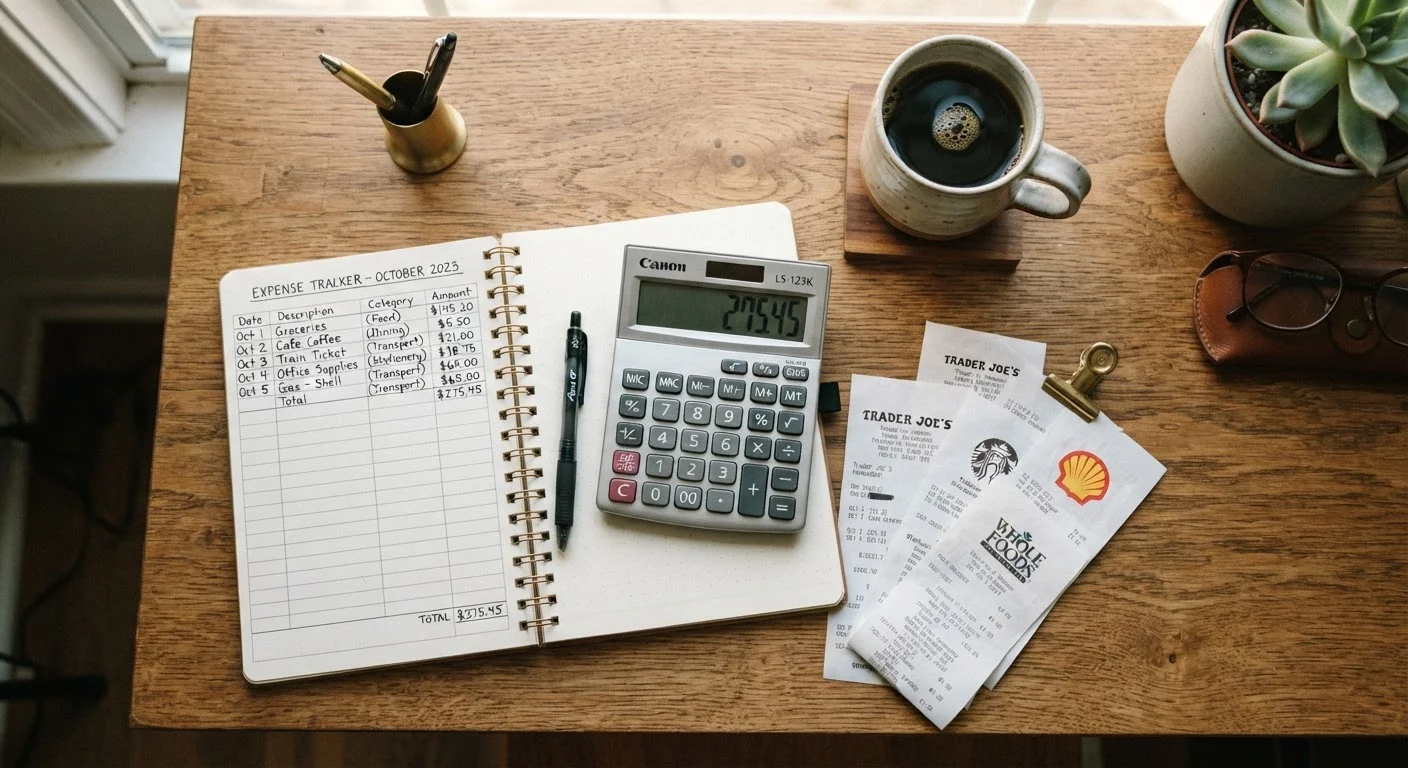
- Paper ledger or notebook: Pen-and-paper tracking has genuine advantages for people who find screens distracting or who want a more deliberate, tactile record. If you're curious about the merits of analog methods, The Case for a Paper Budget in a Digital World offers an honest comparison.
- Bank and card statement export: Most financial institutions allow you to download transaction history as a CSV file. This approach captures everything automatically but requires you to review and categorize entries after the fact - ideally weekly, not monthly.
Whatever method you choose, consistency matters far more than sophistication. A simple notebook used every day outperforms an elaborate spreadsheet opened once a month.
What you will need
How to Set Up and Use Your Tracking System
Once you've chosen a method, follow these steps to get your system running and make it produce useful information.
Gather your starting materials
Before you log a single purchase, set up your system. If using a spreadsheet, create columns for: date, merchant or payee, amount, category, and an optional notes field. If using a notebook, draw the same columns across two facing pages - one spread per week works well. If using bank exports, download the last 30 days of transactions now so you have a baseline to work from immediately.
Define your spending categories
Create a short, realistic list of categories that reflects how you actually spend - not how you wish you spent. Common categories include: Housing, Groceries, Dining Out, Transportation, Utilities, Subscriptions, Personal Care, Entertainment, and Miscellaneous. Avoid over-segmenting; too many categories create friction and make tracking feel like a chore. Aim for 8-12 categories to start.
Log transactions daily or at the point of purchase
The most accurate tracking happens as close to the transaction as possible. Batch-logging a week's worth of purchases from memory introduces errors and omissions. Set a brief daily habit - two to three minutes each evening - to enter that day's purchases. Include cash purchases, which are the most commonly forgotten. If you rarely carry cash, note any ATM withdrawals as a lump sum in Miscellaneous until you can recall how it was spent.
Assign a category to every entry
As you log each transaction, assign it to one of your predefined categories immediately. Uncategorized entries are the primary reason tracking systems stop producing useful information. If a purchase spans multiple categories - say, a superstore trip that included both groceries and household supplies - split it as best you can or assign it to the dominant category and note the exception.
Total each category weekly
At the end of each week, sum each category column. This weekly subtotal is your most actionable data point. It shows you - with a week still left in the month - whether you're on pace, under budget, or already over in a key area. Weekly totals also make the monthly review far less overwhelming, since you're checking four small summaries rather than 30 days of raw entries at once.
Compare actuals to your intended spending
After your first full month of tracking, place your actual category totals next to any spending targets you set (or your general expectations). Note which categories came in significantly over or under. These variances are the insight you've been building toward - they tell you where your financial intentions and your financial behavior diverge. Use this information to set more realistic targets for the following month, not to judge yourself, but to plan more accurately.
Reviewing Your Data and Spotting Patterns
Tracking data only creates value when you look at it. Schedule a brief weekly review - 10 to 15 minutes is enough. Compare what you spent in each category against what you intended to spend. Look for:
- Surprise categories: Spending that showed up in a category you didn't plan for - dining out, convenience stores, or app purchases - often signals an unexamined habit.
- Creeping recurring charges: Small monthly fees compound quickly. A focused spending audit across three months of transactions can surface recurring charges you've forgotten entirely.
- Timing clusters: Some people overspend on weekends, others during online sales events. Tracking by date can reveal when you're most vulnerable to impulse spending.
After a full month of data, you'll have something far more useful than a guess: an actual record of your financial behavior. Use it to set realistic category limits for the following month. When you're ready to build on that momentum, Building a Monthly Savings Habit That Actually Sticks provides behavioral strategies for converting awareness into consistent saving. And for a structured month-end process, The Monthly Budget Reset walks through exactly how to close out one month and start the next with clarity.
This article is for general informational and educational purposes only and does not constitute personalized financial advice. For guidance specific to your financial situation, consider consulting a qualified financial professional.