

Key Takeaways
Paying Yourself First
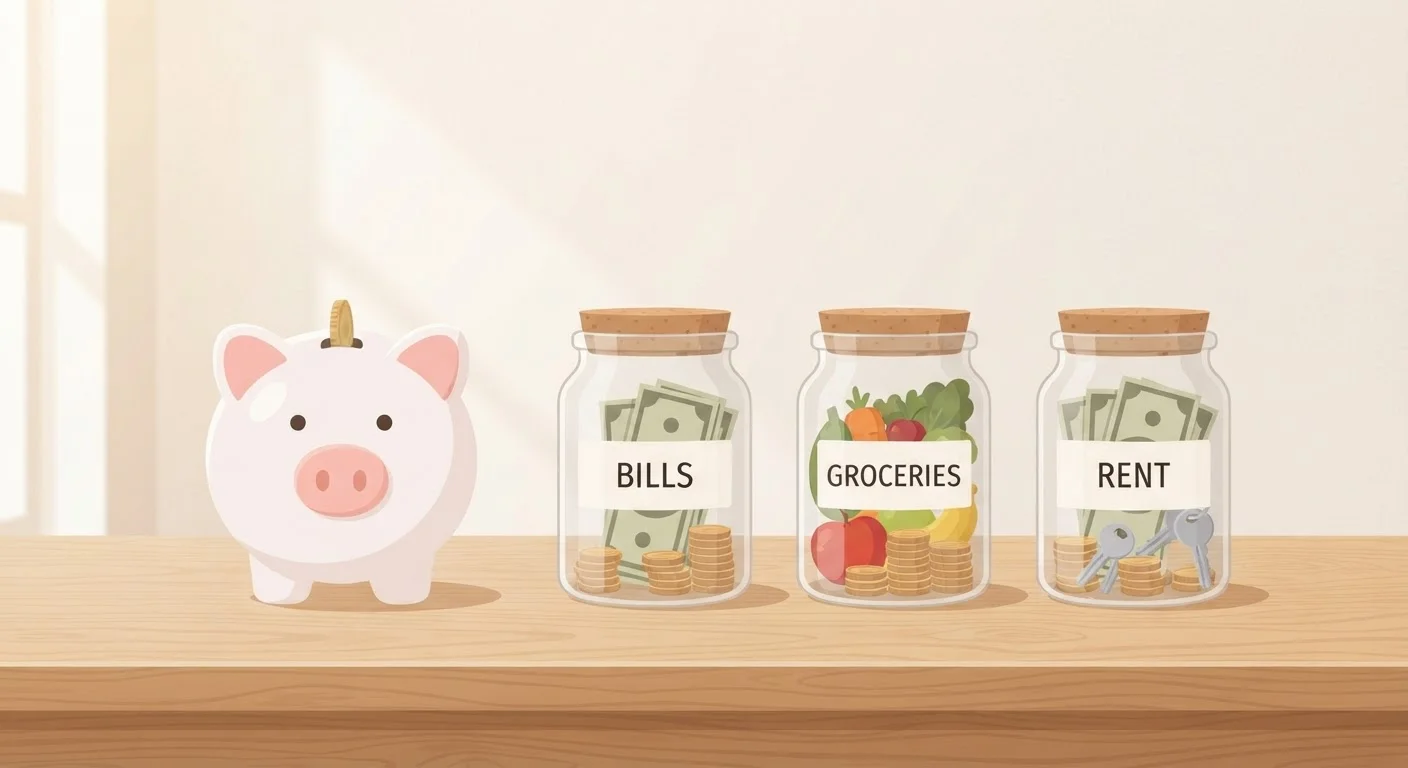
Paying yourself first is a savings strategy where you set aside a predetermined amount of money for savings or investments before you pay any bills, buy groceries, or spend on anything else. The core idea is that savings become a non-negotiable expense-not something you do with whatever is left at the end of the month. It flips the conventional spending sequence so that your future financial security gets funded before your present-day wants and needs compete for the same dollars.
In practice, this is most commonly implemented through automatic payroll deductions-such as 401(k) contributions-or scheduled automatic transfers to a savings or investment account timed to coincide with payday.
Why the Order of Spending Decisions Is Everything
Most people approach saving the same way: pay the rent, cover the utilities, buy groceries, handle the car payment, spend what feels reasonable-and then save whatever happens to be left. It sounds logical. The problem is that "whatever is left" is almost always less than expected, and frequently zero.
This isn't a willpower failure. It's a sequencing problem. When savings compete at the end of a spending chain, they lose to real, immediate costs nearly every time. Paying yourself first solves this by moving savings to the front of the line-treated not as optional but as the first bill you owe, paid to your future self.
The concept is simple, but its implications reshape how a paycheck actually functions. Instead of asking "how much can I save after expenses?" the question becomes "how much do I have left to spend after I've saved?" That reframe changes behavior in meaningful, measurable ways.
“A part of all you earn is yours to keep. It should be no less than a tenth no matter how little you earn. Pay yourself first.”
— George S. Clason, Author of 'The Richest Man in Babylon,' a widely cited personal finance parable first published in 1926
How It Works in Practice
The most effective implementation is automation. When savings happen manually-requiring a deliberate decision each month-they're vulnerable to competing priorities, impulse spending, and simple inertia. When they're automatic, the decision is made once and then removed from the equation entirely.
For many workers, this already happens in part through workplace retirement contributions. Money directed to a 401(k) or similar plan is deducted before it hits a checking account, making it genuinely "first" in the spending sequence. The same principle applies to setting up a recurring transfer to a savings account on payday-before bills are reviewed or discretionary spending begins.
Start Small, Then Scale Up
If your budget feels tight, begin with a savings contribution as small as 1% of your paycheck and increase it by 1% every few months. The behavioral habit of saving first matters more than the initial dollar amount. Small, consistent contributions are far more effective than waiting until you feel ready to save a larger sum.
The behavioral strategies behind consistent saving reinforce why automation matters so much: when saving requires repeated willpower, it tends to erode. When it's structural, it tends to hold.
What It Means for Your Financial Priorities
Paying yourself first isn't about a specific savings rate-it's about establishing savings as a non-negotiable commitment before lifestyle expenses get the first claim on income. This matters especially early in a savings journey, when the habit itself is more valuable than the dollar amount.
Over time, this approach compounds in two ways. Financially, money saved and invested earlier has more time to grow. Behaviorally, a consistent saving habit becomes easier to maintain and easier to increase. If you're deciding between an emergency fund or an investment account as your starting point, either choice benefits from being funded first rather than last.
It's also worth noting what this strategy is not. It's not a guarantee of wealth, and it's not a substitute for managing overall spending. If fixed expenses consume most of your income, paying yourself first requires reducing those costs or increasing income before the strategy can gain real traction. For guidance suited to your specific financial picture, consider speaking with a licensed financial adviser.
For a broader view of how foundational savings habits interact with long-term financial goals, the Saving & Investing hub covers the principles that hold up across different stages of a financial life.
The Underlying Logic: Scarcity Works Both Ways
Behavioral economists have long observed that people tend to spend what's available. When a full paycheck lands in a checking account, the perception of available funds is high-and spending tends to rise to meet it. When savings are removed first, the brain recalibrates to the reduced balance as the new baseline. Spending adjusts, often without the conscious sacrifice most people fear.
This is the quiet power of paying yourself first: it works with human psychology rather than against it. You don't need to resist the urge to spend. You simply reduce what's visibly available before that urge gets a chance to operate.
~57%
Americans who couldn't cover a $1,000 emergency from savings
According to Bankrate's 2024 Annual Emergency Savings Report, a majority of U.S. adults lack sufficient liquid savings to handle a common unexpected expense.
~70%
Private-sector workers with access to a workplace retirement plan
The U.S. Bureau of Labor Statistics reports that access to employer-sponsored retirement benefits varies significantly by employer size and income level.
The same logic that makes this approach effective for retirement savings applies to building an emergency cushion, a home down payment, or any other medium-term goal. The principles behind durable long-term savings consistently point to early, consistent contributions-not market timing or rate optimization-as the most reliable driver of outcomes.
This article is for informational and educational purposes only and does not constitute personalized financial, tax, or investment advice. Please consult a licensed financial professional for guidance tailored to your individual circumstances.