

Key Takeaways
Option A
Secured Debt
Backed by collateral - lower rates, higher stakes.
Best for: Borrowers seeking lower interest rates who are comfortable pledging an asset, such as a home or vehicle, as collateral.
Option B
Unsecured Debt
No collateral required - more flexible, but costlier.
Best for: Borrowers who need funds without tying an asset to the loan and can qualify based on creditworthiness alone.
If you want to minimize interest costs and can pledge an asset
Secured Debt
Collateral reduces lender risk, which generally translates to lower interest rates and longer repayment terms - making secured debt more affordable over time.
If you need funds quickly without risking a specific asset
Unsecured Debt
No collateral means no asset is at immediate risk of repossession, though you should be prepared for higher rates and stricter credit requirements.
If you're consolidating existing balances
Unsecured Debt
Personal loans used for debt consolidation are typically unsecured and can simplify multiple payments without requiring you to pledge property.
If you're financing a home or vehicle purchase
Secured Debt
Mortgages and auto loans are purpose-built for large purchases; the asset itself serves as collateral, enabling access to amounts that unsecured lending rarely supports.
What Makes Debt 'Secured' or 'Unsecured'?
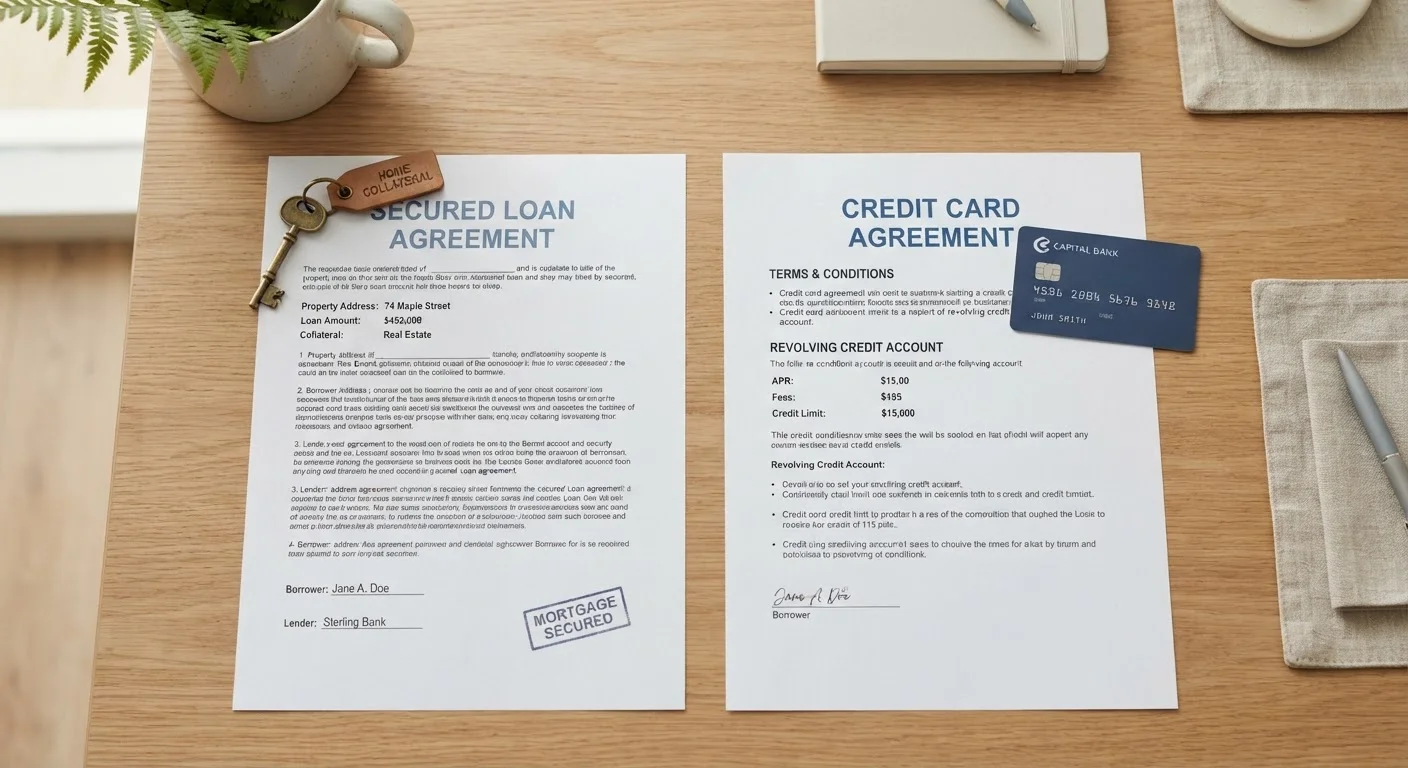
The core distinction between secured and unsecured debt comes down to one word: collateral. Collateral is an asset - a home, a car, a savings account - that a borrower pledges to a lender as a guarantee of repayment. If the borrower defaults, the lender has a legal right to seize and sell that asset to recover what they're owed.
Secured debt is any loan backed by collateral. Mortgages are the most common example: your home is the collateral, and a lender can initiate foreclosure if you stop making payments. Auto loans work the same way - the vehicle is the security. Other examples include home equity loans and secured credit cards, which are often used by people building or rebuilding credit.
Unsecured debt carries no such pledge. Credit cards, most personal loans, medical bills, and student loans (in most cases) are unsecured. Lenders extend credit based on your creditworthiness - your credit score, income, and debt history - rather than on an asset they could claim. For a deeper look at how these terms appear in loan agreements, see our debt and credit glossary.
| Criterion | Secured Debt | Unsecured Debt |
|---|---|---|
| Collateral required | Yes - asset pledged to lender | No - based on creditworthiness |
| Typical interest rate | Generally lower | Generally higher |
| Common examples | Mortgages, auto loans, HELOCs | Credit cards, personal loans, medical debt |
| Consequence of default | Asset repossession or foreclosure | Collections, charge-off, potential lawsuit |
| Loan amounts available | Often larger, longer terms | Typically smaller, shorter terms |
| Credit score impact on approval | Important, but asset provides backup | Critical - no asset to offset risk |
How Each Type Affects Interest Rates and Risk
Because secured lenders have a safety net - your asset - they typically offer lower interest rates than unsecured lenders. This reduced risk allows them to extend larger loan amounts over longer terms. A 30-year mortgage, for example, is only feasible because the lender holds a lien on the property throughout the loan's life.
Unsecured lenders take on more risk. If a borrower defaults, they have no asset to claim - only the option to pursue the borrower through collections or legal action. To compensate, they charge higher interest rates. Credit card APRs commonly range from the mid-teens to over 25%, while personal loan rates vary widely based on credit profile. That spread reflects the difference in risk exposure between secured and unsecured lending.
~$17T
Total U.S. household debt outstanding
According to the Federal Reserve Bank of New York's Household Debt and Credit Report, total U.S. household debt has exceeded $17 trillion, with mortgage debt comprising the largest share.
3-5x
Difference in typical APR: credit cards vs. mortgages
Average credit card APRs have regularly run three to five times higher than average 30-year fixed mortgage rates, reflecting the risk premium lenders apply to unsecured borrowing.
This risk dynamic is also why your credit score matters more for unsecured borrowing. A lender with no collateral backstop scrutinizes your repayment history, utilization rate, and income more intensely. With secured debt, a strong asset can partially offset a weaker credit profile - though creditworthiness still influences the rate you receive.
What Happens When You Miss Payments
Missed payments on any debt type will hurt your credit score and can trigger late fees, penalty rates, or collections activity. But the consequences diverge significantly depending on whether the debt is secured.
With secured debt, a sustained failure to pay can lead to repossession or foreclosure. An auto lender can repossess a vehicle relatively quickly - sometimes within days of a missed payment, depending on state law. Mortgage foreclosure takes longer due to legal protections, but the outcome is the same: loss of the pledged asset. This makes defaulting on secured debt especially serious.
With unsecured debt, lenders cannot immediately seize property. Instead, they may send the account to collections, report it as a charge-off (a severe negative mark on your credit report), or pursue a civil lawsuit. If a court issues a judgment against you, wage garnishment or a bank account levy may follow. While this process is slower and less immediately dramatic than repossession, it can be financially devastating and difficult to reverse.
If you're struggling with multiple debt obligations, understanding how debt consolidation works may help clarify your options. And if you're weighing tools to pay down existing balances, the comparison of personal loans versus balance transfer cards is worth reviewing.
This article is for general informational and educational purposes only and does not constitute personalized financial, legal, or credit advice. Consult a licensed financial professional for guidance specific to your situation.