

Key Takeaways
Asset Allocation
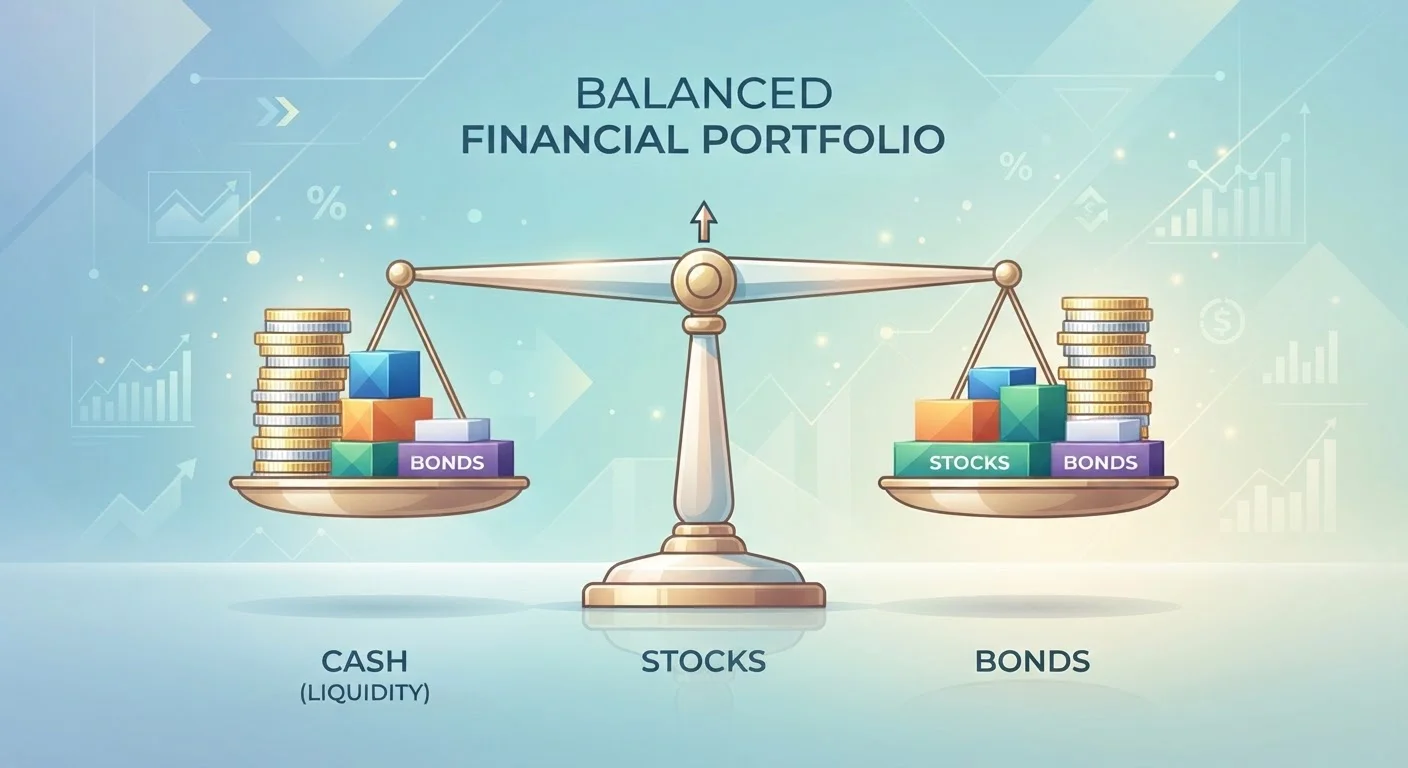
Asset allocation is the practice of dividing an investment portfolio among different categories of assets - most commonly stocks, bonds, and cash equivalents. The goal is to balance potential growth against the risk of loss in a way that suits an investor's time horizon and financial goals. Different asset types tend to behave differently under the same market conditions, which is what makes the mix meaningful.
Asset allocation is distinct from security selection - it operates at the category level rather than choosing individual investments within a category. Research, including work associated with the Brinson, Hood, and Beebower studies, has suggested that allocation decisions explain a significant portion of portfolio return variability over time.
The Core Idea Behind Asset Allocation
When you invest, the single biggest structural decision you make isn't which stock to buy - it's how you divide your money among broad categories of assets. That division is your asset allocation.
The three core asset classes most investors work with are equities (stocks), fixed income (bonds), and cash or cash equivalents. Each carries a different risk-and-return profile. Stocks have historically offered higher long-run growth potential but come with sharper short-term swings. Bonds tend to be more stable but typically offer lower returns over long periods. Cash preserves purchasing power in the near term but earns relatively little and can lose value to inflation over time.
Because these categories often move in different directions under the same economic conditions, blending them can smooth out a portfolio's overall performance. This is the fundamental logic of allocation - not eliminating risk, but shaping it deliberately. For a plain-language breakdown of these and other foundational investing terms, see our beginner's glossary.
~90%
Portfolio return variability explained by allocation
Research frequently cited in investment literature, including the Brinson, Hood, and Beebower studies, suggests asset allocation policy explains a large portion of the variability in portfolio returns over time - though the precise figure is debated among researchers.
3 types
Core asset classes in most portfolios
Stocks, bonds, and cash equivalents form the foundation of most retail investor portfolios, with real assets and alternatives sometimes added for additional diversification.
Why Your Time Horizon Is the Central Variable
Asset allocation isn't a static formula - it's directly tied to when you expect to need your money. This is your time horizon, and it's the most important input when thinking about how aggressive or conservative a portfolio should be.
An investor who is decades from retirement can generally afford to hold more equities. If markets drop sharply, they have time to wait for a recovery before they need to draw on their savings. An investor approaching retirement doesn't have that buffer. A significant market decline shortly before - or after - they begin withdrawing could permanently reduce what they have available.
This dynamic is why financial planning guidance often suggests shifting toward a more conservative mix as retirement nears: reducing equity exposure and increasing bonds or cash equivalents. The idea is not to eliminate growth entirely, but to limit the damage a poorly timed downturn could cause.
Rebalancing: Keeping Allocation on Track
Markets don't stay still, which means your allocation won't either - unless you actively maintain it. If stocks have a strong year, they'll represent a larger share of your portfolio than you originally intended. If bonds underperform, their share shrinks. Over time, this drift can leave you with a meaningfully different risk profile than you planned for.
Rebalancing is the process of restoring your portfolio to its target weights. In practice, this means selling assets that have grown beyond their intended share and adding to those that have fallen below it. It's a mechanical discipline that enforces the principle of buying relatively low and selling relatively high - though it is not a strategy that guarantees gains.
How often to rebalance, and at what threshold, depends on individual circumstances. Doing it too frequently can generate unnecessary costs or tax events; doing it too rarely allows drift to build. For more on managing portfolio risk through diversification within each asset class, see our guide to diversification in practice.
How Goals and Risk Tolerance Shape the Mix
Time horizon is the primary driver of allocation decisions, but it's not the only one. Risk tolerance - how much volatility a person can comfortably absorb without making impulsive decisions - also plays a meaningful role. Someone who would panic-sell during a significant market drop may need a more conservative allocation than their timeline alone would suggest, because emotional decisions made at the wrong moment can be more damaging than holding a slightly lower-risk portfolio from the start.
Financial goals also matter. Saving for a down payment on a house in three years calls for a very different allocation than saving for retirement in thirty. Short-term goals typically warrant conservative, liquid approaches; long-term goals can accommodate more equity exposure and the associated volatility.
These principles - patience, clear goals, and consistency - are explored further in our overview of long-term savings principles.
“The most fundamental decision of investing is the allocation of your assets: how much should you own in stocks, bonds, and cash reserves. That decision is far more important than the choice of which securities you hold within those categories.”
— John C. Bogle, Founder of Vanguard and pioneer of index fund investing
This article is for general informational and educational purposes only and does not constitute personalized financial, investment, or tax advice. All investing involves risk, including the potential loss of principal. Consult a qualified, licensed financial adviser before making decisions about your own situation.