

Key Takeaways
Option A
Mindfulness
A quality of attention you can cultivate anytime.
Best for: People who want to reduce stress and improve focus without carving out dedicated practice time.
Option B
Meditation
A structured, intentional practice with defined techniques.
Best for: People ready to commit to a regular, time-set routine for deeper mental training.
If you have limited time and want stress relief woven into daily life
Mindfulness
Mindfulness requires no dedicated session - you can practice it while eating, commuting, or working, making it highly sustainable.
If you want a structured, progressive mental training routine
Meditation
Formal meditation sessions build consistent practice depth over time, with many techniques targeting focus, sleep, or emotional regulation specifically.
If you're new to both and unsure where to start
Mindfulness
Informal mindfulness has a very low barrier to entry, giving you a feel for present-moment awareness before committing to a formal practice.
If you're managing a clinician-supported mental health plan
Mindfulness
Mindfulness-based approaches such as MBSR are widely integrated into therapeutic settings and may align with professional guidance you're already receiving.
If you're interested in exploring different mental wellness traditions
Meditation
Meditation encompasses a broad range of styles - from breath-focused to body-scan to loving-kindness - offering variety for ongoing exploration.
Defining the Terms Clearly
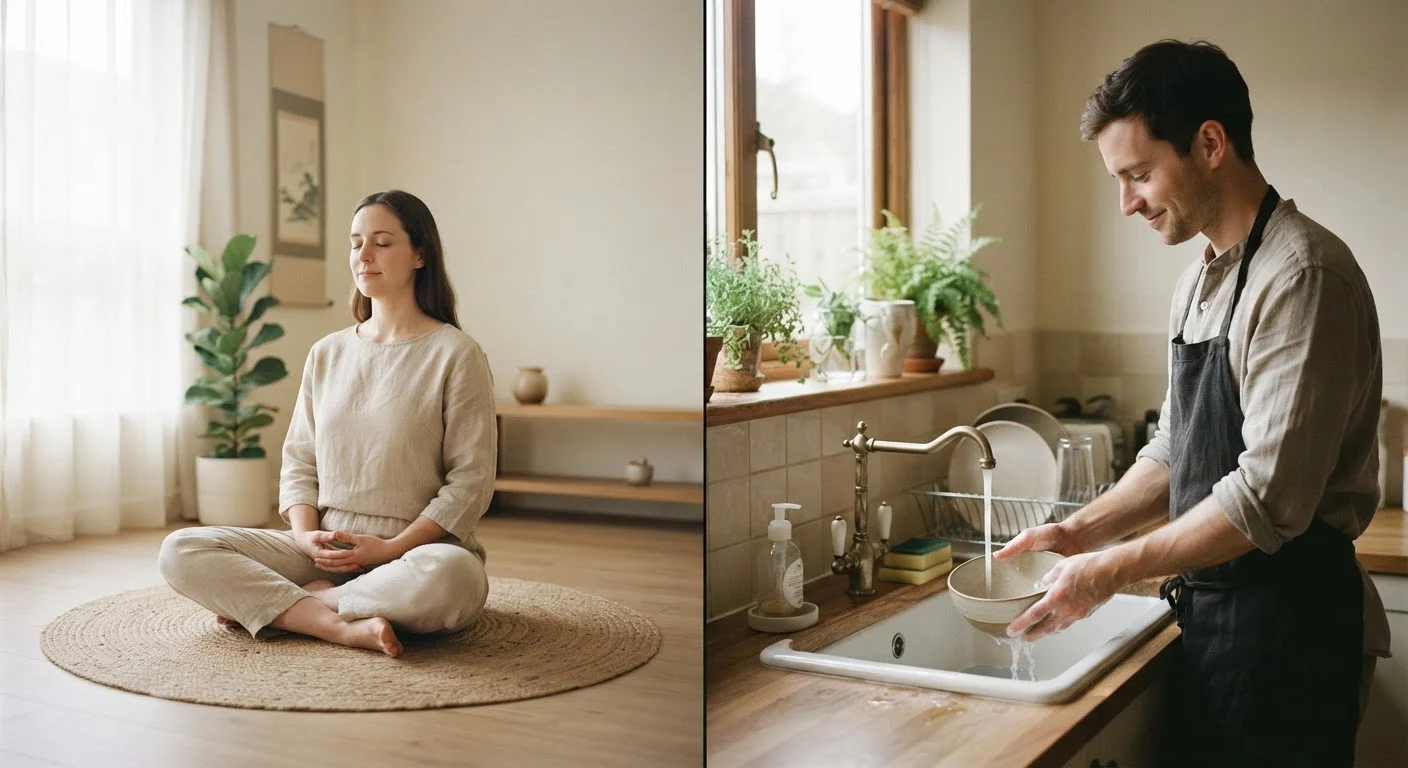
Mindfulness is a quality of attention - specifically, the ability to notice what is happening in the present moment without judging it. It is a mental stance you can bring to nearly any activity: eating, listening to a colleague, or folding laundry. It does not require silence, a cushion, or a dedicated block of time.
Meditation, by contrast, is a deliberate practice - a structured activity you set aside time for, during which you use specific techniques to train the mind. Many forms of meditation aim to cultivate mindfulness, but meditation can also target other goals: deep relaxation, concentration, compassion, or visualization.
Think of it this way: mindfulness is a destination you can reach by many roads, and meditation is one well-mapped road that reliably gets you there. Conflating the two is a bit like equating fitness with going to the gym - the gym is a useful tool, but it is not the only one, and fitness can be built elsewhere. For a parallel look at how similar-sounding health terms differ in meaningful ways, see our guide on mobility vs. flexibility.
How They Overlap - and Where They Diverge
The confusion between the two terms is understandable because they genuinely intersect. Mindfulness-Based Stress Reduction (MBSR), a widely studied eight-week program developed at the University of Massachusetts, uses formal meditation sessions as the vehicle for teaching mindfulness skills. Many meditation apps and classes market themselves using both words almost interchangeably, which compounds the blur.
| Criterion | Mindfulness | Meditation |
|---|---|---|
| What it is | A quality of present-moment attention | A structured, intentional practice |
| Requires dedicated time | No - can be woven into any activity | Yes - has a defined start and end |
| Requires specific technique | No fixed technique needed | Yes - breath, body-scan, visualization, etc. |
| Primary goal | Non-judgmental present-moment awareness | Varies: focus, relaxation, compassion, or mindfulness |
| Research support | Strong, especially in clinical MBSR programs | Strong across multiple modalities and outcomes |
| Barrier to entry | Very low - no equipment or training needed | Low to moderate - benefits from guidance early on |
| Can they work together? | Yes - meditation often builds mindfulness skills | Yes - daily mindfulness reinforces formal practice |
The key distinction in practice: meditation has a beginning and an end. You sit down, set an intention or follow a technique, and then you stop. Mindfulness, ideally, bleeds into the rest of your day. Research published in journals such as JAMA Internal Medicine has found benefits associated with mindfulness meditation programs for anxiety, depression, and pain - though researchers note that effect sizes vary and that these programs work best as complements to, not substitutes for, established care.
Practical Ways to Approach Each
Informal mindfulness involves deliberately paying attention during activities you already do. This might mean noticing the sensation of water temperature while washing your hands, or pausing to take three slow breaths before answering an email. No app is required, though digital mental health tools can offer guided reminders if helpful.
Formal meditation generally involves choosing a technique and a time window - even five to ten minutes - and following it consistently. Common approaches include:
- Breath-focused meditation: Returning attention to the sensations of breathing each time the mind wanders.
- Body-scan meditation: Systematically directing attention through different regions of the body.
- Loving-kindness (metta) meditation: Silently directing well-wishes toward yourself and others.
A Note on Mental Health Conditions
Mindfulness and meditation practices have been studied as adjuncts to care for conditions such as anxiety and depression. However, they are not standalone treatments for clinical mental health conditions. If you're uncertain whether these practices are appropriate for you - particularly if you have a trauma history or significant psychiatric symptoms - it's worth discussing with a mental health professional first. See our overview of anxiety vs. depression for more context on how these conditions are generally approached.
Whichever path you explore, consistency matters more than duration. Brief, regular practice tends to outperform infrequent long sessions for building the awareness skills that both mindfulness and meditation are meant to develop.
For a broader grounding in the language used across mental health topics - including terms like cognitive defusion or nervous system regulation that often appear alongside mindfulness discussions - our plain-language mental health reference can help fill in the gaps.
This article is for general informational purposes only and does not constitute medical or mental health advice. If you are experiencing significant mental health symptoms, please consult a qualified healthcare professional.