

Key Takeaways
Why Your Surroundings Shape Your Mental State
Most people focus on internal strategies - therapy, meditation, better sleep - when thinking about mental wellness. Fewer think deliberately about the spaces they live and work in. Yet environmental psychology research consistently shows that physical surroundings influence mood, stress levels, and cognitive performance in measurable ways.
Clutter, for example, has been associated with elevated cortisol (the body's primary stress hormone) and difficulty shifting attention. Noise pollution can impair concentration and disrupt recovery. Conversely, access to daylight and natural elements is repeatedly linked to improved mood and reduced fatigue in workplace and residential studies.
If you're building a broader mental wellness foundation, understanding what mental health actually means is a useful starting point before tackling environmental changes.
Practical Ways to Redesign Your Space for Clarity
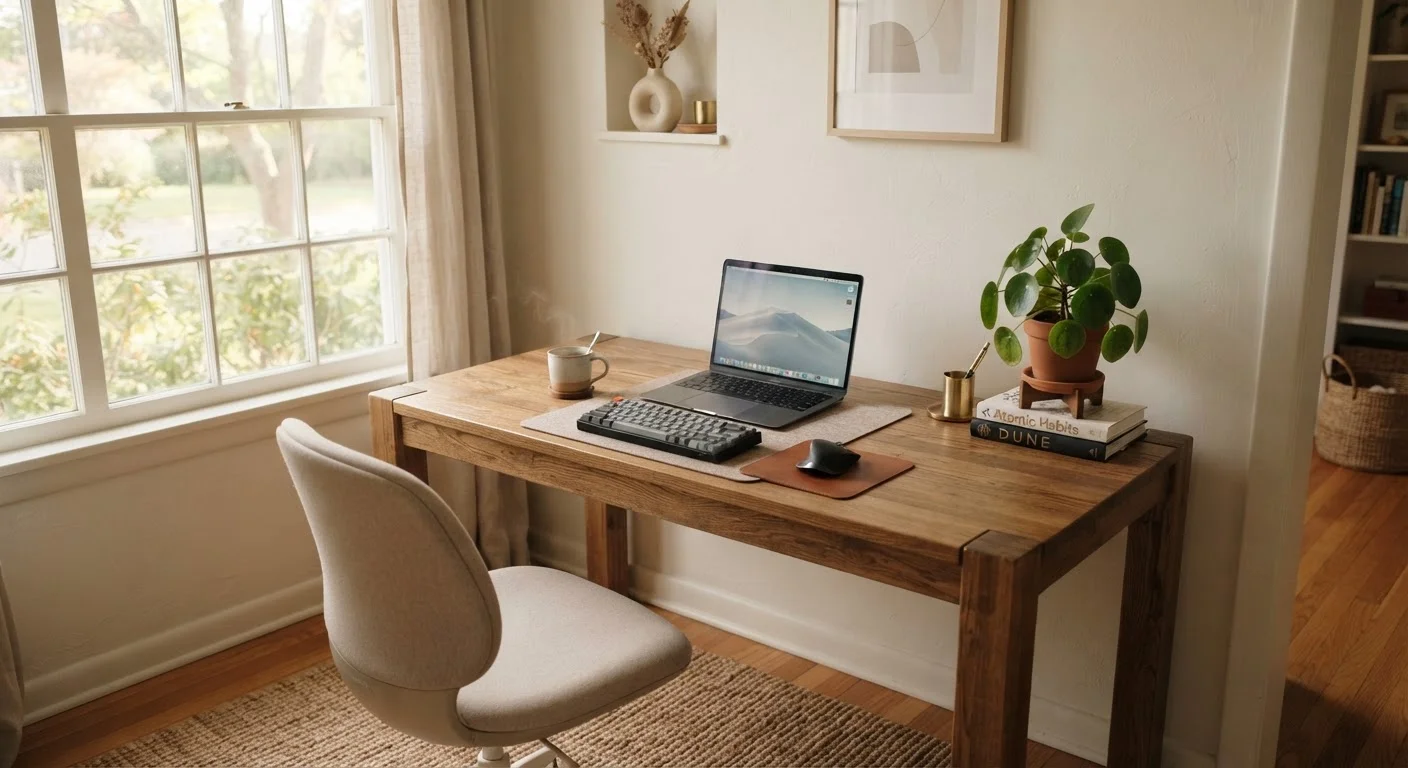
Environment changes don't require a renovation budget or a complete overhaul. Many of the most effective adjustments are low-cost and reversible - which means you can experiment to find what actually works for you.
Beyond individual tweaks, think about how your space flows. Designating specific areas for focused work, rest, and social connection can help your brain shift between cognitive modes more easily - a principle sometimes called "context cuing" in behavioral research.
For those interested in home improvement strategies more broadly, many of the same principles - light, airflow, order - that improve a home's livability also support mental clarity.
The Overlooked Digital Environment
Physical space is only half the picture. For most Americans, a significant portion of each day is spent in digital environments - and those environments carry their own psychological weight.
Notification overload is one of the clearest culprits. Research from workplace psychology suggests that frequent interruptions - even brief ones - significantly extend the time needed to return to focused work. Each ping or badge is a small but real demand on your attention system.
Digital Clutter Is Real Clutter
Overflowing inboxes, cluttered desktops, and dozens of open browser tabs create cognitive load in much the same way physical mess does. Research on "cognitive offloading" suggests that when your working memory is occupied tracking incomplete digital tasks, less capacity is available for the task in front of you. Treating your digital workspace with the same intention as your physical one - regular cleanup, clear organization - is a genuinely evidence-grounded habit.
Audit your notification settings: disable non-essential alerts at the system level rather than relying on willpower to ignore them. Organize your phone's home screen so that tools you want to use intentionally (calendar, notes) are prominent, while reflex-triggering apps are buried or removed. These structural choices reduce the effort required to stay focused.
For a balanced look at how technology intersects with mental wellness, see the honest tradeoffs of digital mental health tools.
Connecting Environment to Broader Wellness Habits
Environment design is a powerful multiplier, but it works best alongside other evidence-supported habits. A quiet, well-lit workspace won't compensate for chronic sleep deprivation, and a clean desk won't resolve ongoing sources of stress that need direct attention. Everyday habits that mental wellness research points to - movement, social connection, consistent sleep - remain foundational.
Your sleep environment in particular deserves attention. Light levels, temperature, and noise in your bedroom directly affect sleep quality, which in turn affects mental clarity the following day. If that cycle sounds familiar, the sleep and mental health connection is worth understanding more fully.
“The environment is the invisible hand that shapes human behavior. Design it with intention.”
— James Clear, Author and researcher on habit formation and behavioral change
Ultimately, the goal is to stop leaving your environment to chance. Intentional arrangement - physical and digital - reduces the background friction that drains mental energy before the day has really begun.
This article provides general health and wellness information for educational purposes only. It is not a substitute for professional mental health advice, diagnosis, or treatment. If you are experiencing significant mental health symptoms, please consult a qualified healthcare professional.