

Key Takeaways
How Fat Got Its Bad Reputation
For much of the late twentieth century, dietary fat was treated as a public health villain. Government guidelines, food marketing, and popular culture aligned around a simple message: eat less fat, live longer. Supermarket shelves filled with low-fat and fat-free products, and generations of Americans grew up believing fat of any kind was dangerous.
The scientific foundation for this view was always more complicated than the public messaging suggested. Early research linked dietary fat - particularly saturated fat - to elevated cholesterol and cardiovascular disease. Those findings were real, but the translation from research to policy flattened a lot of nuance. Not all fats behave the same way in the body, and the evidence has never supported treating them as a single category. For a deeper look at why nutrition guidance can appear contradictory, see how nutritional research works.
Common Myths About Dietary Fat - Corrected
The following myth-and-fact pairs address the most persistent misconceptions about fat in the diet, grounded in current evidence-based guidance.
Myth
All dietary fat makes you gain weight and clogs your arteries.
Fact
Fat is a necessary macronutrient, and its health effects depend heavily on the type consumed and the overall dietary context.
Fat provides essential fatty acids the body cannot produce on its own, supports absorption of fat-soluble vitamins (A, D, E, and K), and plays a structural role in cell membranes. Caloric density is real - fat contains roughly 9 calories per gram compared to 4 for protein or carbohydrates - but eating fat does not automatically translate into body fat or arterial damage. The type of fat, the overall diet, and individual metabolic factors all influence outcomes.
Myth
Saturated fat is definitively proven to cause heart disease.
Fact
The relationship between saturated fat and cardiovascular risk is more nuanced than once believed, and remains an area of active scientific debate.
Earlier consensus held that saturated fat raised LDL cholesterol and therefore increased heart disease risk. More recent meta-analyses have complicated this picture, finding that the effect of saturated fat depends in part on what replaces it in the diet. Replacing saturated fat with refined carbohydrates showed little cardiovascular benefit in some studies, while replacing it with unsaturated fats showed more consistent improvement. Most major health organizations still recommend moderating saturated fat intake, but the science is not as settled as mid-century guidelines implied.
Myth
Low-fat or fat-free foods are always the healthier choice.
Fact
Reduced-fat processed foods often contain added sugars and refined starches that may offset any benefit from fat reduction.
When manufacturers remove fat, the resulting product often tastes worse - so sugar, starch, or artificial additives are introduced to compensate. This trade-off means a fat-free cookie or low-fat yogurt with added sugar is not necessarily nutritionally superior to a full-fat, minimally processed alternative. Reading ingredient labels matters more than the front-of-pack fat claim.
Myth
All unsaturated fats are equally beneficial.
Fact
Unsaturated fats vary in structure and effect; monounsaturated and omega-3 polyunsaturated fats have the strongest evidence for cardiovascular benefit.
Unsaturated fats include a range of compounds. Monounsaturated fats - found in olive oil, avocados, and many nuts - are associated with favorable lipid profiles. Omega-3 polyunsaturated fatty acids, particularly those in fatty fish (EPA and DHA), have substantial evidence linking them to reduced inflammation and cardiovascular benefit. Omega-6 polyunsaturated fats, common in many vegetable oils, are also essential but consumed in much higher quantities in typical Western diets. Balance across these subtypes appears relevant, though research continues to evolve.
Myth
Trans fats from natural sources are just as harmful as artificial trans fats.
Fact
Artificial trans fats (from partial hydrogenation) carry well-documented cardiovascular risks; naturally occurring trans fats in dairy and meat behave differently and are not subject to the same restrictions.
Artificial trans fats - created by partially hydrogenating vegetable oils - raise LDL cholesterol while lowering HDL cholesterol, a combination strongly linked to cardiovascular disease. Regulatory agencies in the United States and many other countries have restricted or eliminated their use in food manufacturing. Naturally occurring trans fats, such as conjugated linoleic acid (CLA) found in small amounts in dairy and beef, have a different chemical structure and have not demonstrated the same harmful effects in research to date.
What Happens When Fat Gets Replaced
One of the most consequential oversights of the low-fat era was ignoring what people ate instead. When fat is removed from processed foods, manufacturers typically replace it with refined carbohydrates and added sugars to restore palatability. Research has since shown that for many people, this substitution did not improve cardiovascular outcomes and may have worsened some metabolic markers.
This doesn't vindicate high-fat diets across the board - it underscores that food quality and overall dietary pattern matter more than any single macronutrient. Why popular diet trends often contradict each other explores this tension further, particularly how keto and Mediterranean approaches reach different conclusions about fat.
Extreme Fat Restriction Carries Its Own Risks
Eliminating fat too aggressively can impair absorption of fat-soluble vitamins and deprive the body of essential fatty acids it cannot synthesize. Very low-fat diets are sometimes used in clinical settings under medical supervision, but are not appropriate as general self-directed strategies. If you are considering a significant change to your macronutrient intake, speak with a registered dietitian or physician first.
Well-meaning efforts to eat healthier can also backfire in other ways - when good nutrition intentions go wrong is worth reading alongside this piece.
A More Useful Framework for Fat Intake
Rather than counting grams of total fat, most nutrition researchers and clinicians now emphasize dietary patterns. Diets rich in vegetables, legumes, whole grains, fish, and minimally processed plant oils - such as Mediterranean-style eating - consistently show positive associations with cardiovascular health in large population studies.
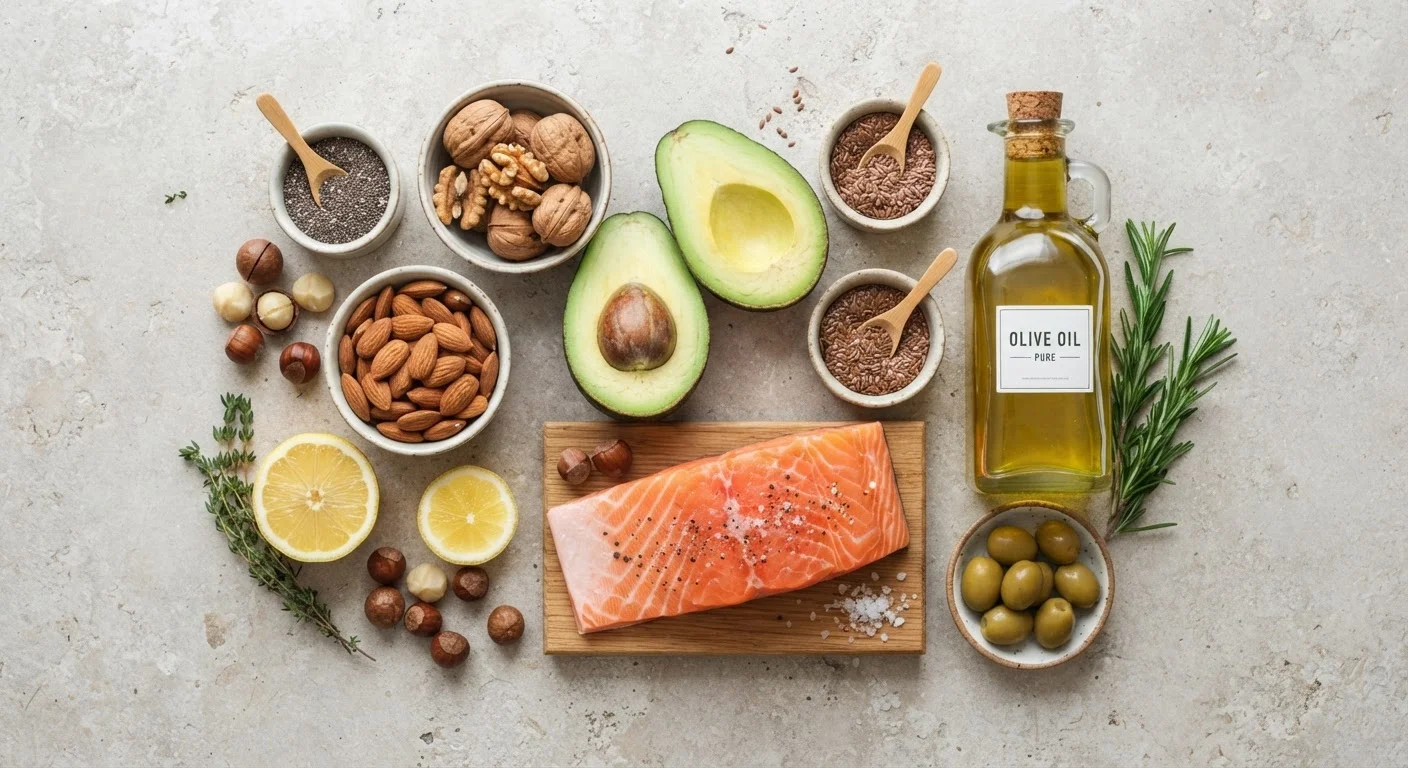
Practically, this means focusing on sources: avocados, nuts, seeds, fatty fish like salmon and sardines, and olive oil contribute unsaturated fats alongside fiber, protein, and micronutrients. Highly processed foods high in saturated fat or any product containing partially hydrogenated oils (a source of artificial trans fats) are worth limiting. These are general population-level observations, not prescriptions - individual needs vary based on health status, genetics, and existing conditions. A registered dietitian or physician is the right resource for personalized guidance.
~20-35%
Recommended daily caloric intake from fat
The Dietary Guidelines for Americans suggest fat should comprise roughly 20-35% of total daily calories for most adults, with emphasis on unsaturated sources.
<1%
Trans fat limit in U.S. food supply
Following an FDA determination, partially hydrogenated oils - the primary source of artificial trans fats - were largely phased out of the U.S. food supply by 2020.
This article is for general informational and educational purposes only and does not constitute medical or dietary advice. Consult a qualified healthcare professional before making significant changes to your diet.