

Key Takeaways
Summary
22 items · 30-60 minutes
Why Meal Planning Often Feels Harder Than It Should
Most people don't abandon meal planning because they lack motivation - they abandon it because they try to do too much at once. An overly detailed plan, a grocery list for unfamiliar recipes, and a Sunday spent in the kitchen for hours can make the whole effort feel unsustainable by Wednesday.
The goal of this checklist isn't to turn you into a meal-prep influencer. It's to help you build a repeatable, realistic system that keeps nutritious food accessible throughout your week - without eliminating spontaneity or demanding culinary expertise.
Before diving in, note that meal planning is general nutritional organization, not personalized dietary advice. If you have specific health conditions, food allergies, or clinical dietary needs, a registered dietitian is your best resource for tailored guidance.
Avoid Overly Ambitious First Plans
One of the most common meal planning mistakes is designing a menu full of complex, time-consuming recipes you've never made before. This leads to fatigue, wasted ingredients, and abandonment of the system entirely. Start with meals you already know how to make, then gradually introduce new recipes one at a time.
For a closer look at how well-meaning nutrition habits can quietly backfire, see our article When Good Nutrition Intentions Go Wrong.
What You'll Need Before You Start
Having a few basic tools in place makes the planning process significantly smoother. You don't need specialized equipment - just some organizational aids and a clear sense of what's already in your kitchen.
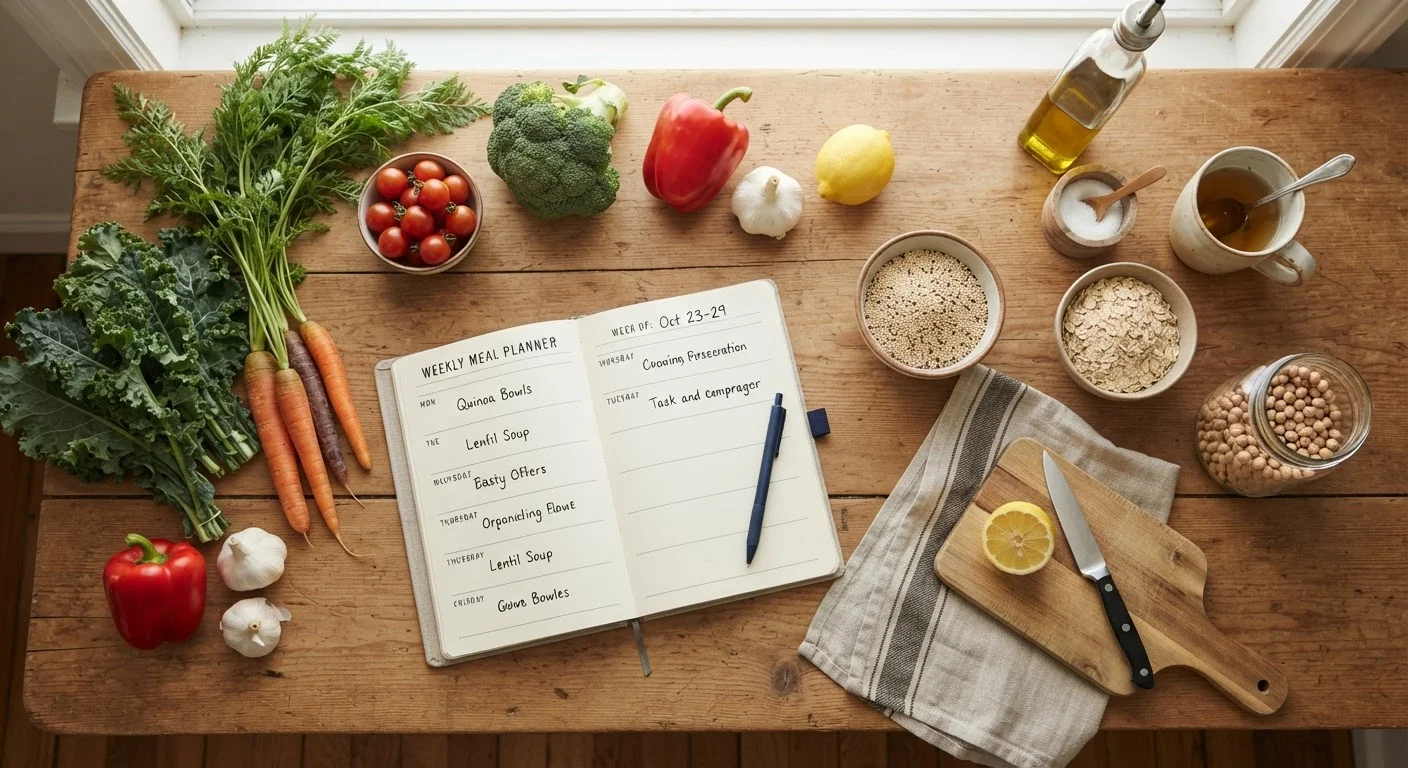
Weekly planner template or notebook
Provides a visual grid to map meals across breakfast, lunch, dinner, and snacks for each day of the week.
Pantry inventory list
A running record of what staples you have on hand, reducing duplicate purchases and food waste.
Grocery list organizer
Groups items by store section (produce, protein, dairy, dry goods) to speed up shopping trips.
Kitchen scale
Useful for developing a practical sense of portion sizes, particularly for proteins and grains.
Reusable airtight containers
Essential for storing prepped ingredients and batch-cooked components safely across the week.
Nutrition label reference (e.g., USDA FoodData Central)
A free, authoritative resource for checking general nutrient content of ingredients you're using.
The Meal Planning Checklist
Work through these grouped items at a pace that suits your schedule. Seasoned planners may move quickly through early sections; beginners should take time with the pantry and staples groups before tackling weekly structure.
Pantry & Staples Audit
Weekly Menu Structure
Grocery List & Shopping
Portion Awareness
Reducing Waste & Saving Time
Thinking about the role of protein across your meals? Our guide to protein sources across eating patterns covers both animal and plant-based options in practical terms. And for a plain-English breakdown of key micronutrients to keep in mind as you plan, visit our vitamins and minerals reference guide.
Making the Plan Stick Week After Week
Consistency is the real goal - not perfection. Research consistently shows that even modest improvements in dietary patterns, sustained over time, have more impact than brief periods of strict adherence followed by abandonment.
A few habits help planners stay on track. First, treat your weekly planning session as a non-negotiable appointment - even 20 minutes on a Sunday afternoon is enough for most households. Second, rotate a core set of familiar, reliable meals rather than testing new recipes every week. Save experimentation for one meal per week at most.
Mindful eating practices can complement your planning efforts well. Rather than eating on autopilot, paying attention to hunger and satisfaction cues helps you gauge how well your plan is actually meeting your needs. Our getting started with mindful eating article explains these concepts in approachable terms.
Flexibility Is Part of the Plan
A good meal plan is a guide, not a contract. Life changes - schedules run late, appetites shift, and social meals happen. If you follow your plan roughly four or five days out of seven, you're succeeding. Rigidly forcing yourself to stick to every detail often causes more stress than the planning was meant to prevent.
This article is for general informational and educational purposes only and does not constitute personalized medical or dietary advice. Consult a qualified healthcare professional or registered dietitian before making significant changes to your diet, especially if you have a medical condition or specific nutritional requirements.