

Key Takeaways
Start here
Choosing the Right Spot
Next
Planning Your Garden Layout
Then
Preparing Your Soil
When you're ready
Selecting and Planting Your Vegetables
Ongoing
Watering, Feeding, and Ongoing Care
Choosing the Right Spot
The single most important decision you'll make is where to put your garden. Most vegetables require at least six hours of direct sunlight per day - eight is better for fruiting crops like tomatoes and peppers. Walk your yard at different times of day and note where sunlight lingers longest.
Beyond sun, consider these factors:
- Proximity to water: The closer your garden is to a hose or spigot, the more likely you are to water consistently.
- Level ground: Avoid low spots where water pools, which can lead to root rot. Gentle slopes are fine; steep grades cause erosion.
- Away from large trees: Tree roots compete aggressively for water and nutrients, and tree canopies create unwanted shade.
If your ideal spot has poor native soil, don't worry - you'll fix that in a later step. Location is harder to change than soil chemistry.
Use the 'shadow test' to assess sunlight
On a clear day, visit your intended garden site at 9 a.m., noon, and 3 p.m. and note whether it's in full sun, partial shade, or deep shade at each time. A spot that's sunny at all three check-ins is a strong candidate. This simple method takes the guesswork out of sunlight assessment without any special tools.
Planning Your Garden Layout
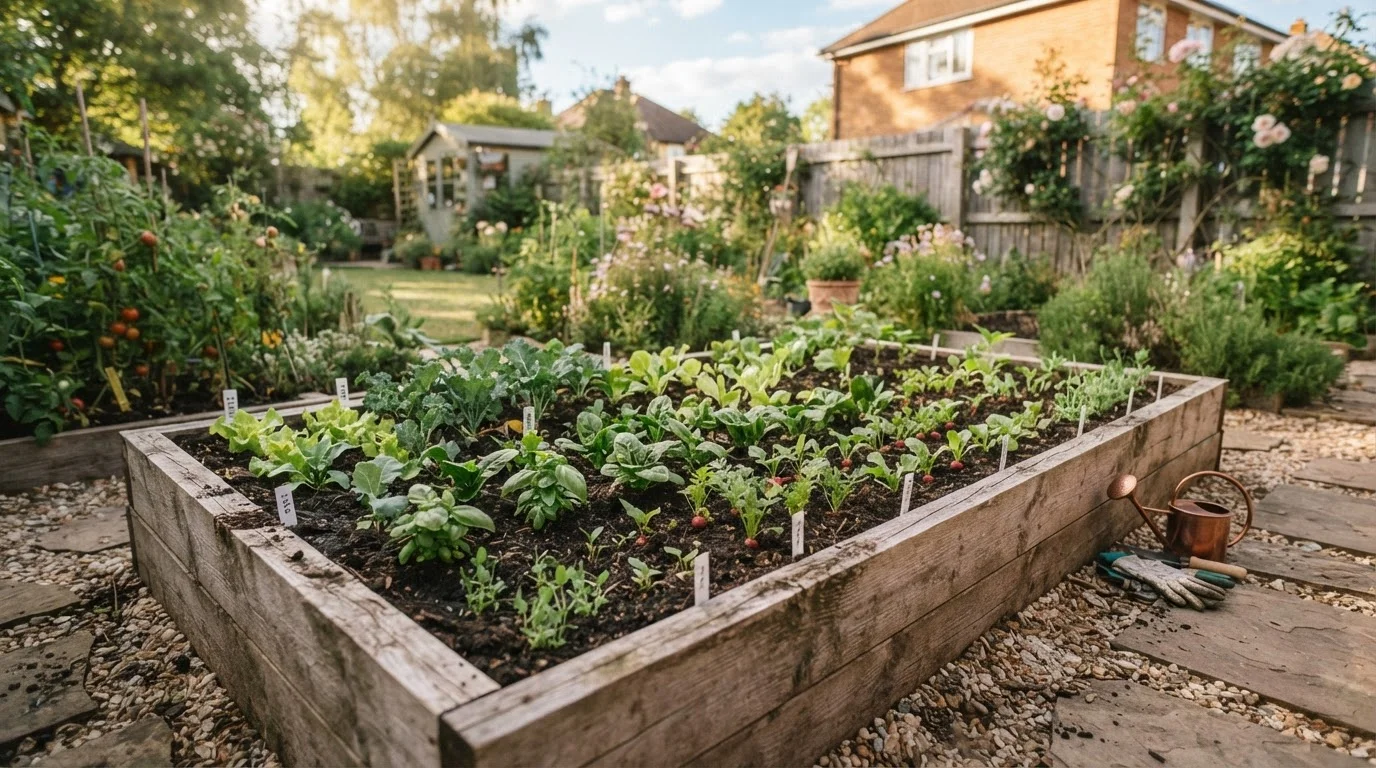
Resist the urge to start big. A 4×8-foot raised bed - or even a 4×4-foot plot - gives a first-time gardener plenty to learn without becoming unmanageable. You can always expand next season once you understand how your space grows and how much time the garden demands.
Sketch your layout on paper before you dig. Think about:
- Tall plants at the back: Place taller crops like tomatoes or pole beans on the north side so they don't shade shorter neighbors.
- Companion planting basics: Some plants help each other - basil near tomatoes is a classic pairing. Avoid planting members of the same family (like broccoli and cabbage) side by side, as they attract the same pests.
- Paths and access: Plan so you can reach every part of the bed without stepping on soil, which compacts it and harms root growth.
Before the digging begins, our spring garden prep guide walks you through a seasonal checklist to ensure your beds and tools are truly ready.
Compost
Decomposed organic material - such as food scraps and yard waste - that enriches soil with nutrients and improves its structure.
Soil pH
A measure of how acidic or alkaline your soil is, rated on a scale from 0 to 14. Most vegetables grow best in slightly acidic to neutral soil (around 6.0-7.0).
Transplant
A seedling that has been started in a container and is then moved into the garden rather than being direct-seeded into the ground.
Direct seeding
Planting seeds directly into garden soil outdoors, rather than starting them indoors or purchasing seedlings.
Companion planting
The practice of growing certain plants near each other because they have mutually beneficial effects, such as repelling pests or improving growth.
Mulch
A layer of material - such as straw, wood chips, or leaves - spread on the soil surface to retain moisture, moderate temperature, and reduce weeds.
Preparing Your Soil
Healthy soil is the foundation of a productive garden - no amount of sunlight or water compensates for poor growing medium. The ideal vegetable garden soil is loose, well-draining, and rich in organic matter. Dense clay or sandy soil both need improvement before planting.
Here's a practical approach for beginners:
- Clear the area of grass, weeds, and debris. For a new bed, smother existing grass with cardboard for several weeks before planting, or remove it manually.
- Test your soil pH if possible. Most vegetables prefer a slightly acidic to neutral range (roughly pH 6.0-7.0). Inexpensive test kits are widely available at garden centers.
- Amend generously with compost. Work two to four inches of compost into the top eight to twelve inches of soil. Compost improves drainage in clay soils and helps sandy soils retain moisture.
- Avoid compacting your work. Once amended, walk only on designated paths and avoid pressing down the planting area.
If you're building a raised bed, fill it with a mix of topsoil, compost, and an aerating material such as perlite or aged bark. A quality growing mix makes root development easier from day one.
Selecting and Planting Your Vegetables
Choose crops suited to your climate and the current season. Garden centers stock plants appropriate to your region at the right time, which takes the guesswork out of timing. Seed packets also list days to maturity and preferred conditions.
Reliable beginner crops include:
- Cool-season: Lettuce, spinach, kale, radishes, peas
- Warm-season: Zucchini, bush beans, cherry tomatoes, cucumbers
- Herbs: Basil, chives, parsley - easy to grow and immediately useful in the kitchen
When planting, follow spacing guidelines on seed packets or plant tags precisely. Crowded plants compete for nutrients and airflow, which invites disease. For transplants (seedlings purchased at a nursery), plant at the same depth they were growing in their container, firm the soil gently around roots, and water in well.
Pollinators play a critical role in vegetable production for crops like squash, cucumbers, and beans. If you'd like to actively support them, see our guide to growing a pollinator garden alongside your vegetables.
Watering, Feeding, and Ongoing Care
Once plants are in the ground, consistent care makes the difference between a struggling garden and a thriving one. The good news: most vegetable care routines take only a few minutes each day.
Watering: Aim for roughly one inch of water per week. Water deeply and less frequently rather than shallowly every day - this trains roots to grow downward, making plants more drought-resilient. Morning is the best time; wet foliage overnight encourages fungal disease.
Mulching: Apply two to three inches of straw, shredded leaves, or wood chips around (not touching) plant stems. Mulch conserves moisture, regulates soil temperature, and suppresses weeds dramatically.
Feeding: Compost-rich soil often provides enough nutrition early in the season. As plants grow - especially heavy feeders like tomatoes - a balanced, general-purpose fertilizer applied according to package directions helps sustain production. Avoid over-fertilizing with nitrogen, which produces lush foliage but fewer fruits.
Pest monitoring: Walk your garden regularly and inspect the undersides of leaves where many insects lay eggs. Hand-picking pests like caterpillars and squash bugs early is often more effective than waiting until an infestation is established.
Starting a garden is one of the most rewarding things a homeowner can do with their outdoor space. If you're settling into a new property and building healthy habits from the ground up, our first-year homeowner guide covers the broader context of caring for your home and yard.
Don't overwater - it's a common beginner mistake
Overwatering is one of the leading causes of vegetable garden failure for new gardeners. Waterlogged soil suffocates roots and encourages rot and fungal disease. Before watering, push your finger two inches into the soil near the base of a plant - if the soil still feels moist, wait another day before irrigating.