

Key Takeaways
Why Pollinator Gardens Matter - and What Makes Them Work
Bees, butterflies, moths, and even flies pollinate roughly one-third of the food we eat, according to widely cited estimates from agricultural and ecological research. Yet many common yard practices - monoculture lawns, chemical pest control, and highly manicured plantings - actively reduce the habitat these insects need to survive. A thoughtfully planted pollinator garden doesn't just look beautiful; it plays a direct role in supporting local ecosystems.
The difference between a garden that merely looks pretty and one that functions as genuine habitat comes down to plant selection, garden structure, and what you leave out (mainly pesticides). Native plants are the foundation: they produce pollen and nectar in forms that local pollinators have evolved to use. Many ornamental hybrids, while visually striking, have been bred in ways that reduce or eliminate those resources. For a deeper look at this trade-off, see Native Plants vs. Ornamental Hybrids.
Pollinator gardens also integrate naturally into broader sustainable yard practices. If you're working toward a more ecologically sound yard overall, see Sustainable Yard Practices Every Home Gardener Can Adopt for complementary strategies around water use, soil health, and wildlife support.
Garden fork or trowel
Used to loosen soil and dig planting holes for transplants and seedlings.
Compost or well-aged organic matter
Improves soil structure and fertility to support healthy plant establishment.
Mulch (wood chips or shredded leaves)
Suppresses weeds, retains soil moisture, and maintains moderate soil temperatures.
Watering can or drip irrigation
Delivers water consistently during the establishment period without wetting foliage unnecessarily.
Plant markers or garden stakes
Helps you track what is planted where, especially useful with seedlings that look similar early on.
Shallow dish or birdbath
Provides a water source for bees and butterflies; add pebbles so insects can land safely.
Planning and Planting Your Pollinator Garden
Success starts with an honest assessment of your site and a planting plan that accounts for your region, your soil, and your available space. You don't need a large yard - a 4×8-foot raised bed or even a cluster of large containers can provide meaningful habitat if planted well. What matters most is plant diversity, seasonal coverage, and avoiding the chemical inputs that undermine everything else.
Not All 'Wildflower' Seed Mixes Are Regionally Appropriate
Many mass-market wildflower seed mixes contain non-native or even invasive species that can outcompete local plants and provide limited benefit to native pollinators. Always verify that the species in a mix are appropriate for your region before planting. Your local cooperative extension office is a reliable free resource for region-specific plant lists.
Extend the Season with Overlapping Bloom Times
Map out your plants' bloom periods before you buy. Aim for at least one species flowering in early spring, several in summer, and one or two that bloom into fall. This ensures pollinators have continuous food sources rather than a feast-and-famine cycle through the season.
What you will need
Assess your site conditions
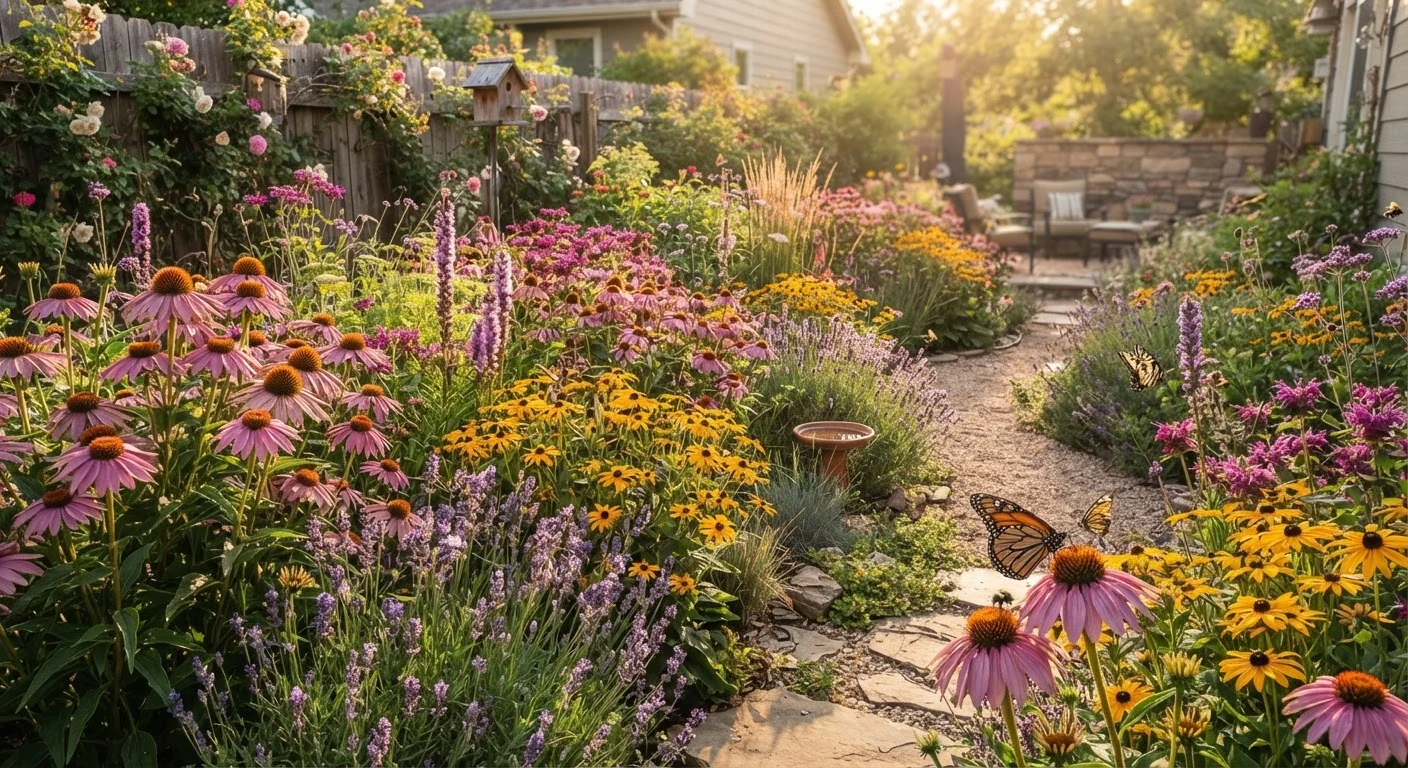
Before selecting any plants, spend a day observing how sunlight moves across your chosen space. Most pollinator-friendly plants - coneflowers, black-eyed Susans, milkweed, lavender - perform best in full sun (six or more hours daily). Also check drainage: water pooling after rain signals compacted or clay-heavy soil that will need amendment before planting.
Choose regionally appropriate native plants
Native plants have co-evolved with local pollinators, making them far more effective than many ornamental varieties at providing usable pollen and nectar. Research which species are native to your state or region - resources like your local cooperative extension service or native plant societies are reliable starting points. Aim for diversity: a mix of flowering shapes and sizes serves different pollinator species with different tongue lengths and body sizes.
For more on the trade-offs between native plants and ornamental hybrids, see Native Plants vs. Ornamental Hybrids: What to Know Before You Plant.
Plan for continuous bloom from spring through fall
A garden that peaks in July and goes dormant by August is only useful to pollinators for a fraction of the year. Build a planting plan that includes early bloomers (wild columbine, redbud), mid-season workhorses (coneflowers, bee balm, milkweed), and late-season plants (goldenrod, asters, Joe-Pye weed) that support migrating monarchs and over-wintering bees preparing for cold months.
Prepare and amend your soil
Loosen the soil to a depth of at least 8-10 inches using a garden fork. Work in two to three inches of compost to improve both drainage in clay soils and moisture retention in sandy soils. Avoid over-fertilizing with high-nitrogen blends - they push leafy growth at the expense of flowers, reducing the nectar and pollen your plants produce.
Plant in clusters, not scattered singles
Pollinators forage more efficiently when they can move between multiple flowers of the same species in close proximity. Plant in groups of three to five of each variety, and keep related plants together rather than distributing them individually across the bed. This also creates stronger visual impact for you as the gardener.
Eliminate or minimize pesticide use
This step is non-negotiable for a functional pollinator garden. Even pesticides labeled as organic or natural can harm beneficial insects if applied to open flowers. If pest pressure is unavoidable, spot-treat affected plants only, apply in the evening when bee activity is lowest, and never spray plants in bloom. Prioritize cultural controls - good plant spacing, healthy soil, and diverse plantings - which naturally reduce pest pressure over time.
Add water and nesting habitat
Pollinators need more than food. Place a shallow dish filled with fresh water and small pebbles near your garden - bees need to land safely to drink. For nesting, leave some areas of bare, undisturbed soil for ground-nesting native bees (which make up the majority of North American bee species). Leave hollow or pithy plant stems standing through winter to provide overwintering habitat for cavity-nesting bees and beneficial insects.
If you're new to gardening more broadly, the principles here pair well with the foundational guidance in Starting Your First Vegetable Garden from Scratch, and understanding perennials vs. annuals will help you build a garden that balances effort and longevity. For companion planting insights that can reinforce a healthy garden ecosystem, see Companion Planting: What Actually Helps.
Pesticides Can Undermine Your Entire Garden
Systemic insecticides - including some products sold as seed treatments or soil drenches - are taken up by the plant and can be present in pollen and nectar. Even low-level exposure can disorient or harm bees and other pollinators. Before applying any pest-control product near your pollinator garden, read labels carefully and consider non-chemical alternatives first.