

Key Takeaways
Why Sustainable Yard Practices Pay Off Long-Term
A beautiful yard doesn't have to come at the expense of water, soil health, or the local ecosystem. Sustainable yard practices work with natural processes rather than against them - and over time they tend to make gardening easier, not harder. Soil improves season by season, established plants need less intervention, and ecosystems that support natural pest control begin to build themselves.
The shift doesn't require a complete yard overhaul. Most sustainable habits are cumulative: small consistent changes - in how you water, what you plant, and how you manage soil - compound into a noticeably healthier outdoor space within a few seasons. See our guide to soil health for a deeper look at why what's underground drives everything above it.
Local Conditions Always Matter
Sustainable practices are most effective when matched to your specific climate, soil type, and region. What works in the Pacific Northwest may need adjustment in the Southeast or high desert. Check with your local cooperative extension service - a free resource in most U.S. states - for regionally tailored guidance.
Core Practices for a More Sustainable Yard
The following approaches are well-supported by horticultural research and widely recommended by extension services across the country. They're organized around the areas where home gardeners can have the greatest impact: soil, water, and plant selection.
Start a compost system to feed your soil naturally.
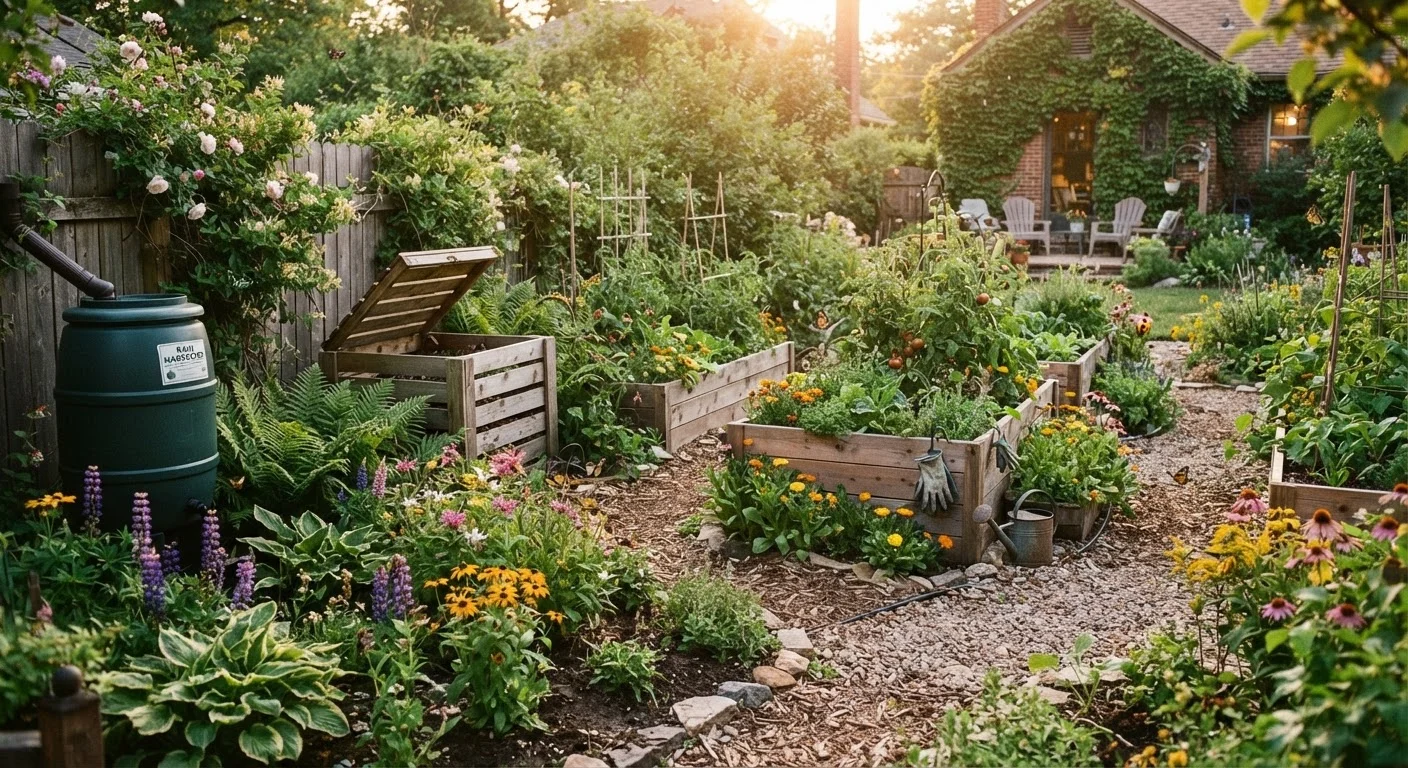
Compost adds organic matter that improves drainage in clay soils and water retention in sandy soils. It introduces beneficial microorganisms that help break down nutrients into forms plants can absorb, reducing or eliminating the need for purchased fertilizers. Over time, consistent composting builds the kind of living soil that supports healthy plant growth season after season.
Choose native or regionally adapted plants for the bulk of your plantings.
Plants native to your region have evolved alongside local soils, rainfall patterns, and wildlife - making them naturally more resilient and less demanding once established. They require less supplemental watering and are less vulnerable to local pests, reducing the need for interventions. They also provide food and shelter for native pollinators and birds that ornamental exotics cannot support as effectively.
Water deeply and infrequently rather than a little every day.
Shallow daily watering encourages roots to stay near the surface, making plants more vulnerable to drought and heat stress. Deep watering - soaking the root zone thoroughly and then allowing the soil to partially dry - trains roots to grow deeper into the soil where moisture is more stable. This approach also reduces total water consumption and lowers the risk of fungal disease caused by constantly wet foliage.
Apply a 2-3 inch layer of organic mulch around plants and beds.
Mulch is one of the most cost-effective tools in a sustainable yard. It slows moisture evaporation, keeps soil cooler in summer and warmer in early spring, suppresses weed germination, and gradually breaks down to add organic matter to the soil below. Consistent mulching can reduce supplemental watering needs noticeably over the course of a season.
Reduce lawn area and replace it with lower-maintenance planted zones.
Traditional turf lawns are among the most resource-intensive elements of a residential yard - requiring regular mowing, irrigation, and often fertilizer or pest treatments. Converting even a portion of lawn to planted beds with ground covers, ornamental grasses, or edible gardens significantly cuts water and maintenance demands while improving biodiversity. Smaller lawn areas are also easier to manage without power equipment.
Collect and use rainwater where local regulations allow.
Capturing roof runoff in a rain barrel or cistern reduces demand on municipal water supplies and provides plants with unchlorinated water they generally prefer. Even a modest 50-gallon rain barrel can capture meaningful volumes during a moderate rain event. Note that rainwater harvesting regulations vary by state and municipality - always verify what is permitted in your area before installing a collection system.
For guidance on choosing plants that deliver both ecological value and visual appeal, see our comparison of native plants and ornamental hybrids. And if you're thinking about bed layout, our raised beds vs. in-ground planting overview can help you plan effectively.
Where to Start: Quick Wins You Can Implement Today
If you're new to sustainable gardening or simply want to make faster progress, a few targeted actions deliver outsized results with minimal effort or investment. Focus on soil and water first - these two areas underpin everything else in your yard.
For a season-by-season approach to sustainable preparation, our spring garden prep checklist walks through soil amendments, bed clearing, and timing before the first seed goes in. Understanding what most gardeners get wrong about watering is also worth your time early in the season.
“Healthy soil is the foundation of a sustainable garden. Everything else - plant health, water efficiency, pest resistance - follows from what's happening beneath the surface.”
— Eliot Coleman, Longtime organic market gardener and author on sustainable growing practices