

Key Takeaways
Our Verdict
Native plants offer measurable ecological benefits - supporting pollinators, reducing inputs, and building soil health - while ornamental hybrids deliver design flexibility and extended bloom seasons. Neither category is inherently better; the most functional and beautiful gardens typically draw from both, informed by a clear sense of place and purpose.
| Best for | Recommended |
|---|---|
| Homeowners prioritizing wildlife support and low-input maintenance | Native Plants |
| Gardeners seeking bold seasonal color and design control | Ornamental Hybrids |
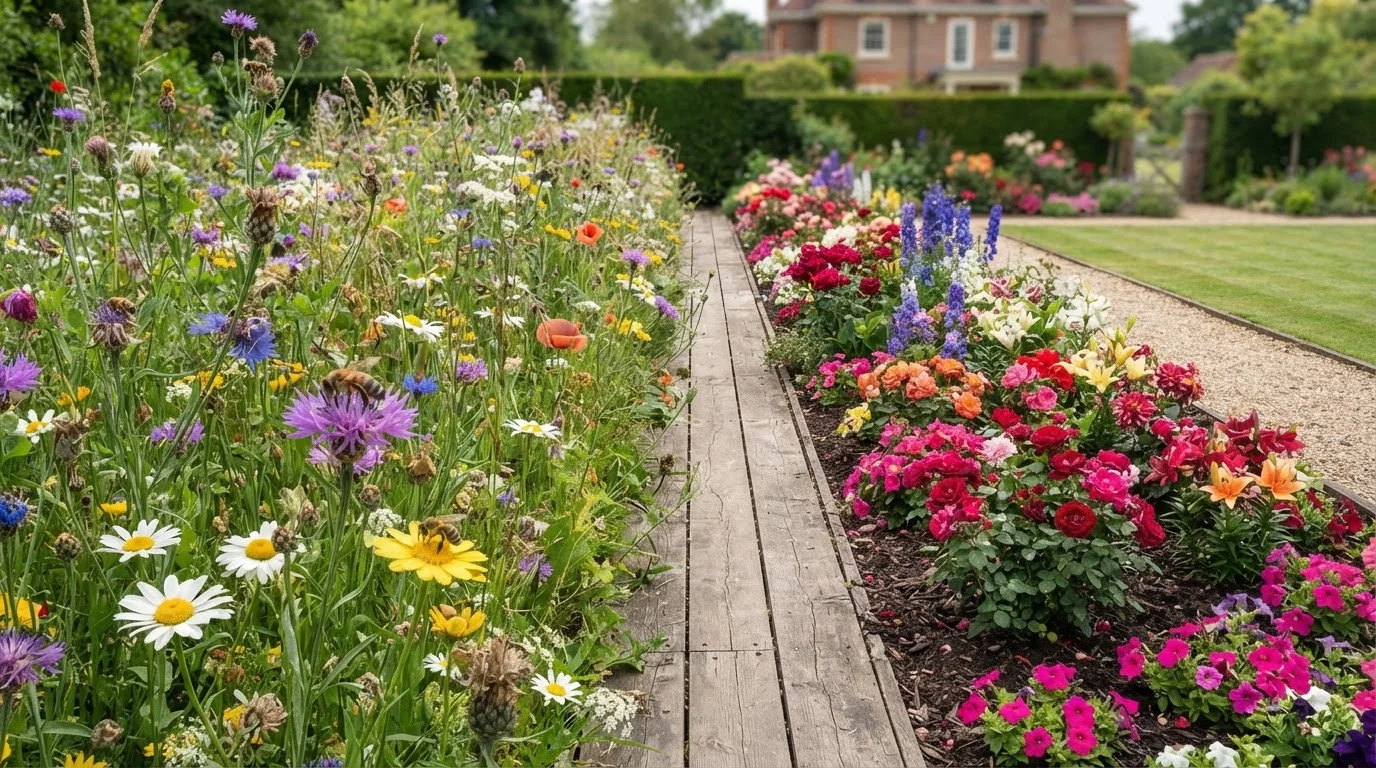
| Those wanting ecological function without sacrificing visual interest | A blended planting strategy |
Defining the Two Categories
Before comparing them, it helps to understand what each term actually means - because both are frequently misused.
Native plants are species that evolved in a specific region over thousands of years, developing relationships with local soils, rainfall patterns, insects, and birds. A plant native to the tallgrass prairies of Kansas, for example, is not automatically suited to coastal Georgia, even if it's sold as a "native" species. Provenance - where the plant's seed stock actually originated - matters considerably.
Ornamental hybrids are cultivated varieties (often called "cultivars") developed through selective breeding or hybridization to emphasize visual traits: larger flowers, more vivid colors, double blooms, extended flowering periods, or compact form. Some hybrids are derived from native species; others are bred from non-native parents entirely. The breeding process often stabilizes traits that appeal aesthetically but can reduce characteristics that benefit wildlife, such as pollen accessibility or nectar production.
This distinction matters when you're standing in a nursery row trying to decide between what looks native and what actually functions as native in your specific region.
Ecological Performance: Where Natives Have a Clear Edge
The ecological case for native plants is well-documented. Research in conservation biology and landscape ecology consistently shows that native plants support significantly more insect biodiversity than non-native ornamentals - and insects sit at the base of most terrestrial food webs.
Native plants co-evolved with local pollinators, which means their bloom timing, flower structure, and pollen chemistry often align with the needs of native bees, butterflies, and other insects. Some specialist bee species can only gather pollen from a narrow range of plant genera. When those plants disappear from a landscape, those bee populations follow.
Beyond pollinators, natives tend to:
- Establish deeper root systems that improve soil aeration and water infiltration
- Require less supplemental irrigation once established in appropriate conditions
- Tolerate local pest and disease pressures without chemical intervention
- Provide food sources - berries, seeds, foliage - for native birds and mammals
For a broader look at how plant choices connect to yard sustainability, see sustainable yard practices that support soil, water, and wildlife together.
| Native Plants | Ornamental Hybrids | |
|---|---|---|
| Wildlife Support | High - supports local insects, birds, and food webs | Variable - reduced in many heavily bred cultivars |
| Water Needs (Established) | Low - adapted to local rainfall patterns | Moderate to high - often requires supplemental irrigation |
| Fertilizer Requirements | Minimal - suited to native soil fertility | Moderate - often benefits from regular feeding |
| Design Flexibility | Limited palette and form options | Wide range of colors, sizes, and bloom times |
| Establishment Period | 1-3 seasons; needs consistent early care | Often faster to establish and bloom |
| Long-Term Maintenance | Generally lower once established | Ongoing deadheading, division, or replacement |
| Sourcing Complexity | Provenance matters; requires reputable sources | Widely available at most garden centers |
Where Ornamental Hybrids Deliver Real Value
Dismissing ornamental hybrids entirely would be a mistake. They serve legitimate purposes in home gardens, and their advantages are real - provided you understand what you're trading.
Hybrids are typically bred for reliability and visual impact: longer bloom windows, resistance to specific regional diseases, uniform growth habits, and colors that native species simply don't produce. For gardeners working with difficult microclimates - dense shade, compacted urban soil, or sites with irregular drainage - hybrids often provide more predictable results than natives that may struggle outside their ideal conditions.
Ornamental hybrids also expand design possibilities. If your goal is a specific color palette, a tidy border, or a formal garden structure, hybrids offer more control. This matters in residential contexts where aesthetic standards - including those of HOAs or neighborhood norms - may constrain how naturalistic a planting can look.
One important nuance: some cultivars derived from native species retain meaningful ecological function. A native coneflower (Echinacea) cultivar with a slightly deeper purple bloom may still support pollinators nearly as well as the straight species. Others - particularly double-flowered forms where petals replace reproductive structures - offer almost no benefit to insects. Checking with your local cooperative extension office or a native plant society can help you identify which cultivars bridge the gap effectively.
Look for the 'Straight Species' at Nurseries
When shopping for native plants, look for the straight species rather than named cultivars - for example, Echinacea purpurea rather than a branded variety. Straight species are genetically closest to wild plants and most reliably support local insect communities. Your state's native plant society often publishes a list of nurseries that sell locally sourced, non-hybridized natives.
Practical Considerations Before You Plant
Your decision shouldn't be purely philosophical. Several practical factors should shape how you balance natives and hybrids in your specific yard.
Soil and Site Conditions
Native plants perform best when matched to conditions that mirror their natural habitat. A sun-loving prairie plant won't thrive in part shade just because it's native to your state. Assess your soil type, drainage, sun exposure, and moisture levels before selecting any plant - native or hybrid.
Maintenance Capacity
Natives often require less ongoing input after establishment, but the establishment period - typically one to three growing seasons - can demand consistent watering and weeding. Hybrids may need more regular deadheading, fertilizing, or division, but some gardeners find that routine rewarding rather than burdensome. Consider your actual time and budget honestly. For related guidance on choosing plants that match your maintenance preferences, see our comparison of perennials vs. annuals.
Sourcing and Provenance
When purchasing native plants, ask nurseries about seed provenance. Plants propagated from local genotypes tend to outperform those grown from distant seed sources. Many states have native plant societies that maintain lists of reputable local nurseries. For ornamental hybrids, verify that the cultivar is suited to your USDA hardiness zone.
Blended Planting Strategies
Most experienced gardeners land on a mixed approach: native plants forming the ecological backbone of the garden, with ornamental hybrids used selectively for specific design goals or challenging spots. This strategy is also well-suited to companion planting principles - see which plant pairings actually help for evidence-based guidance on combining plants effectively.