

Key Takeaways
Option A
Perennials
The long-term backbone of a low-maintenance garden.
Best for: Gardeners who want established structure, reliable regrowth each year, and less replanting over time.
Option B
Annuals
The flexible, high-impact choice for seasonal color.
Best for: Gardeners who want bold, continuous blooms and the freedom to refresh their garden palette each season.
If you want to plant once and reduce yearly maintenance
Perennials
Perennials return each growing season from established root systems, meaning far less replanting and lower year-over-year effort once they're settled in.
If you want maximum color impact all season long
Annuals
Annuals are bred to bloom continuously from spring through frost, delivering dense, vivid color that most perennials can't match for sheer seasonal output.
If you're designing a balanced, year-round garden
Perennials
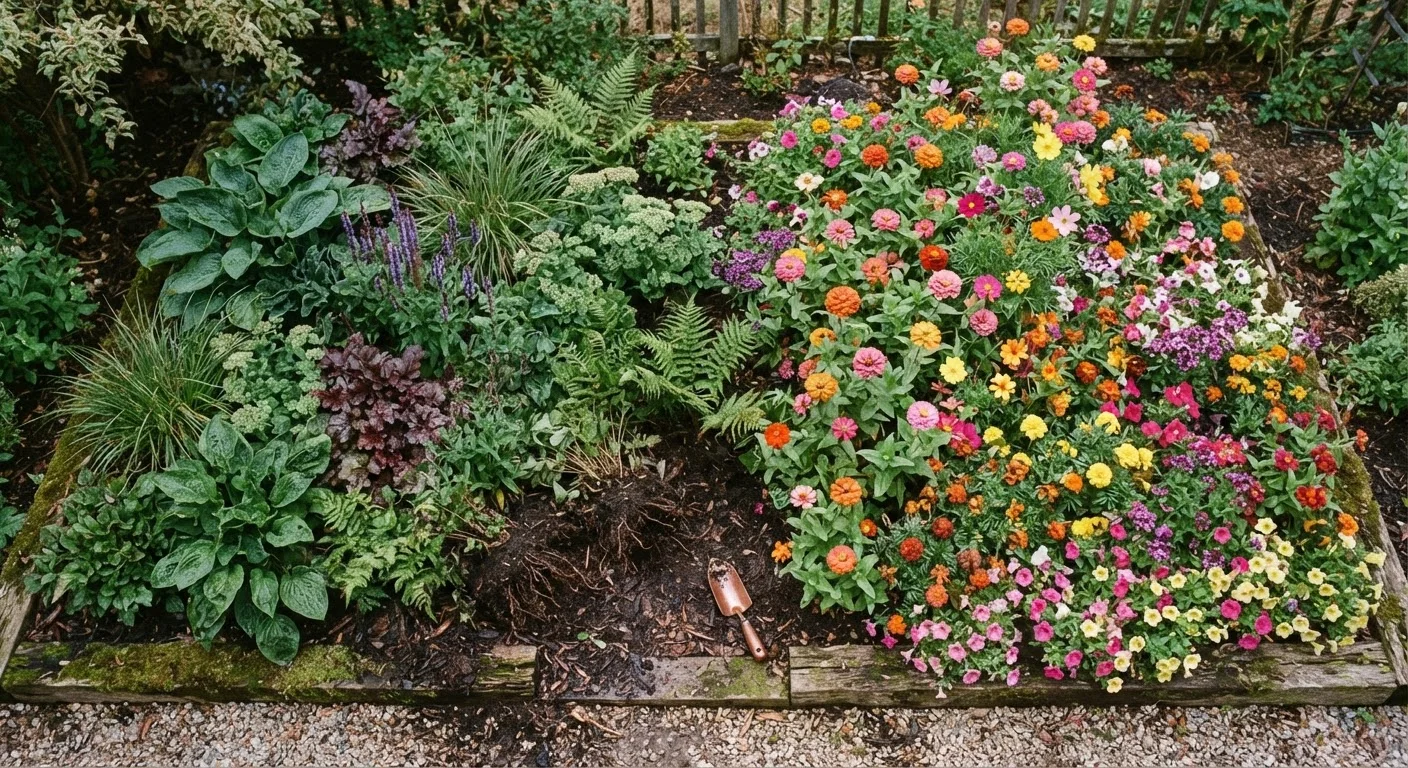
Use perennials as the structural foundation and fill gaps with annuals for color - this layered approach minimizes labor while keeping beds visually dynamic.
If you enjoy changing your garden's look each year
Annuals
Annuals give you a fresh slate every season, letting you experiment with new colors, textures, and arrangements without long-term commitment.
What Actually Separates Perennials from Annuals
The distinction is straightforward but consequential: annuals complete their full life cycle - germination, flowering, seed production, and death - within a single growing season. Perennials die back to the ground in winter (in most climates) but regrow from their root system each spring, often for many years.
That difference shapes almost every practical gardening decision you'll make, from budget to bed layout. Annuals like marigolds, impatiens, and zinnias are powerhouse bloomers that put all their energy into flowering for one season. Perennials like coneflowers, hostas, and black-eyed Susans invest energy into root development first, which is why they tend to bloom more modestly in their first year.
It's also worth noting that the perennial/annual label is climate-dependent. Some plants treated as annuals in cold northern states - such as lantana or certain salvias - behave as perennials in warmer USDA hardiness zones. Always check your local zone when evaluating plant labels.
| Criterion | Perennials | Annuals |
|---|---|---|
| Lifespan | Returns for multiple years | One growing season only |
| Bloom duration per season | Weeks to a couple of months | Spring through first frost |
| Upfront cost | Higher per plant | Lower per plant |
| Long-term cost | Lower (no annual replanting) | Higher (repurchased each year) |
| Year-one effort | Moderate (establishment phase) | Low (fast to establish) |
| Ongoing yearly effort | Low once established | Moderate (replanting, deadheading) |
| Design flexibility | Less - plants return in place | High - fresh layout each year |
| Pollinator support window | Varies by species | Long, continuous season |
The Maintenance Reality for Each Plant Type
If low effort is the goal, understanding the real maintenance demands of each type is essential - and neither category is automatically easy.
Perennials require patience upfront. The first season is largely about root establishment, not show. You'll need to water consistently, divide clumps every few years to prevent overcrowding, and cut back dead foliage in fall or early spring. However, once established, many perennials are remarkably self-sufficient. For a strong start, see our spring garden prep guide for soil prep and timing advice.
Annuals demand more recurring labor: purchasing or starting new transplants each season, replanting after the last frost, regular deadheading (removing spent blooms) to sustain flowering, and consistent watering since they can't draw on deep established roots. That said, they reward the effort quickly - most annuals begin flowering within weeks of planting.
3-5 years
Typical perennial establishment period for full performance
Many garden horticulture resources note that perennials reach their visual and growth peak within three to five years of planting.
6-8 weeks
Average time from transplant to bloom for common annuals
Fast-establishing annuals like zinnias and marigolds typically begin flowering within six to eight weeks of being transplanted into the garden.
Every 3-4 years
Recommended division interval for most clumping perennials
Dividing perennial clumps every three to four years prevents overcrowding, refreshes plant vigor, and gives you free plants to expand other beds.
For gardeners working with raised beds or containers, annuals are often a natural fit because the growing environment is refreshed each season anyway. Our container gardening guide covers that tradeoff in detail.
Building a Low-Effort Garden with Both
The most resilient, visually satisfying gardens rarely rely on one type alone. A practical strategy: use perennials as the structural layer and annuals as seasonal fill.
- Plant perennials in the back or middle of beds where they can expand year over year without crowding out neighbors.
- Use annuals in the front or in containers where you can easily swap them out and where their dense bloom habit reads best up close.
- Choose annuals that fill the gaps in your perennial bloom calendar - if your perennials peak in late summer, choose spring annuals like pansies to cover the earlier months.
- Group by water needs to cut down on irrigation time, keeping drought-tolerant perennials separate from moisture-loving annuals.
This layered approach also supports pollinators over a longer window, which benefits the whole garden ecosystem. If you're thinking about ecological impact alongside aesthetics, our article on native plants vs. ornamental hybrids explores how plant selection affects local wildlife. For broader sustainability practices, sustainable yard practices offers additional guidance on reducing inputs while improving soil health.
A Note on Regional Climate Differences
What counts as a perennial depends heavily on where you garden. A plant labeled a perennial in USDA Zone 8 may not survive winters in Zone 5. Before purchasing, confirm a plant's hardiness zone range and check your local extension service's recommendations for your specific region. This is especially important for borderline species like ornamental grasses or certain salvias.