

Key Takeaways
Works without access to in-ground soil
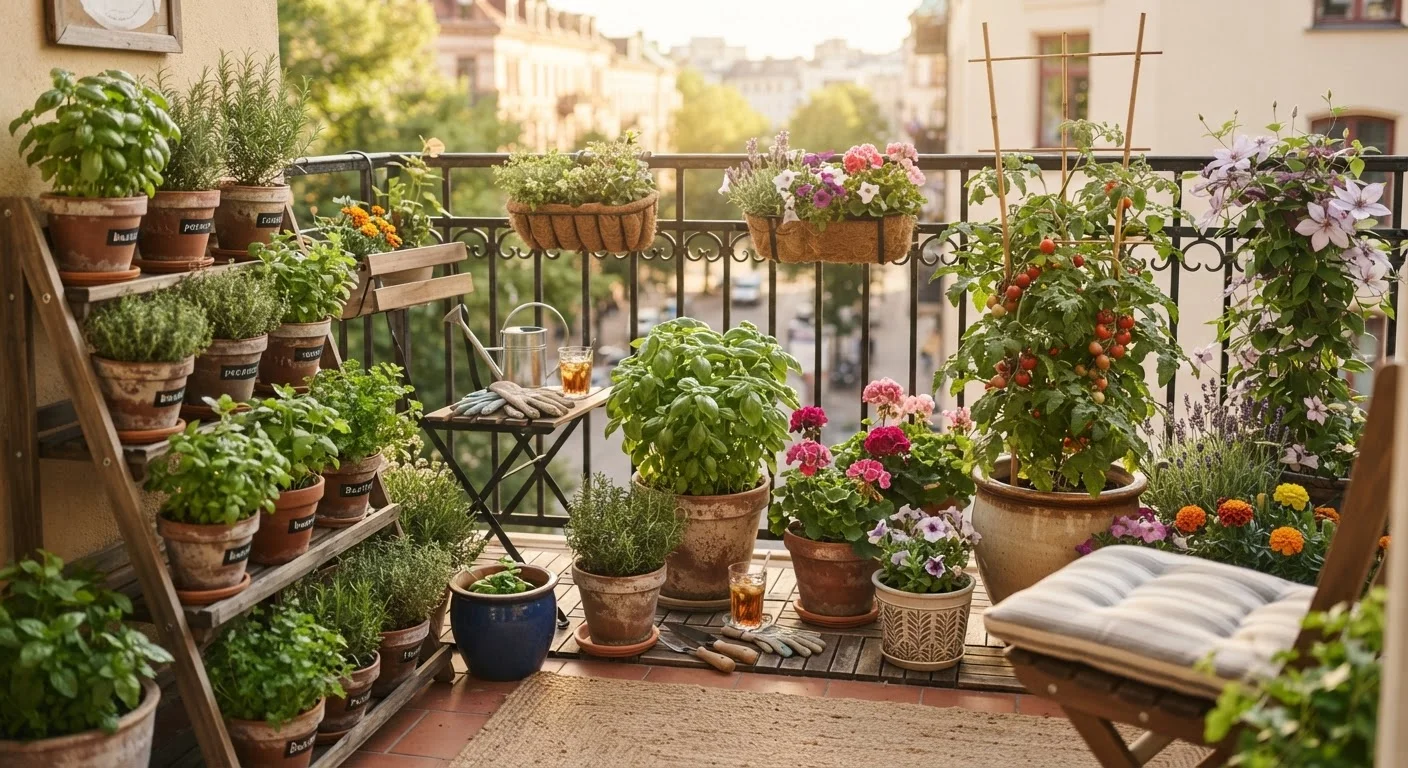
Patios, balconies, rooftops, and paved yards are all viable growing spaces. This makes container gardening the primary option for renters and urban dwellers who lack traditional garden beds.
Plants can be repositioned as conditions change
Containers let you follow sun patterns, protect plants from frost, or rearrange your layout seasonally - none of which is possible with fixed beds.
Soil conditions can be customized per container
You can tailor pH and drainage to each plant's needs rather than working within your yard's existing soil profile, which is especially useful for plants with specific requirements.
Pest and disease spread is easier to contain
Problems in one pot are physically isolated from the rest of your growing space, giving you more control before an issue escalates.
Low commitment to a permanent layout
Container arrangements can be changed from season to season without digging, making them practical for gardeners still figuring out their space.
Requires frequent, consistent watering
Containers dry out much faster than in-ground beds, especially in warm weather. Missing even a day or two can stress or kill plants in smaller pots.
Nutrients deplete faster than in garden beds
Potting mix holds limited nutrients and regular watering leaches them out. Container plants generally need supplemental fertilizing throughout the growing season.
Root space limits plant size and variety
Large vegetables, deep-rooted crops, and most trees cannot thrive in standard containers. Choosing the wrong plant for the pot size is one of the most common causes of poor results.
Cumulative costs can exceed in-ground alternatives
Quality containers, potting mix, and ongoing inputs add up. Unlike in-ground soil, potting mix also degrades and typically needs refreshing every one to two seasons.
Vulnerable to temperature extremes
Containers offer little insulation - roots can freeze in cold winters or overheat in summer sun, stressing or killing plants that would survive the same conditions in the ground.
Our Verdict
Container gardening is a genuinely practical option for small-space growers, renters, and anyone who wants gardening flexibility without committing to permanent beds. It asks more of you on watering and feeding than in-ground planting does, and it won't suit every plant or every budget. But when matched to realistic expectations and the right plant choices, it's a rewarding way to grow food, herbs, and ornamentals in almost any outdoor space.
Best suited to apartment dwellers, renters, urban gardeners with limited ground space, and homeowners who want movable, low-commitment planting options.
What Container Gardening Actually Involves
Container gardening means growing plants in pots, planters, window boxes, or any portable vessel rather than directly in the ground. It's one of the most accessible entry points into home growing - no tilling, no soil amendment in a large area, and no permanent footprint in your yard. That said, it's not a simplified version of traditional gardening so much as a different discipline with its own demands and rewards.
The basics include choosing appropriate containers (with drainage holes), using a quality potting mix rather than garden soil, selecting plants suited to confined root space, and staying on top of watering and fertilizing more consistently than you would with ground beds. For a direct comparison of alternatives, see raised beds vs. in-ground planting to understand how container growing stacks up against other setups.
The Genuine Advantages
Container gardening earns its popularity for real reasons, not just aesthetic ones.
Works without access to in-ground soil
Patios, balconies, rooftops, and paved yards are all viable growing spaces. This makes container gardening the primary option for renters and urban dwellers who lack traditional garden beds.
Plants can be repositioned as conditions change
Containers let you follow sun patterns, protect plants from frost, or rearrange your layout seasonally - none of which is possible with fixed beds.
Soil conditions can be customized per container
You can tailor pH and drainage to each plant's needs rather than working within your yard's existing soil profile, which is especially useful for plants with specific requirements.
Pest and disease spread is easier to contain
Problems in one pot are physically isolated from the rest of your growing space, giving you more control before an issue escalates.
Low commitment to a permanent layout
Container arrangements can be changed from season to season without digging, making them practical for gardeners still figuring out their space.
The flexibility to reposition plants is especially valuable for gardeners dealing with partial shade, harsh afternoon sun, or unpredictable microclimates. Moving a heat-stressed pot into shade takes seconds. Rearranging a patio layout for a gathering or a new season requires no tools. If you're interested in how containers can contribute to a well-designed outdoor space, designing a backyard that works year-round offers useful layout context.
Pest and disease management is also more contained - literally. A fungal problem or pest infestation in one pot doesn't automatically spread through an entire bed. Soil conditions can be tailored precisely per container, which matters when you want to grow acid-loving blueberries alongside Mediterranean herbs that prefer lean, well-drained conditions.
The Real Drawbacks
Honest assessment means looking at the limitations that catch new container gardeners off guard.
Requires frequent, consistent watering
Containers dry out much faster than in-ground beds, especially in warm weather. Missing even a day or two can stress or kill plants in smaller pots.
Nutrients deplete faster than in garden beds
Potting mix holds limited nutrients and regular watering leaches them out. Container plants generally need supplemental fertilizing throughout the growing season.
Root space limits plant size and variety
Large vegetables, deep-rooted crops, and most trees cannot thrive in standard containers. Choosing the wrong plant for the pot size is one of the most common causes of poor results.
Cumulative costs can exceed in-ground alternatives
Quality containers, potting mix, and ongoing inputs add up. Unlike in-ground soil, potting mix also degrades and typically needs refreshing every one to two seasons.
Vulnerable to temperature extremes
Containers offer little insulation - roots can freeze in cold winters or overheat in summer sun, stressing or killing plants that would survive the same conditions in the ground.
Watering is the most consistent challenge. Containers - especially unglazed terracotta - lose moisture rapidly, and in hot weather, daily or twice-daily watering isn't unusual. Understanding how soil moisture actually works will help you avoid the two most common mistakes: overwatering and letting pots dry completely. Our guide on what most home gardeners get wrong about watering covers this in practical detail.
Fertility is the second ongoing need. Because potting mix has limited nutrient reserves and watering flushes nutrients out over time, container plants need regular fertilizing - something in-ground plantings with healthy soil often don't require at the same frequency.
Container Size Matters More Than You Might Expect
A common mistake is choosing containers that are visually appealing but too small for the plant's root system. As a general rule, most vegetables need at least 5 gallons of soil volume, while tomatoes and peppers do better in 10 gallons or more. Undersized containers stress plants, reduce yield, and increase how frequently you need to water. Always check mature plant size before buying a pot.
Plant Selection: Where Containers Shine and Where They Struggle
Success in containers starts with plant choice. Herbs - basil, parsley, chives, mint, rosemary - are genuinely well-suited to pots and among the most rewarding container crops for everyday use. Compact or determinate tomato varieties, peppers, lettuce, radishes, and shallow-rooted flowers like marigolds and petunias also perform reliably.
Deep-rooted vegetables (carrots, parsnips, large squash) and most fruit trees are poorly suited to standard containers without very large, deep vessels. Perennial shrubs can live in containers for years but will eventually need upsizing or in-ground planting. For guidance on balancing annuals and perennials in your overall garden strategy, perennials vs. annuals is a helpful companion read.
80%+
Of herbs grow successfully in containers
Most culinary herbs are well-adapted to container culture, making them consistently reliable choices for small-space growers.
2×
Faster moisture loss vs. in-ground beds
Container soil can dry out roughly twice as fast as an equivalent volume of in-ground soil, particularly in terracotta pots or hot climates.
Cost and Sustainability Considerations
Startup costs for container gardening vary considerably. A few nursery pots and a bag of potting mix can cost under $30. A curated patio arrangement with glazed ceramic planters, quality soil, and drip irrigation can run into hundreds of dollars. Ongoing costs - potting mix replacement, fertilizer, container upgrades - add up over seasons in a way that an established in-ground garden does not.
On the sustainability side, standard peat-based potting mixes raise legitimate environmental concerns. Coir-based or compost-heavy alternatives are increasingly available and preferable where possible. Enriching container soil with home compost is one practical way to reduce both cost and reliance on commercial inputs - composting at home explains how to get started. For broader approaches to low-impact gardening, sustainable yard practices covers water-wise and soil-building strategies that apply to container gardeners too.