

Key Takeaways
Start with a Layout That Reflects How You Actually Live
Before selecting a single paver or plant, spend a few days observing your yard. Note where morning sun falls, where afternoon shade naturally pools, and which paths you already walk without thinking. These patterns reveal the skeleton of a functional layout - one that works with your habits rather than against them.
Effective outdoor spaces are organized around zones: a dining area, a lounging area, a play or utility area, and a garden buffer. Keeping zones loosely defined - through changes in surface material, level, or plantings - gives the yard structure without making it feel rigid. Think of it like interior design applied outdoors. Our guide to open-concept vs. defined room layouts explores this balance of openness and definition, and the same logic translates outside.
Allow at least 36 inches of clear circulation between furniture groupings so movement feels natural. Position your primary seating area within a comfortable visual line to the house entrance - people naturally gravitate toward spaces that feel connected, not stranded at the far end of a yard.
Sketch your yard to scale on graph paper and mark the sun arc across morning, midday, and late afternoon before finalizing any zone placement. What feels shady at 9 a.m. may be fully exposed by 3 p.m.
Sun angle shifts substantially through the day and across seasons, and misaligning a seating area with peak sun exposure is one of the most common - and most preventable - outdoor design errors.
When selecting paving materials, order a sample and leave it outside for a full week in current weather conditions before committing to a large quantity. Natural variation in color and texture can look very different at scale.
Material appearance changes significantly between showroom lighting and outdoor daylight, and surface texture can reveal traction or maintenance concerns that aren't obvious from a small tile in a catalog.
Shade Strategies That Make Summer Bearable
Unmanaged sun exposure is the single most common reason outdoor spaces sit unused from June through August. Addressing shade proactively transforms a hot, blinding patio into a genuinely comfortable retreat. For more on how heat affects outdoor plantings, see our article on why gardens struggle in summer heat.
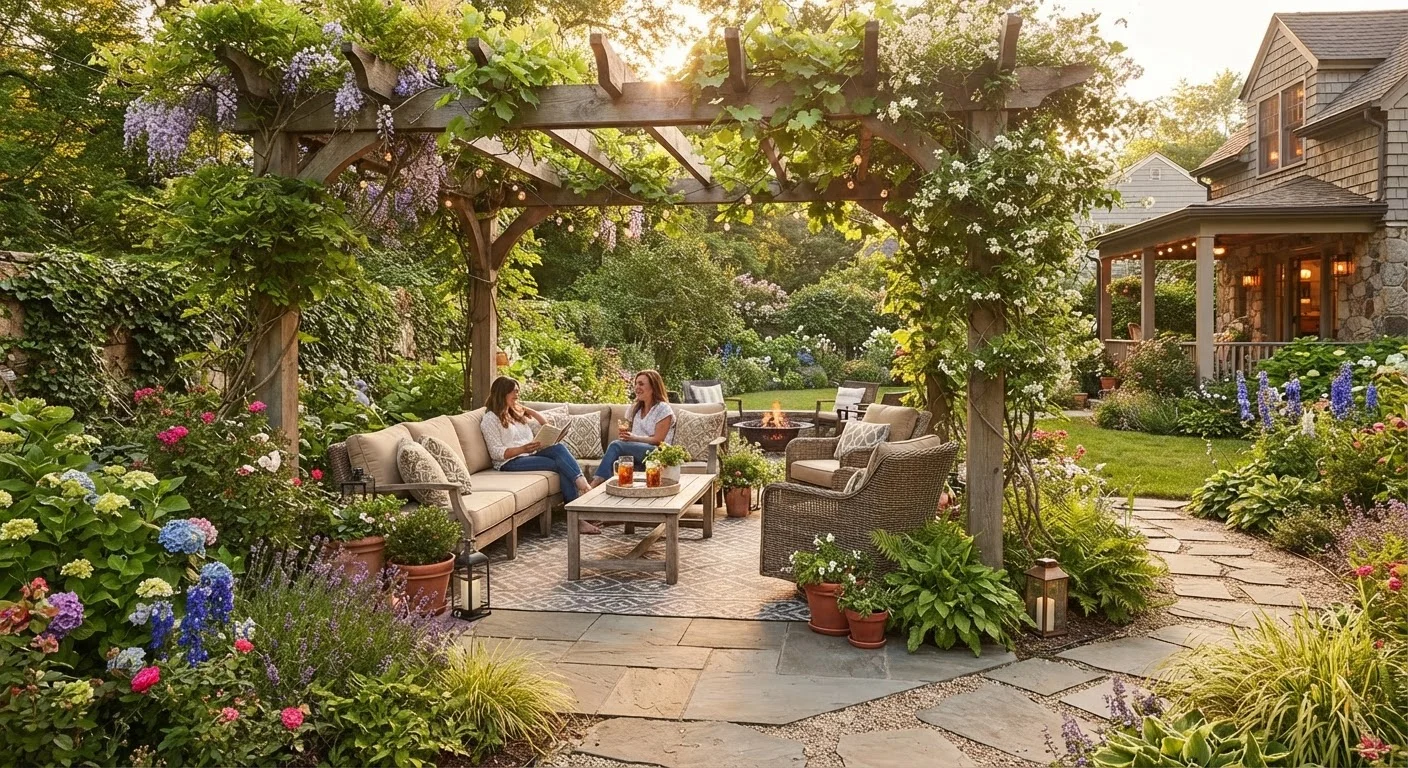
Shade solutions fall into two broad categories: built structures and living canopy. Pergolas, shade sails, and awnings provide immediate, predictable coverage. A pergola with open rafters reduces solar gain while maintaining air circulation - critical in humid climates. A retractable awning gives flexibility when you want warmth in shoulder seasons.
Living shade - deciduous trees and large shrubs - takes longer to establish but pays dividends for decades. A well-placed deciduous tree blocks intense summer sun while allowing winter light through bare branches. Position trees on the south or west side of a seating area for maximum afternoon shade. Allow adequate clearance from structures and underground utilities; consult a certified arborist before planting large trees near foundations or service lines.
Check Utility Lines Before Planting Trees
Large trees planted too close to underground water, gas, or electrical lines can cause significant damage as roots mature. Before digging, contact your local utility-locate service (in the U.S., call 811) to have underground lines marked at no cost. This is a legally required step in most states before any digging project.
Choosing Plants That Carry the Space Year-Round
A backyard that looks appealing only in May and June is a missed opportunity. A thoughtful plant palette creates visual interest across all four seasons by layering bloom times, foliage textures, and structural forms.
The foundation should be evergreen structure - boxwood, yew, ornamental grasses, or native hollies provide year-round form even when nothing is flowering. Layer deciduous shrubs with interesting bark or berries (such as dogwood or winterberry) for winter appeal. Then add perennials for reliable summer color with minimal replanting effort. Our breakdown of perennials vs. annuals can help you strike the right balance for your maintenance tolerance.
For patios and smaller yards, container gardening offers the flexibility to swap plants seasonally without disturbing beds. Containers also let you introduce tender specimens you'd otherwise lose to frost. Adding native flowering plants along borders supports local pollinators - see our guide on growing a pollinator garden for plant selection and arrangement tips.
Extending the Season into Fall and Winter
With a few intentional additions, most backyards can remain usable well into autumn and, in milder climates, through winter. The key is managing heat and wind rather than trying to fight the season outright.
A fire feature - whether a built-in fire pit, a freestanding chiminea, or a gas fire table - extends comfortable outdoor evenings by weeks. Radiant warmth from a fire is remarkably effective for gathering spaces, though placement should keep flames clear of overhead structures and flammable plantings. Always follow local regulations, which vary by municipality, regarding open flame use in residential yards.
Thermal mass matters too. Stone and brick surfaces absorb daytime heat and release it gradually into the evening, keeping a patio noticeably warmer after sunset than a wood deck. Screening prevailing winds with a hedge, fence, or lattice panel can make a 45°F evening feel significantly more comfortable.
For ongoing upkeep across all seasons, our year-round home maintenance reference covers the seasonal tasks that protect outdoor structures and surfaces from weather damage.
Surfaces, Materials, and Upkeep Realities
Surface choice is a long-term commitment, and it shapes maintenance requirements more than almost any other decision. Concrete is durable and relatively low-maintenance but can crack in freeze-thaw climates if not properly installed with expansion joints. Natural stone is beautiful and long-lasting, though it requires sealing and can become slippery when wet. Composite decking has improved significantly and resists rot and fading, but lower-quality versions can feel hollow underfoot and warp in extreme heat.
Gravel and decomposed granite are affordable and permeable - important for managing stormwater runoff - but require periodic replenishment and can be uncomfortable for barefoot use. Permeable pavers offer a middle ground: structural, attractive, and environmentally sound. Adopting sustainable yard practices such as permeable surfaces and reduced lawn area can also lower water bills and reduce runoff into storm systems.
Whatever surface you choose, budget for periodic maintenance from the outset. A surface that's ignored for several years may require full replacement rather than a simple refresh. Review all planned hardscaping with your local building department - many jurisdictions require permits for patios above a certain square footage or for structures like pergolas and retaining walls.
This article is for general informational and educational purposes. Always verify local building codes, permit requirements, and safety regulations with your municipality before beginning any outdoor construction or modification project.