

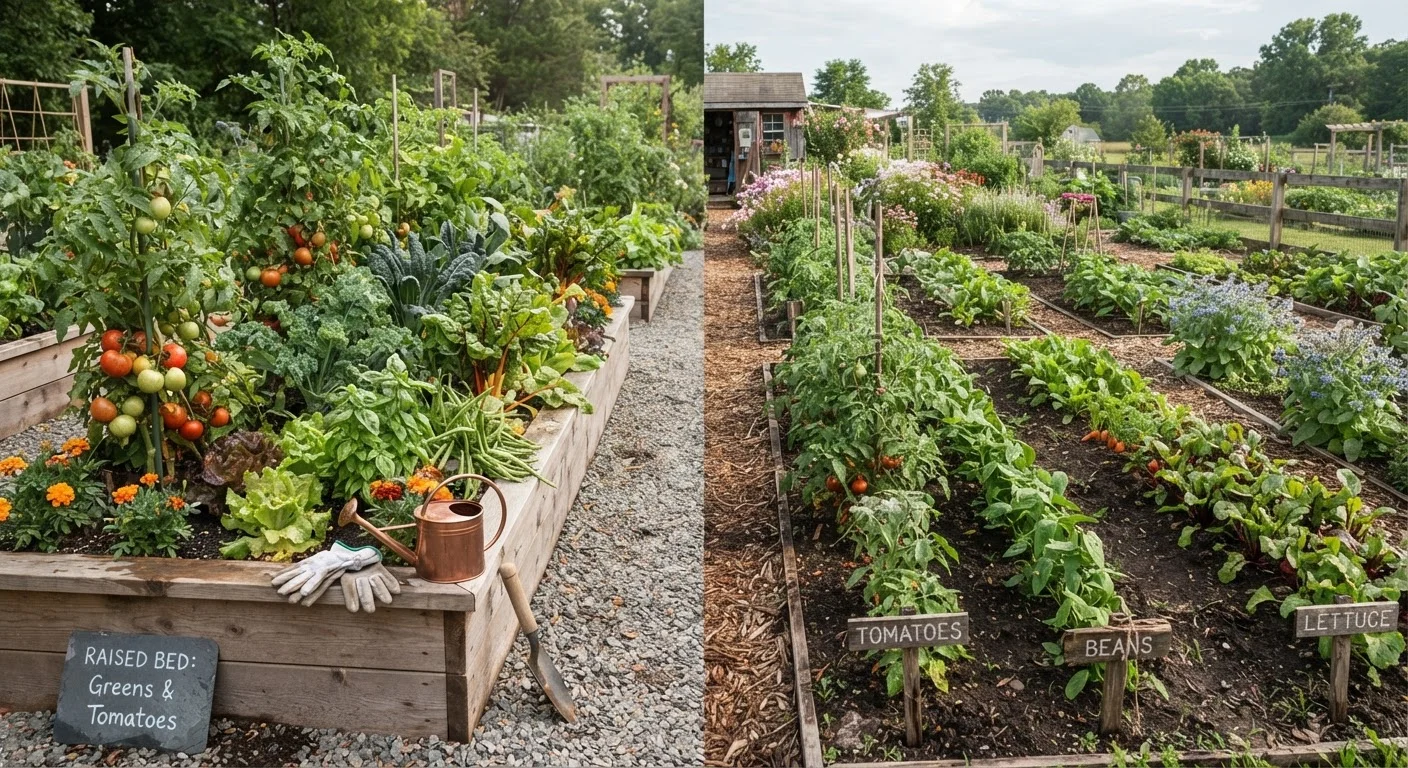
Key Takeaways
Option A
Raised Bed Gardening
The controlled, high-performance setup for challenging conditions.
Best for: Gardeners dealing with poor native soil, limited mobility, drainage issues, or who want tight control over their growing environment.
Option B
In-Ground Planting
The traditional, lower-cost approach for established, workable soil.
Best for: Homeowners with healthy native soil and space who want a lower upfront investment and room to grow at scale.
If your native soil is compacted, rocky, or contaminated
Raised Bed Gardening
Raised beds let you bypass poor native soil entirely by filling with a custom mix, eliminating the need for expensive remediation.
If you're gardening on a tight budget or a large plot
In-Ground Planting
In-ground gardens have minimal startup costs and scale easily without the expense of lumber, hardware, and imported soil.
If you have mobility limitations or back and knee issues
Raised Bed Gardening
Beds built to 24-30 inches tall eliminate the need to kneel or crouch, making gardening far more accessible and comfortable.
If you want to grow deep-rooted crops like pumpkins, corn, or sprawling squash
In-Ground Planting
In-ground beds provide unlimited root depth and horizontal spread that most raised beds simply cannot accommodate cost-effectively.
If you're planning a long-term, evolving backyard garden layout
Raised Bed Gardening
Defined beds create clear structure and can anchor a cohesive outdoor living design that adapts as your yard and needs change over time.
The Core Difference: Soil You Control vs. Soil You Inherit
The most fundamental distinction between raised beds and in-ground planting comes down to where your plant roots live. In-ground planting uses whatever soil exists in your yard, amended over time. Raised beds sit above grade and are filled with a custom growing medium - typically a blend of topsoil, compost, and other organic matter - that you choose and maintain independently.
This difference shapes nearly every other variable: drainage, nutrition, weed pressure, pest management, and how much physical work the garden demands each season. For gardeners in regions with heavy clay, sandy, or compacted soil, raised beds remove a major barrier to success. For those fortunate enough to have deep, loamy native soil, in-ground planting may already offer an excellent growing environment with far less setup work.
Before deciding, it's worth investing time in soil preparation - whether you're amending in-ground beds or selecting your raised bed fill. Our spring garden prep guide walks through soil testing, amendments, and timing that apply to both methods.
| Criterion | Raised Beds | In-Ground Planting |
|---|---|---|
| Startup Cost | Moderate to high | Low to minimal |
| Soil Control | Full - custom fill | Limited - amend native soil |
| Drainage | Excellent, drains fast | Variable by soil type |
| Spring Warmup | Earlier, 2-3 weeks faster | Slower in cool climates |
| Weed Pressure | Lower initially | Typically higher |
| Scalability | Costly at large scale | Scales easily and cheaply |
| Accessibility | High - no kneeling needed | Lower - ground-level work |
| Deep-Root Crops | Limited by bed depth | Unrestricted root depth |
Cost, Setup, and Long-Term Maintenance
Upfront costs differ significantly between the two approaches. Building a single 4×8-foot raised bed - including lumber or composite boards, corner hardware, landscape fabric, and fill soil - can run anywhere from $100 to several hundred dollars depending on materials and local soil prices. In-ground planting, by contrast, may require only a soil amendment like compost and basic tilling, keeping startup costs minimal.
That said, long-term maintenance tells a more nuanced story. Raised beds tend to need annual topping-off of compost as the fill settles, and wooden frames typically require replacement every 7-15 years depending on the wood species and climate. In-ground beds require regular soil enrichment too, but the ground itself doesn't degrade structurally. Weed pressure is often lower in raised beds initially - especially when lined with landscape fabric - but bare-root weeds and wind-seeded plants do eventually establish in any open soil.
6-8 in.
Minimum recommended raised bed depth
Most extension horticulture programs recommend at least 6 inches of growing medium for shallow-rooted crops, and 12+ inches for root vegetables.
2-3 weeks
Earlier spring planting in raised beds
Raised bed soil typically warms faster than in-ground soil in spring, allowing earlier planting of cool-season crops in many U.S. climates.
$100-$300+
Typical cost of one 4×8 raised bed
Costs vary widely based on material choice (cedar, composite, metal) and local fill soil pricing - larger or multiple beds multiply expenses accordingly.
For gardeners thinking about integrating beds into a broader landscape plan, the structural definition of raised beds can double as a design asset. See how bed placement fits into a larger outdoor vision in our guide to designing a backyard that works year-round.
Drainage, Warmth, and Growing Season
Raised beds drain faster than in-ground plots because water moves freely through the elevated growing medium and out through the base. This is a clear advantage in regions with heavy rainfall or clay-heavy soil where waterlogging can rot roots. However, that same fast drainage means raised beds also dry out more quickly in hot, dry conditions - often requiring more frequent watering. Pairing a raised bed setup with a drip irrigation system can help manage moisture efficiently.
Temperature is another advantage of raised beds. Elevated soil absorbs heat more readily and warms up earlier in spring, which can give cool-season crops like lettuce, spinach, and peas a meaningful head start of two to three weeks compared to in-ground beds in the same yard. In fall, that same warmth retention can extend harvests slightly. In-ground soil stays cooler longer in spring but also holds moisture more consistently through summer heat.
Contaminated Soil: A Key Consideration
If your yard was previously used for industrial purposes, is near a heavily trafficked road, or has older painted structures, native soil may contain lead or other contaminants. In these situations, raised beds with a solid base or thick landscape fabric barrier are generally the safer choice for edible gardens. If you're uncertain about your soil's safety, a soil test through your local cooperative extension service can provide clarity before you plant anything edible.
Plant Choices and Scale
Raised beds excel with compact, high-value crops: salad greens, herbs, tomatoes, peppers, carrots, and root vegetables that benefit from loose, well-drained soil. The controlled environment lets you tailor soil pH and nutrient levels with precision - particularly useful for crops with specific requirements. For ideas on balancing plant types that will thrive in either setting, our guide on perennials vs. annuals is a useful companion read.
In-ground planting wins when scale matters. Large vegetable gardens, sprawling melon patches, row crops, or extensive flower beds are far more economical to establish in native soil. Deep-rooted plants like fruit trees, asparagus, and large squash also perform better with unrestricted root access to native soil layers. If your goal is a large, diverse planting area, in-ground beds let you expand without a proportional rise in material costs.
Neither method is universally superior - the best setup is the one that matches your site conditions, physical needs, and gardening ambitions. For those who want to go further with sustainability in either setup, sustainable yard practices offers practical ways to reduce water use and improve soil health naturally over time.