

Key Takeaways
Drip Irrigation
Drip irrigation is a watering method that delivers water slowly and directly to the root zone of individual plants through a network of tubes and small emitters. Instead of spraying water through the air or flooding the soil surface, it releases water at a controlled, low flow rate right where roots can absorb it. This targeted approach reduces evaporation and runoff compared to conventional watering methods.
Drip systems typically operate at low pressure (8-30 PSI) and can be integrated with pressure regulators, filters, and timers to automate delivery and maintain consistent soil moisture.
How a Drip Irrigation System Actually Works
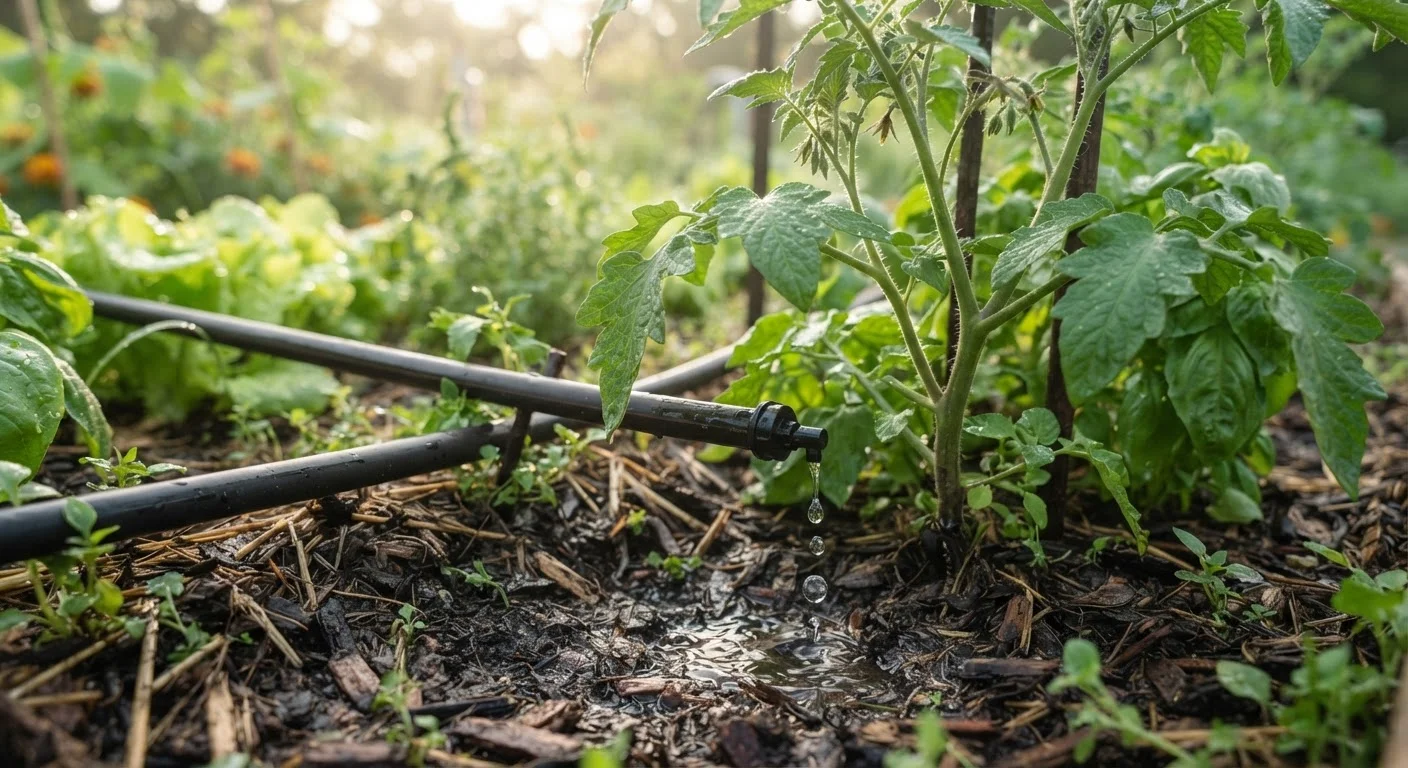
At its core, a drip irrigation system consists of a few key components working together: a water source connection, a pressure regulator, a filter, mainline tubing, and smaller emitter lines (sometimes called drip tape or soaker lines) with individual emitters or holes along their length. Water travels from your outdoor spigot or irrigation supply line through the mainline, then branches into smaller lateral tubes that run alongside your plants.
Each emitter - a small, precisely sized outlet - releases water at a set flow rate, typically measured in gallons per hour (GPH). Common residential emitters range from 0.5 to 2 GPH. By releasing water this slowly, the system allows it to seep directly into the soil rather than pool on the surface or run off before roots can absorb it.
Most home systems also include a timer, which automates watering schedules and removes the guesswork from manual irrigation. This is where drip systems become especially practical - consistent, hands-off watering that responds to a set schedule rather than memory or habit. Understanding the real science of soil moisture and plant needs helps you configure your timer settings more effectively.
Drip Irrigation vs. Sprinklers: Key Differences
The most fundamental distinction between drip irrigation and sprinkler systems is where the water lands. Sprinklers broadcast water through the air in a wide arc, wetting both the soil and the foliage above it. Drip systems keep water at ground level, targeting roots directly. That difference has several downstream effects.
30-50%
Potential water savings vs. sprinklers
The U.S. Environmental Protection Agency (EPA) notes that drip irrigation can use 20-50% less water than conventional overhead irrigation methods, depending on system design and local conditions.
90%+
Estimated application efficiency
Irrigation industry guidelines commonly cite drip systems as achieving application efficiencies of 90% or higher, compared to roughly 65-75% for sprinkler systems, because less water is lost to evaporation and runoff.
8-30 PSI
Typical operating pressure range
Drip irrigation systems are designed to run at low pressure - most require a pressure regulator when connected to standard residential water lines, which typically supply 40-80 PSI.
Water efficiency: Overhead watering loses a significant portion of moisture to evaporation, wind drift, and surface runoff before it ever reaches roots. Drip irrigation minimizes these losses by delivering water slowly and close to the soil surface.
Plant health: Persistently wet foliage can promote fungal diseases like powdery mildew and leaf spot. Because drip systems don't wet leaves, they can reduce the risk of these conditions in vulnerable plants such as tomatoes, squash, and roses.
Weed suppression: Sprinklers water the entire surface, including bare soil between plants where weed seeds germinate. Drip irrigation wets only the root zones of your chosen plants, which can modestly reduce weed pressure between rows.
Coverage: Sprinklers are far more practical for lawns and large open areas. Drip systems are better suited to defined beds, borders, and rows.
Which Gardens Benefit Most from Drip Irrigation
Drip irrigation is not a universal solution, but it excels in several common garden settings.
- Vegetable gardens: Row crops like tomatoes, peppers, cucumbers, and squash benefit enormously from consistent root-zone moisture. Drip irrigation supports steady growth and reduces the stress spikes that cause problems like blossom-end rot in tomatoes.
- Raised beds: The compact, defined layout of raised beds makes drip tubing easy to install and highly effective. If you're weighing your setup options, see our comparison of raised bed vs. in-ground planting for more context.
- Flower borders and shrub beds: Established perennials, shrubs, and ornamental plantings benefit from deep, infrequent watering - exactly what a well-configured drip system provides.
- Container plants: Drip emitters placed in pots eliminate the inconsistency of hand-watering containers, which tend to dry out quickly.
- Water-restricted areas: In regions with summer watering restrictions or limited rainfall, drip irrigation makes responsible use of every gallon. It fits naturally into sustainable yard practices aimed at reducing household water use.
Layer Mulch Over Your Drip Lines
Covering your drip tubing with 2-3 inches of organic mulch - such as shredded bark, straw, or wood chips - keeps the soil surface cooler and slows evaporation between watering cycles. It also hides the tubing from UV exposure, which extends the life of your lines. Leave the emitter outlets uncovered so water can reach the soil.
Gardens that struggle seasonally may also benefit - if your plants tend to falter in hot months, targeted watering at the root zone addresses one of the most common underlying causes. Our article on why gardens struggle in summer heat explores this further.
Setting Up a Basic Drip System: What to Know Before You Start
Installation complexity scales with garden size, but a basic single-zone drip system for a vegetable bed or flower border is a realistic DIY project for most homeowners. Here's what to plan for:
- Map your garden layout. Measure the area you want to irrigate and sketch where plants are positioned. This determines how much mainline tubing and how many emitters you'll need.
- Choose emitter flow rates to match your plants. Thirsty vegetables may need 1-2 GPH emitters; drought-tolerant perennials or shrubs generally do fine with 0.5-1 GPH.
- Install a filter and pressure regulator. Most residential water pressure is higher than drip systems need. A pressure regulator protects emitters from blowouts; a filter protects them from clogging.
- Lay mainline tubing, then branch lines. Run your ½-inch mainline along the edge of the bed, then punch in smaller ¼-inch lines that run to each plant or row.
- Add a timer. Even a simple, battery-operated hose-end timer dramatically improves consistency and removes the burden of manual watering.
Healthy, well-structured soil absorbs drip-delivered water most efficiently. Our guide on soil health and structure explains why this foundation matters before any watering system is installed.