

Key Takeaways
Why Technique Matters More Than Power
Many homeowners assume that more pressure equals better cleaning. In practice, excess PSI (pounds per square inch) is one of the most common causes of preventable exterior damage. Etched concrete, splintered wood, stripped caulk, and water intrusion behind siding panels are all typical results of pressure washing done without the right settings.
Before you pull the trigger, understand two key variables: PSI (the force of the water) and nozzle angle (which controls how concentrated that force is). A 0-degree nozzle produces a pinpoint jet powerful enough to cut into soft concrete. A 40-degree nozzle spreads the water into a wide fan that cleans gently. Choosing the right combination for your surface is the foundation of damage-free pressure washing.
Start Low, Then Adjust Upward
When in doubt, begin at a lower PSI setting and increase gradually only if the surface isn't responding. It's far easier to make a second pass at higher pressure than to repair etched concrete or damaged siding. Most residential cleaning tasks - including driveways - can be completed well below the maximum output of a typical gas-powered unit.
Pressure-Washing Your Driveway the Right Way
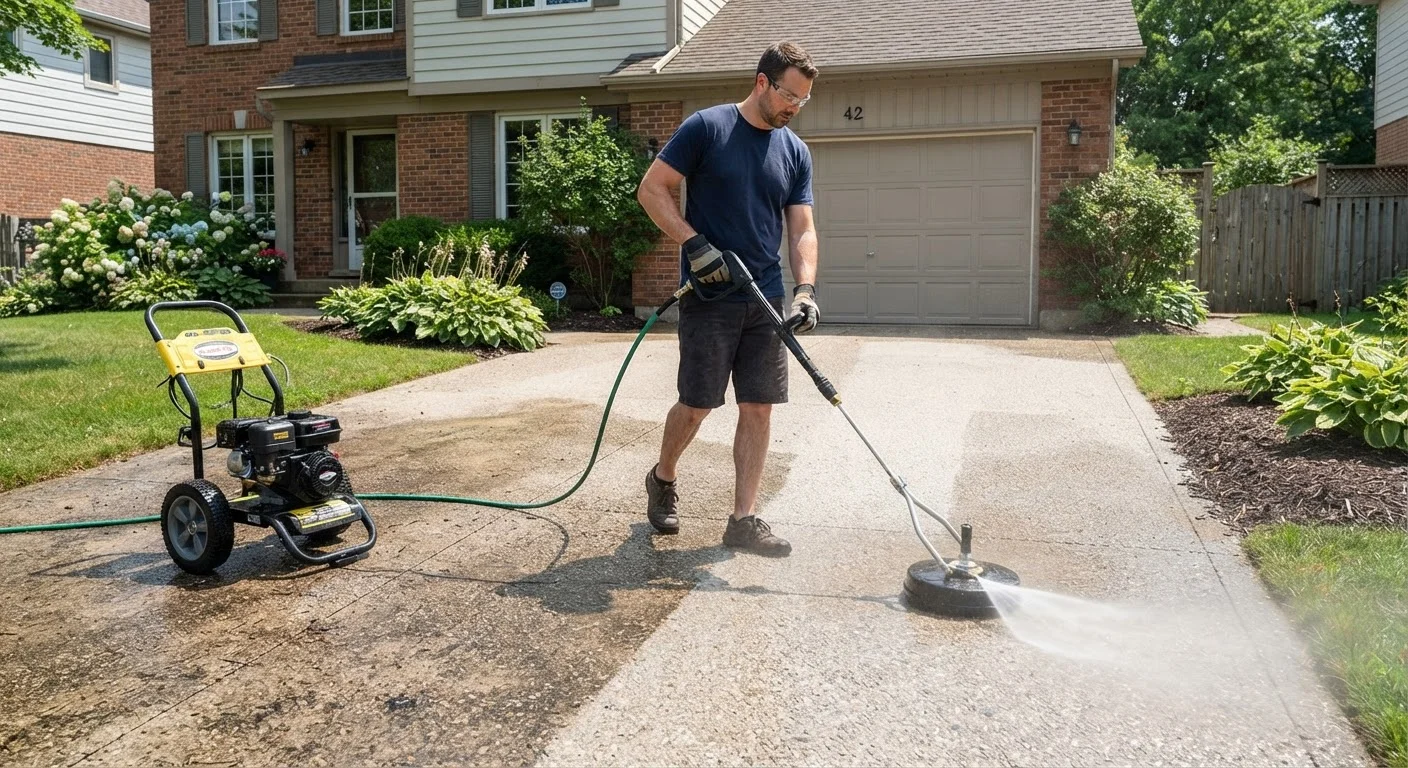
Concrete driveways can generally tolerate higher pressures - typically between 2,500 and 3,000 PSI for standard residential concrete - but the nozzle angle still matters. A 25-degree (green) nozzle is usually the right choice for concrete: it delivers enough force to dislodge embedded grime without concentrating pressure enough to etch the surface.
Match your nozzle to the surface material before you start
The wrong nozzle concentrates water pressure far beyond what a surface can safely handle. A nozzle that works on concrete can shred vinyl siding or gouge weathered wood in seconds.
Always keep the wand moving in consistent, overlapping passes
Holding the spray in one spot concentrates impact force and creates visible etching or discoloration. Even passes distribute cleaning action evenly and prevent streaks.
Pre-wet surfaces and use detergent for heavy buildup
Detergent does chemical cleaning work so you need less mechanical force. Trying to remove grease or algae with pressure alone often means cranking up the PSI to damaging levels.
Maintain a consistent standoff distance from the surface
Pressure dissipates with distance. Getting too close turns a safe PSI into a damaging one; staying too far reduces cleaning effectiveness. A consistent distance gives predictable results.
Inspect and re-caulk vulnerable seams before washing
Pressure washing forces water into any gap it can find. Cracked or missing caulk around windows, doors, and trim gives water a direct path to wall cavities, insulation, and framing.
For asphalt driveways, stay below 1,500 PSI and use a 40-degree nozzle. Asphalt is softer and more easily eroded than concrete, and high-pressure cleaning can loosen the binding agents that hold the surface together.
Always wet the surface first with a low-pressure rinse, hold the wand at least 12 inches from the surface, and keep the nozzle moving in smooth, overlapping passes. Stopping in one spot concentrates damage quickly.
Cleaning Siding Safely
Siding - whether vinyl, fiber cement, wood, or engineered wood - requires a gentler approach than driveways. The most important rule: never spray upward at an angle into the laps or seams. Water forced behind panels can saturate insulation, promote mold growth, and cause wood rot or structural damage that's far more expensive to repair than the original stain you were trying to remove.
For vinyl siding, keep PSI between 1,200 and 1,500 and use a 40-degree nozzle. Work from the top down in horizontal passes, spraying at a slight downward angle. For wood or painted siding, drop the pressure further - around 500 to 600 PSI - and consider a house-wash detergent to do more of the cleaning work so the water pressure doesn't have to.
Keep the nozzle at least 18 inches from the surface, and always test an inconspicuous area first. Gaps around windows, doors, and utility penetrations are particularly vulnerable to water intrusion - clear any damaged caulk before washing, and check your gutters while you're at it, since blocked gutters can make moisture problems worse after a thorough exterior cleaning.
Wood Siding Needs Extra Caution
Older wood siding - especially on homes built before the 1980s - may have lead paint. Pressure washing lead-painted surfaces can generate hazardous dust and runoff. If your home is older and you're unsure of the paint history, consult a licensed contractor before proceeding. Local regulations may govern how lead paint debris is managed.
Quick Wins to Get Started Safely
You don't need to overhaul your entire approach to protect your home's exterior. A few targeted adjustments before you start can prevent the most common mistakes.
1,200-1,500
PSI recommended for vinyl siding
Cleaning industry guidelines generally recommend keeping pressure below 1,500 PSI for most residential siding materials to prevent panel damage or water intrusion.
40°
Nozzle angle for siding and delicate surfaces
A 40-degree nozzle disperses water across a wider area, significantly reducing the per-square-inch impact compared to narrower nozzles used on harder surfaces like concrete.