

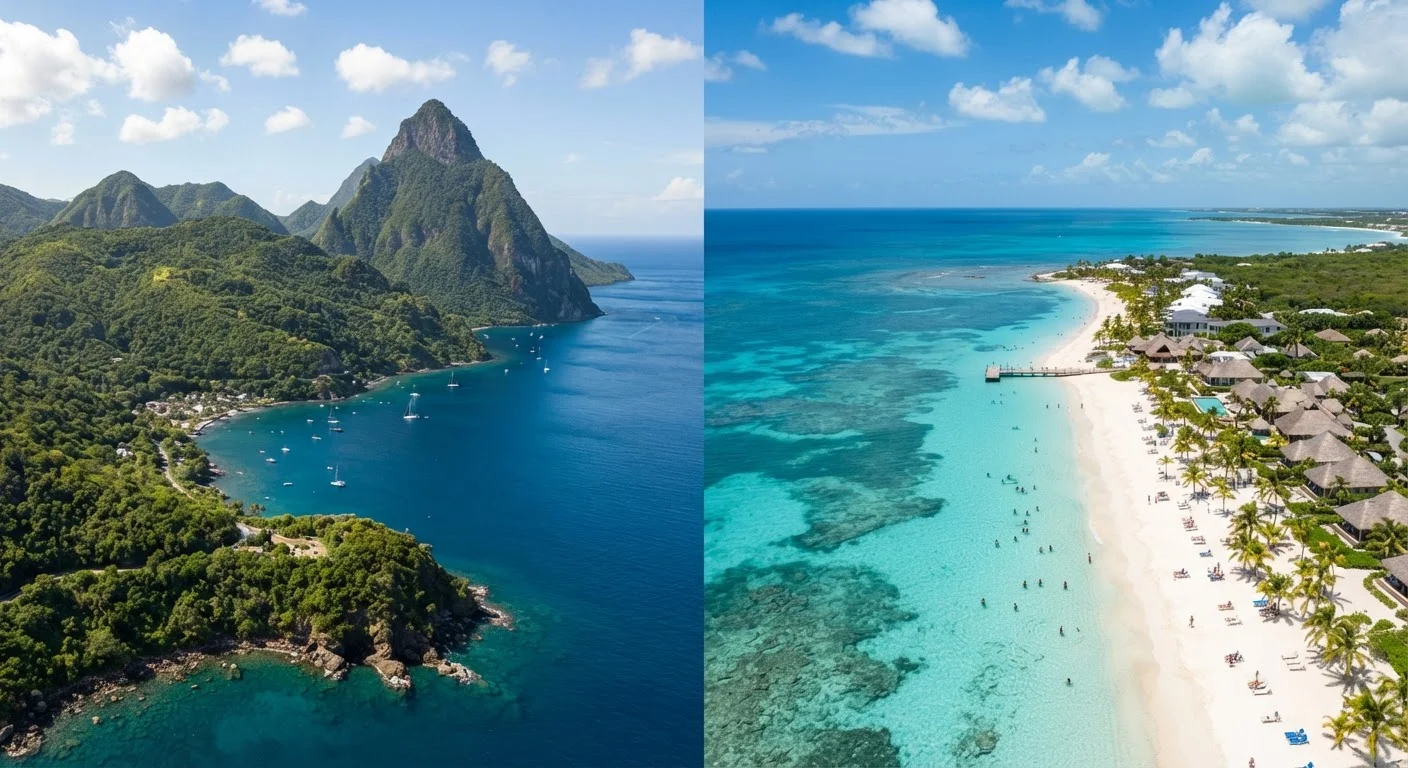
Key Takeaways
Option A
Hawaii
The grand Pacific archipelago with volcanic drama and deep Polynesian roots.
Best for: Travelers seeking diverse landscapes, outdoor adventure, and a rich indigenous cultural experience across multiple distinct islands.
Option B
US Virgin Islands
The compact Caribbean gem with easy Atlantic access and laid-back island charm.
Best for: East Coast travelers wanting quick, passport-free Caribbean immersion with excellent snorkeling, sailing, and a relaxed pace.
If you're an East Coast traveler with limited vacation days
US Virgin Islands
Flights from cities like New York or Miami are roughly 3-4 hours, making a long weekend genuinely feasible without losing days to travel fatigue.
If you want dramatic, varied landscapes and outdoor adventure
Hawaii
From active lava flows on the Big Island to Maui's Haleakalā summit and Kauai's Nā Pali Coast, Hawaii's terrain has no real rival in the US island world.
If snorkeling and sailing are your top priorities
US Virgin Islands
The calm, clear waters of the Caribbean - especially around St. John and Buck Island - are world-class for reef snorkeling and day sailing with consistent conditions.
If cultural immersion and indigenous history matter to you
Hawaii
Native Hawaiian culture - language, hula, surfing traditions, and ahupuaʻa land management - is actively practiced and accessible to respectful visitors throughout the islands.
If you're traveling as a group or family on a tighter budget
US Virgin Islands
Lower airfares from the East Coast, competitive lodging options, and the ability to bring in some groceries duty-free can help keep group trip costs more manageable.
Location, Access, and Getting There
One of the first practical realities separating these two destinations is sheer distance. Hawaii sits roughly 2,400 miles from the US West Coast - about a 5-to-6-hour flight from California, and up to 11 hours from the East Coast. The US Virgin Islands, by contrast, are just 1,000 to 1,600 miles southeast of Florida, making them a 3-to-4-hour flight from most East Coast cities.
Crucially, both are US territories, so American citizens travel without a passport and spend in US dollars. But the USVI's proximity makes it a genuinely compelling quick-getaway option for East Coast travelers, while Hawaii demands a more deliberate time commitment from most of the country. If you're weighing whether to go solo or with a group for either trip, the logistics shift considerably - see our thoughts on how planning differs for solo vs. group travel.
| Criterion | Hawaii | US Virgin Islands |
|---|---|---|
| Distance from East Coast | ~10-11 hours by air | ~3-4 hours by air |
| Distance from West Coast | ~5-6 hours by air | ~8-9 hours by air |
| Passport required | No (US territory) | No (US territory) |
| Currency | US Dollar | US Dollar |
| Landscape type | Volcanic, rainforest, diverse | Hilly, reef-fringed, Caribbean |
| Number of main islands | 6 major visitor islands | 3 main islands |
| Hurricane season risk | Low (occasional tropical storms) | Moderate (June-November) |
| Cultural heritage | Native Hawaiian, Asian-Pacific | African, Danish, Caribbean |
Landscape, Climate, and Natural Character
Hawaii's scale and geological youth give it extraordinary landscape diversity. Each major island has its own personality: the Big Island hosts active lava fields at Hawaiʻi Volcanoes National Park; Kauai's interior is one of the wettest places on Earth; Maui offers high-altitude desert atop Haleakalā and lush rainforest valleys. Temperatures are warm year-round, but wetter winter months and trade winds create micro-climates that can vary dramatically within a single island.
The US Virgin Islands - St. Thomas, St. John, and St. Croix being the main three - sit in the classic Caribbean climate zone: warm and sunny most of the year, with a hurricane season running roughly June through November. The terrain is hilly rather than volcanic, and the defining natural feature is the water itself. St. John alone has about 60% of its land protected as Virgin Islands National Park, with some of the clearest snorkeling reefs in the Atlantic.
60%
St. John land protected as national park
Virgin Islands National Park covers approximately 60% of St. John, making it one of the most protected islands in the Caribbean.
6
Major visitor islands in Hawaii
Oahu, Maui, the Big Island, Kauai, Molokai, and Lanai each offer distinct terrain and character for travelers to explore.
~2,400 mi
Hawaii's distance from US West Coast
Hawaii's mid-Pacific location makes it the most remote state in the US, contributing to higher airfares from most of the country.
Culture, History, and Local Identity
Hawaii's culture is deeply rooted in Native Hawaiian traditions - a living Polynesian heritage expressed through language revival efforts, the practice of hula, traditional navigation, and land stewardship concepts like ahupuaʻa. That culture is layered with the influence of waves of Asian, Portuguese, and Pacific Islander immigrants who shaped Hawaiian food, music, and social identity. Visitors who engage respectfully with these layers leave with something more than a tan.
The US Virgin Islands carry a very different historical weight. Danish colonial rule until 1917, followed by American administration, created a cultural identity that blends West African, Caribbean, and European strands. St. Croix's plantation history is preserved at sites like Estate Whim Museum. Charlotte Amalie on St. Thomas is one of the Caribbean's busiest port cities, with a lively commercial waterfront that feels genuinely different from anywhere in Hawaii.
Respect Local Culture at Both Destinations
In Hawaii, some natural and cultural sites carry deep spiritual significance to Native Hawaiians - visitors are encouraged to learn which areas require particular care or have specific access protocols. In the USVI, the history of enslaved people is woven into the landscape; approaching historical sites with thoughtfulness enriches the experience for everyone. At both destinations, local communities balance tourism's economic benefits against its cultural and environmental costs.
If you're still deciding what type of trip suits you best before choosing a destination, our guide to city breaks vs. beach vacations can help frame the decision.
Cost and Practical Planning
Hawaii generally carries higher overall trip costs. Flights from the continental US are longer and pricier for most travelers, and accommodation in popular areas like Maui's Wailea or Honolulu's Waikīkī can be expensive, particularly in peak winter and summer months. Food costs are elevated because so much is imported. Budget-savvy visitors often use vacation rentals, cook some meals, and explore the outer islands for lower prices.
The USVI can be more affordable for East Coast travelers on flight costs, but island-imported goods still push grocery and dining prices above mainland levels. St. John's accommodations are relatively limited and can sell out far in advance; St. Thomas and St. Croix offer a broader range of lodging options. Cruise-ship traffic affects daily life significantly in Charlotte Amalie - timing a visit around ship schedules can improve the experience considerably.
Regardless of destination, travel insurance is worth considering, especially during hurricane season in the USVI or during winter swell season in Hawaii. Always verify entry requirements, health advisories, and local conditions through official US government sources before booking.