

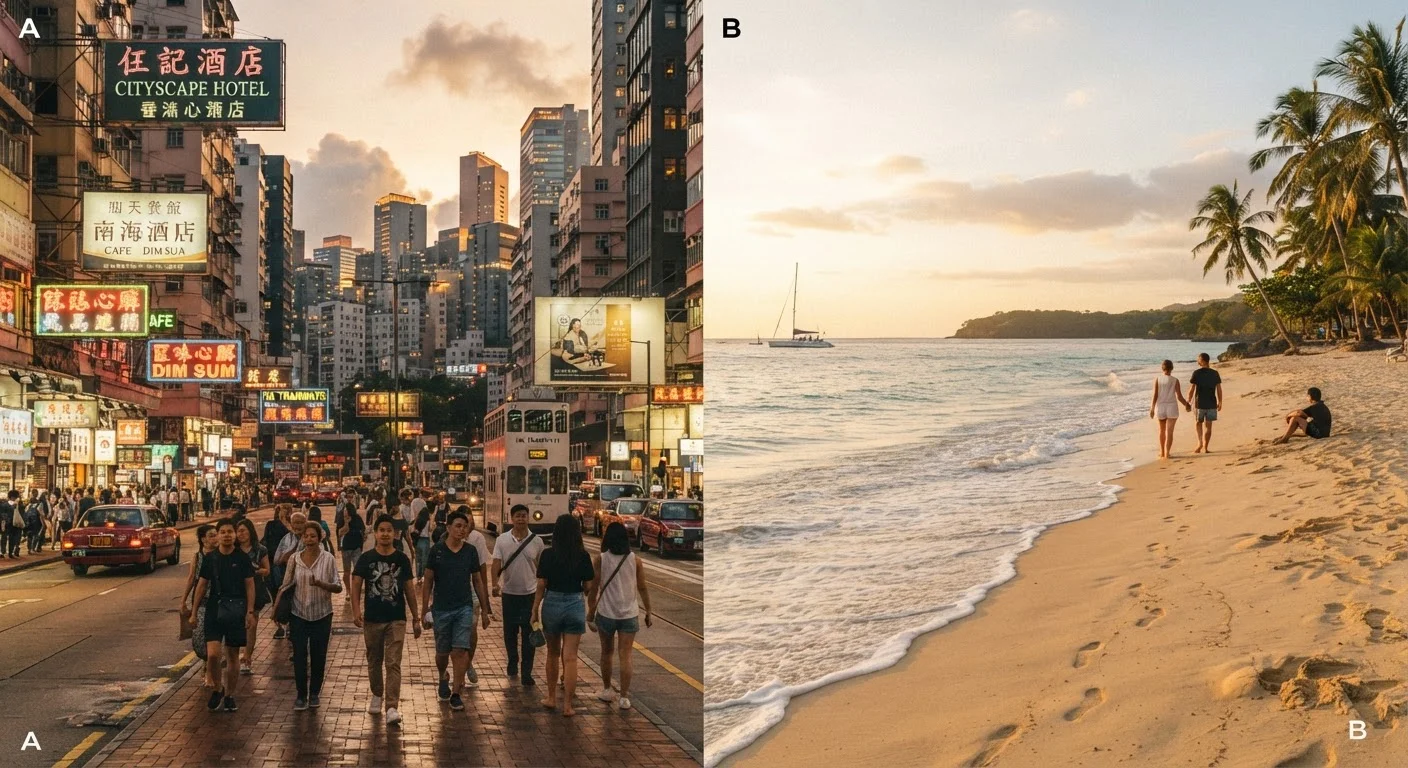
Key Takeaways
Our Verdict
Neither a city break nor a beach vacation is universally better - the winning choice depends almost entirely on what you actually need from a trip. City breaks reward curiosity and deliver more per day; beach vacations reward the ability to do less and return home genuinely refreshed. Matching the format to your current mental and logistical state matters far more than destination prestige.
| Best for | Recommended |
|---|---|
| Short trips of three to five days with a curious, active travel style | City Break |
| Travelers seeking genuine rest, stress recovery, or family downtime | Beach Vacation |
| First-time visitors to a region who want cultural context quickly | City Break |
| Mixed groups with varying ages or activity levels | Beach Vacation |
The Real Question: What Do You Need From This Trip?
Most travelers frame the city-versus-beach debate around destination appeal. That's the wrong starting point. The more useful question is: what does your mind and body actually need right now?
City breaks are high-input environments. Even a relaxed urban itinerary involves navigation, decision-making, crowds, noise, and constant visual stimulation. That's energizing for some travelers and exhausting for others - sometimes it's the same person at different times of year. Beach vacations, by contrast, are structurally low-input: the agenda is largely decided by tides and sunscreen. The challenge there isn't boredom, it's allowing yourself to actually decompress.
Before comparing destinations, it helps to think about your planning style - because city breaks almost always demand more structure, while beach trips tend to forgive looser schedules. Understanding that preference early narrows your options fast.
City Breaks: What They Deliver (and What They Cost You)
A well-chosen city break packs an enormous amount into a short window. Museums, restaurants, neighborhoods, live music, architecture - urban environments are dense with experience by design. For travelers with limited vacation days, that density is a genuine advantage.
The tradeoffs are real, though. Urban travel tends to be more expensive per day once you factor in dining out every meal, paid attractions, and accommodation in central locations. It's also physically demanding: the average city traveler logs far more daily steps than they expect, and decision fatigue sets in quickly when every hour involves new choices.
City breaks work especially well for solo travelers and couples who enjoy moving at a similar pace. They can be trickier with mixed groups - the logistics shift significantly when you're coordinating multiple people with different energy levels or interests.
| City Break | Beach Vacation | |
|---|---|---|
| Ideal trip length | 3-5 days | 6-10 days |
| Daily pace | High - structured, activity-dense | Low - unstructured, flexible |
| Best for | Curious, culturally driven travelers | Rest-seekers, families, mixed groups |
| Typical daily cost | Higher (dining, attractions, central lodging) | Variable; lower if self-catering |
| Weather sensitivity | Low - most activities work year-round | High - season strongly affects experience |
| Physical demand | High (walking, transit, navigation) | Low to moderate |
| Planning complexity | Higher - reservations often needed | Lower - less pre-booking required |
One often-overlooked risk: over-scheduling. The temptation to fill every slot is strong in a city with a long must-see list. That's one of the most common itinerary mistakes travelers make, and it hits city breaks harder than almost any other format.
Beach Vacations: Rest That Actually Works (If You Let It)
The pitch for beach travel is simple: sun, water, and nothing mandatory. The reality is that many travelers struggle to actually rest, even in ideal conditions. They fill beach days with excursions, anxiously scroll for the next activity, and return home feeling like they didn't "make the most of it."
A beach vacation delivers what it promises only if you're willing to let unstructured time count. For travelers who can do that, the payoff is significant - reduced cortisol, better sleep, and a genuine mental reset that city stimulation rarely produces.
Give Yourself One Fully Unplanned Day
On any beach vacation longer than four nights, resist the urge to schedule every day. Blocking one day with zero planned activities - no excursions, no restaurant reservations - often produces the most memorable and restorative part of the trip. Travelers frequently report that the unplanned day becomes the highlight. Let boredom show you what you actually want to do next.
Beach trips also have more flexibility for mixed-age groups and families. The threshold for participation is low: even toddlers and grandparents can enjoy a beach day without a tightly coordinated plan. That accessibility makes coastal destinations a strong default for group travel where interests vary widely.
Seasonality matters more for beach trips than city breaks. Coastal destinations can shift dramatically outside peak months - for an honest look at what actually changes, the piece on Coastal New England in the off-season is a useful reference for what to expect when timing doesn't land in summer.
Making the Call: A Framework for Choosing
If you're still undecided, run through these three filters:
- Trip length: Under five days, a city break usually makes better use of your time. Seven or more days, a beach vacation has room to breathe and actually restore.
- Travel party: Solo or couple with aligned interests? Either works. Family or mixed group? Beach vacation typically generates less conflict.
- Current stress level: If the past few months have been genuinely taxing, defaulting to a beach vacation is often the smarter call - even if a city sounds more exciting on paper.
Some destinations sidestep the choice entirely. Cities like Honolulu, Miami, or San Diego offer genuine urban culture alongside beach access, though they often come with premium price tags. If your budget allows and you're drawn to both formats, a hybrid destination can be a satisfying middle ground - though it's worth reading up on how different island destinations compare before assuming all beach cities are alike.
Whatever you choose, spending time researching your destination properly before arrival - beyond social media highlight reels - will shape the experience far more than the city-vs-beach question itself.