

Why Every Traveler Needs a Personal Medical Kit
Pharmacies abroad range from well-stocked to nonexistent, and even in developed countries, familiar brand names and formulations may not be available. A personal travel medical kit puts essential supplies within arm's reach - on a delayed flight, in a remote hiking area, or during a stomach-turning night in an unfamiliar hotel room.
The goal isn't to pack a field hospital; it's to handle common ailments and minor injuries while you figure out next steps. For those with chronic conditions, the stakes are higher - see our guide to traveling with a chronic condition for medication logistics and documentation tips that go beyond what a general kit covers.
Before you build your kit, check with your personal healthcare provider about your specific destinations and health history. This article is for general informational purposes only and is not medical advice.
Core Categories and What to Include
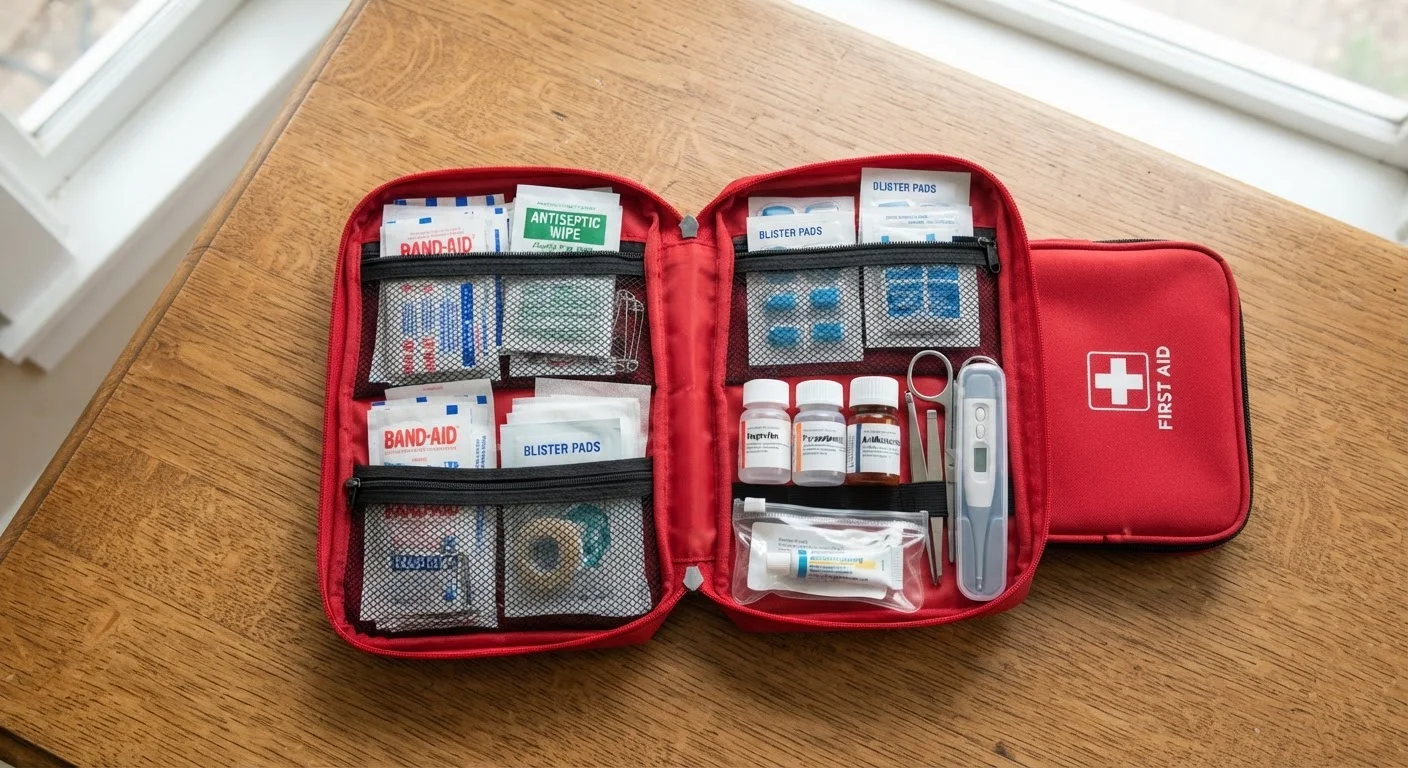
Wound and Skin Care
- Adhesive bandages - multiple sizes for cuts, scrapes, and heel blisters
- Blister pads (moleskin or gel) - essential for any trip involving significant walking
- Antiseptic wipes and a small tube of antibiotic ointment - for cleaning minor wounds
- Medical tape and gauze pads - for larger cuts or securing dressings
- Tweezers - for splinters and ticks
Gastrointestinal Essentials
- Oral rehydration salts (ORS) - the most effective response to dehydration from traveler's diarrhea or heat
- Anti-diarrheal tablets - useful for when you need to get on a plane or bus; consult a pharmacist about options
- Antacids - spicy or unfamiliar food can trigger indigestion quickly
- Anti-nausea medication - helpful for motion sickness or stomach bugs; ask your provider what's appropriate for you
Pain and Fever Management
- Acetaminophen and/or ibuprofen - for headaches, muscle aches, minor fever, and inflammation; carry both since one may be preferred in certain situations
- Throat lozenges - dry cabin air and new environments commonly trigger sore throats
Allergy and Environmental
- Antihistamines - for unexpected allergic reactions, insect bites, or hay fever in new regions
- Hydrocortisone cream - for mild rashes and bug bite irritation
- High-SPF sunscreen and lip balm with SPF - especially important at altitude or near water
- Insect repellent containing DEET or picaridin - critical in tropical or rural destinations
High-Altitude and Climate Considerations
If your itinerary includes destinations above 8,000 feet - think Colorado ski towns, the Andes, or trekking in Nepal - altitude sickness is a genuine risk. Talk to your healthcare provider well before departure about whether a prescription medication like acetazolamide is appropriate for your situation; it is not right for everyone. Also pack electrolyte supplements and plan acclimatization days into your schedule.
Altitude Medications Require a Prescription
Acetazolamide (commonly known by the brand name Diamox) is frequently mentioned in travel health discussions as a preventive for acute mountain sickness. It requires a prescription in the United States and is not appropriate for everyone - particularly those with sulfa allergies. Speak with a travel medicine specialist or your primary care provider at least four to six weeks before a high-altitude trip to discuss whether it's right for you.
Documentation and Extras
- A list of your medications, allergies, and blood type
- Copies of any prescriptions, especially for controlled substances
- Digital thermometer
- Safety pins and small scissors (check carry-on rules)
- Latex-free gloves
The pre-departure checklist for international travel is a helpful companion document for assembling paperwork alongside your physical kit.
Packing Smart and Staying Legal
Medications that are legal in the United States may be controlled or prohibited in other countries. Carry prescription drugs in their original labeled containers and bring a letter from your prescribing physician for anything that could raise questions at customs. The U.S. Embassy website for your destination and the country's official health authority are the authoritative sources - always verify before you fly.
For air travel, TSA's 3-1-1 liquid rule applies to gels and liquid medications unless they're medically necessary and declared at screening. Solid tablets, patches, and dry supplies travel more easily.
Keep your kit accessible in your carry-on, not buried in checked luggage. A small, zippered pouch works better than a bulky case. Once you're back home, audit expiration dates before your next trip - several common medications degrade meaningfully past their printed dates.
For a broader look at pre-trip health preparation - from vaccinations to emergency contacts - explore our pre-trip health and safety checklist. And if you haven't reviewed your travel health insurance coverage yet, understanding what travel health insurance covers is worth reading before you depart.
This article is for general informational purposes only and does not constitute medical advice. Consult a qualified healthcare professional before traveling, particularly regarding medications, vaccinations, and any personal health conditions.