

Key Takeaways
Start here
Why Vaccines Matter Before You Travel
Build your knowledge
Three Categories of Travel Vaccines
Take action
How to Find Out What You Need
Prepare your appointment
Planning Your Pre-Travel Appointment
Finish strong
Keeping Records and Staying Covered
Why Vaccines Matter Before You Travel
When you cross an international border, your immune system doesn't get a briefing. Diseases that are rare or well-controlled in the United States - typhoid, yellow fever, Japanese encephalitis, hepatitis A - remain common in many parts of the world. Travelers who haven't built immunity, either through vaccination or prior exposure, can become seriously ill.
Beyond personal health, some countries treat certain vaccinations as an entry requirement rather than a suggestion. Arriving without required documentation can mean being quarantined, vaccinated on the spot, or denied entry entirely. Understanding the vaccine landscape before you go is as fundamental as checking your passport expiration date.
See our pre-departure checklist for a structured overview of everything to handle before you leave home.
This article is for general informational purposes only and is not medical advice. Always consult a qualified healthcare provider or travel medicine specialist for guidance specific to your health situation and destination.
Three Categories of Travel Vaccines
Routine vaccine
A vaccine recommended for all people in the United States regardless of travel plans, such as MMR or Tdap. Travel is a good time to confirm yours are current.
Recommended vaccine
A vaccine that health authorities suggest based on your specific destination and activities. It's not legally required for entry but is medically advisable to reduce disease risk.
Required vaccine
A vaccine that a country mandates as a legal condition of entry. You may need to show documented proof or risk being turned away at the border.
Yellow Card (ICVP)
The International Certificate of Vaccination or Prophylaxis - an official document that records vaccines like yellow fever. Some countries inspect it at the border.
Travel medicine specialist
A healthcare provider trained in travel-related health risks who offers personalized vaccine and health recommendations based on your destination and medical history.
Immunity
The body's ability to resist a specific disease, often developed through vaccination. Immunity typically builds over days to weeks after receiving a vaccine.
Travel vaccines are typically grouped into three practical categories:
- Routine vaccines - These are the immunizations recommended for all Americans regardless of travel, such as measles-mumps-rubella (MMR), tetanus-diphtheria-pertussis (Tdap), and flu. International travel is a good prompt to check whether yours are up to date, since some adults unknowingly have lapsed coverage.
- Recommended vaccines - These are vaccines that public health authorities suggest based on your specific destination, activities, and personal health history. Examples include hepatitis A, typhoid, rabies (for adventure travelers), and Japanese encephalitis. They're not required for entry but are medically advisable.
- Required vaccines - A small number of vaccines are mandated by certain countries as a legal condition of entry. Yellow fever is the most common example: countries in sub-Saharan Africa and tropical South America that have active yellow fever transmission may require proof of vaccination. Saudi Arabia also requires meningococcal vaccination for Hajj and Umrah pilgrims.
The distinction matters because failing to meet a required vaccine can have real, immediate consequences at the border - not just a health risk down the road.
How to Find Out What You Need
The most reliable starting points for US travelers are official sources:
- CDC Travelers' Health website (wwwnc.cdc.gov/travel) - Offers destination-specific health notices, vaccine recommendations, and disease outbreak alerts updated regularly by public health officials.
- Your destination country's embassy or health ministry - For legally required vaccines, the official government source for that country is authoritative. Entry rules can change, so checking close to your travel date matters.
- A travel medicine specialist - Combines destination data with your personal health history to give individualized guidance that a website can't replicate.
Always Verify Before You Depart
Vaccine requirements and outbreak alerts can change faster than printed guides are updated. Make it a habit to check the CDC Travelers' Health site and your destination's official government health portal within two weeks of departure. If requirements changed after your appointment, contact your travel clinic promptly - there may still be time to address any gaps.
Requirements and recommendations can shift with disease outbreaks, seasonal factors, and policy changes. A destination that had no yellow fever entry requirement last year may have added one. Always verify current conditions rather than relying on information that may be out of date - even guidance from this article. Our destination guides can help orient you to regional health considerations, but official sources should be your final word on requirements.
Planning Your Pre-Travel Appointment
A travel medicine consultation is the most efficient way to sort through what applies to your specific trip. Come prepared with your full itinerary (countries, cities, planned activities, accommodation type), your vaccination history if you have it, and a list of any ongoing health conditions or medications. That context lets a provider make genuinely useful recommendations rather than generic ones.
Timing is important. The CDC generally suggests scheduling a travel health appointment at least 4-6 weeks before departure. Some vaccines require two or three doses spaced weeks apart, and immunity builds over time - not instantly after a shot. If your trip is coming up faster than that, go anyway; even a late appointment can provide meaningful protection and catch any required documentation issues.
Travelers with chronic conditions should be especially thorough at this stage. Our guide on managing a chronic condition while traveling covers the broader planning picture, including how to coordinate medications and documentation across borders.
Keeping Records and Staying Covered
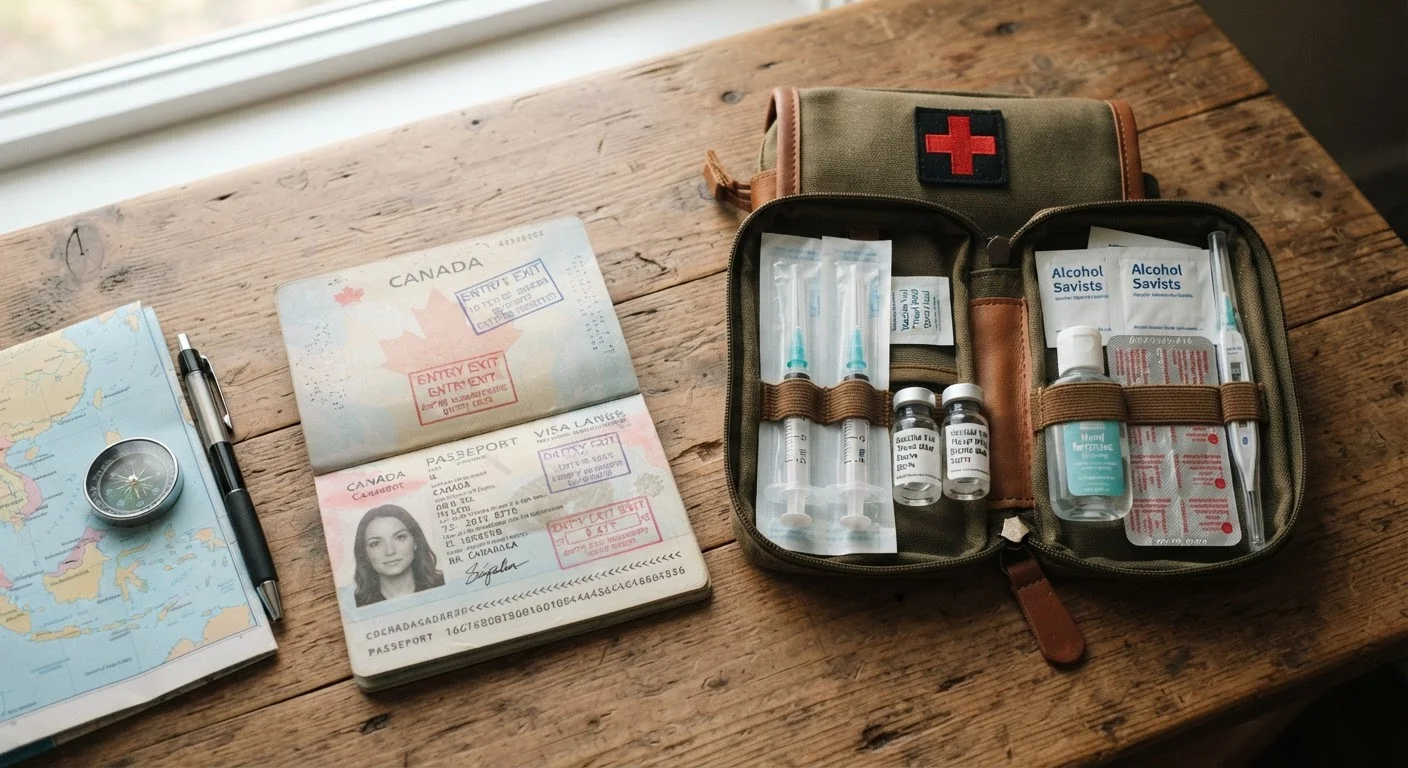
Once vaccinated, documentation becomes its own priority. The International Certificate of Vaccination or Prophylaxis (ICVP) - informally called the Yellow Card - is the standardized document used to record vaccines that may be inspected at borders. Your travel clinic will issue this when applicable. Store it with your passport, and consider keeping a digital photo of it in secure cloud storage as a backup.
On the financial side, be aware that many US domestic health insurance plans don't cover travel-specific vaccines. Contact your insurer before your appointment to understand your out-of-pocket exposure. Travel health insurance can sometimes help bridge that gap - our overview of travel health insurance coverage explains what these policies typically include and where their limits lie.
Vaccine protection is one layer of a broader travel health strategy. Staying informed, consulting qualified professionals, and keeping your documents organized puts you in the strongest possible position - wherever your itinerary takes you.