

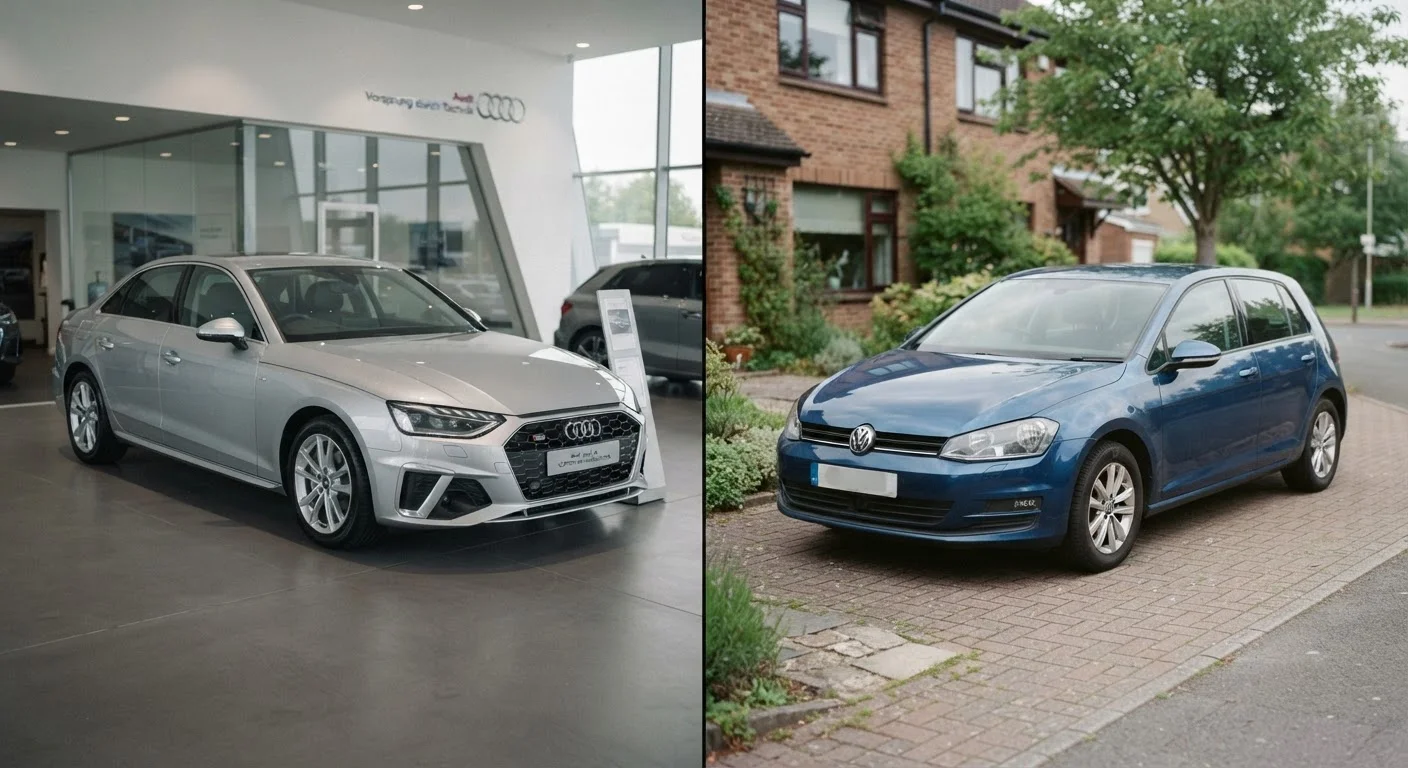
Key Takeaways
Option A
New Car
The latest features, full warranty, and zero prior history.
Best for: Buyers who prioritize predictability, modern safety technology, and the lowest initial maintenance burden.
Option B
Used Car
Lower upfront cost with value already established by the market.
Best for: Budget-conscious buyers willing to accept some uncertainty in exchange for significant savings on purchase price and depreciation.
If you want the lowest possible purchase price and are comfortable with some mechanical uncertainty
Used Car
A used vehicle lets someone else absorb the steepest depreciation hit. With a pre-purchase inspection, you can significantly reduce the risk of hidden problems.
If long-term reliability assurance and the latest safety features matter most to you
New Car
Factory warranties typically cover three to five years of mechanical failures. New models also include advanced driver-assistance systems not found on older vehicles.
If you want used-car pricing with some warranty protection built in
Used Car
A certified pre-owned vehicle can offer a middle path. Review what the CPO program actually covers - details vary significantly by automaker.
If you plan to keep the vehicle for ten or more years
New Car
Over a decade-long ownership window, the depreciation disadvantage narrows and the reliability advantages of a new vehicle tend to compound in your favor.
Depreciation: Where the Real Cost Gap Lives
Depreciation is the single largest expense most vehicle owners never see as a line item. A new car typically loses a significant portion of its value - estimates from automotive data firms have historically placed first-year depreciation at roughly 15-25% - before the owner has even made a dozen monthly payments. By the time a vehicle reaches three years old, it may be worth 40-50% of its original price.
This is the central financial argument for buying used: when you purchase a two- or three-year-old vehicle, someone else has already absorbed that initial drop. You pay closer to what the vehicle is actually worth in market terms, rather than its depreciation-adjusted retail price.
That said, depreciation cuts both ways. When you eventually sell or trade in a new vehicle, it retains a residual value that a very high-mileage used car may not. For drivers who plan to hold a vehicle for a decade, the depreciation gap matters less than for those who trade in every three to four years. See our guide to how trade-ins are valued for more context on what to expect.
| Criterion | New Car | Used Car |
|---|---|---|
| Purchase Price | Higher upfront cost | Lower upfront cost |
| Depreciation Exposure | Buyer absorbs initial drop | Prior owner absorbed the steepest loss |
| Financing Interest Rates | Typically lower rates available | Typically higher rates |
| Warranty Coverage | Full manufacturer warranty | Limited or none (CPO varies) |
| Reliability History | Unknown; new model risks possible | Track record available |
| Safety Technology | Latest driver-assist systems standard | Older systems; varies by model year |
| Customization Options | Full trim and option selection | Limited to available inventory |
Financing, Warranty, and the Hidden Variables
Financing rates tell an underappreciated part of this story. Lenders typically offer lower interest rates on new vehicles than on used ones, partly because new cars serve as more reliable collateral. A buyer who assumes a used car is automatically cheaper may be surprised when the total loan cost - principal plus interest - narrows the gap considerably.
Warranty coverage compounds the comparison. New cars come with manufacturer warranties that generally cover three years or 36,000 miles for bumper-to-bumper defects, and five years or 60,000 miles for powertrain components. These figures vary by automaker, but the principle is consistent: predictable repair costs during the warranty window.
Used vehicles are typically sold as-is or with limited dealer warranties unless they carry a certified pre-owned designation. CPO programs offer additional coverage, but the scope of that coverage varies widely - reading the fine print matters.
~20%
Average first-year depreciation on new vehicles
Automotive valuation analysts have consistently estimated new car depreciation at roughly 15-25% in year one, with significant variation by make and model.
3-5 yrs
Typical new-car manufacturer warranty window
Most major automakers provide bumper-to-bumper coverage for 3 years or 36,000 miles and powertrain coverage for 5 years or 60,000 miles, though terms differ by brand.
$200
Approximate cost of an independent pre-purchase inspection
An inspection by a qualified independent mechanic can identify mechanical and safety issues not apparent during a test drive, often for well under $200.
Reliability history is another variable worth examining. A used car's real-world track record is knowable in ways a new model's is not. Vehicle history reports, recall databases, and owner forums can reveal patterns that no brochure will mention. For any used vehicle purchase, an independent mechanical inspection is strongly advisable - the pre-purchase inspection process is straightforward and often costs well under $200.
Making the Decision: What to Weigh for Your Situation
Neither option is universally superior. The right choice depends on your financial picture, how long you plan to own the vehicle, how much uncertainty you're comfortable absorbing, and what features matter most to you.
New cars make a stronger case when: you value the latest active safety systems (automatic emergency braking, lane-keeping assist, blind-spot monitoring); you want warranty-backed repair predictability; or you plan to keep the vehicle long enough to spread the depreciation cost over many years of use.
Used cars make a stronger case when: your budget is constrained and purchase price is the primary driver; you're buying a model with a well-documented reliability record; or you're purchasing through a certified pre-owned program that adds meaningful coverage.
Where you buy - dealer or private seller - also shapes the experience. Our comparison of private sellers vs. dealerships breaks down the protections and trade-offs each path involves. For a full walkthrough of the purchase process itself, see The Car-Buying Process, Start to Finish.
Whichever direction you lean, the most useful number to anchor on is total cost of ownership - factoring in purchase price, financing costs, insurance, expected maintenance, depreciation, and fuel economy - rather than sticker price alone.