

Key Takeaways
Our Verdict
Neither option is universally superior - the right choice depends on your priorities, risk tolerance, and preparation. Private sellers can offer meaningful price savings on the right vehicle, but the burden of due diligence falls squarely on the buyer. Dealerships add cost but also add structure, documentation, and recourse that many buyers genuinely value.
| Best for | Recommended |
|---|---|
| Budget-conscious buyers willing to do thorough research and inspection | Private Seller |
| Buyers who want financing, warranty coverage, and title handling in one place | Dealership |
| First-time used-car buyers with limited mechanical knowledge | Dealership |
| Experienced buyers targeting a specific make, model, and year at below-market value | Private Seller |
What You're Actually Comparing
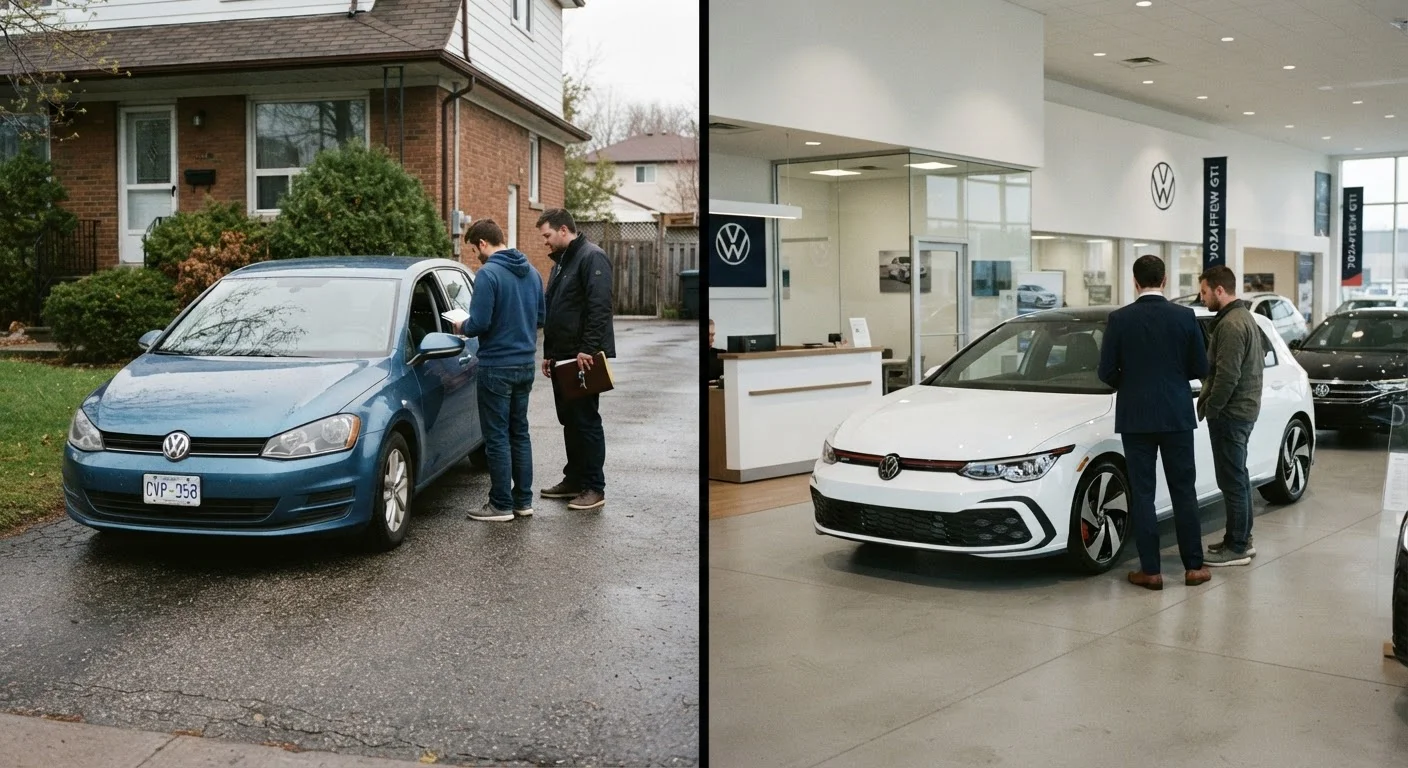
When you buy from a private seller, you're transacting directly with an individual - typically through a platform like Craigslist, Facebook Marketplace, or a classified listing. When you buy from a dealership, you're working with a licensed business that is regulated at the state level and must comply with consumer protection laws that don't apply to private parties.
That regulatory difference shapes almost everything: the paperwork involved, the financing options available, what happens if something goes wrong, and yes, the price. Understanding where those differences actually show up helps you decide which path makes sense for your situation. For a parallel look at the digital-first option, see how online retailers compare to traditional dealerships.
Price and Negotiation
Private sellers typically list vehicles below dealer retail because they lack the overhead costs - reconditioning, lot fees, staff - that dealers build into their prices. That gap can be meaningful, but it's not guaranteed. A seller who has done their homework on market value may price accordingly, leaving little room to negotiate.
Dealers, by contrast, operate with more pricing layers. The sticker price is generally a starting point, and there is often room to negotiate - though how much varies widely by market conditions, vehicle demand, and individual dealership policy. If you want to understand how those conversations actually unfold, separating car-buying myths from how negotiation really works is worth reading before you visit a lot.
| Private Seller | Dealership | |
|---|---|---|
| Typical Price | Often below retail market value | Retail pricing with negotiation room |
| Vehicle Inspection | Buyer's responsibility to arrange | Usually inspected; CPO options available |
| Financing Options | Must arrange externally; more complex | In-house financing available on-site |
| Warranty Coverage | Typically sold as-is, no warranty | Limited, extended, or CPO warranty options |
| Paperwork & Title | Buyer handles transfer independently | Dealer manages title and registration |
| Legal Protections | Caveat emptor; limited recourse | State regulations and FTC rules apply |
| Trade-In Handling | Must sell separately beforehand | Applied directly to purchase price |
Vehicle History, Condition, and Inspection
Dealers - particularly franchised new-car dealers - typically perform a multi-point inspection before listing a used vehicle, and many offer certified pre-owned (CPO) programs that come with manufacturer-backed warranties. That doesn't mean every dealer vehicle is problem-free, but there is a documented process and a paper trail.
With a private seller, you're largely relying on the seller's disclosure and your own due diligence. Pulling a vehicle history report (such as through CARFAX or a comparable service) is essential, but it won't catch everything. An independent pre-purchase inspection by a qualified mechanic is strongly advisable for any private sale - and frankly, it's a reasonable precaution with dealer vehicles too. Never skip this step based on a seller's assurances alone.
Never Skip a Pre-Purchase Inspection
Regardless of how confident a seller appears or how clean a vehicle looks, always have it inspected by an independent, qualified mechanic before committing funds. A professional inspection can surface hidden issues - such as frame damage, flood history, or worn mechanical components - that aren't visible in photos or apparent during a test drive. The cost of an inspection is minor compared to unexpected repair bills after purchase.
Financing and Payment
Dealerships offer in-house financing and often work with multiple lenders, which can simplify the process considerably - especially if you're trading in a vehicle at the same time. That said, it's worth arriving with a pre-approved loan offer from your bank or credit union to compare rates objectively. See how dealer financing and outside lenders differ for a detailed breakdown.
Financing a private-party purchase is possible through many banks and credit unions, but lenders may impose stricter conditions - such as minimum vehicle age or mileage limits - and the process involves more legwork on your part. Cash remains the simplest route for private transactions, though large cash transfers carry their own risks. If you're trading in your current vehicle, be aware that dealers can apply its value directly to your purchase, while a private sale requires you to sell it separately first. Understanding how trade-ins are valued helps set realistic expectations.
Paperwork, Title, and Legal Protections
Licensed dealerships handle the bulk of the title transfer and registration paperwork as a standard part of the transaction. They are also bound by state-level consumer protection regulations, the Federal Trade Commission's Used Car Rule (which requires a Buyer's Guide disclosing warranty terms), and lemon law provisions where applicable.
Private sales are conducted under a caveat emptor - or "buyer beware" - principle in most states. Once the title is signed over and money changes hands, your legal recourse is limited. You're responsible for managing the title transfer, verifying there are no outstanding liens on the vehicle, and ensuring the seller is the legitimate owner. Confirm the VIN on the vehicle matches the title, and check with your state's DMV if there's any uncertainty about lien status before completing a private purchase.
This article provides general informational guidance about car-buying options and is not legal or financial advice. Regulations and consumer protections vary by state; verify requirements with your state's DMV and consult a qualified professional for guidance specific to your situation.