

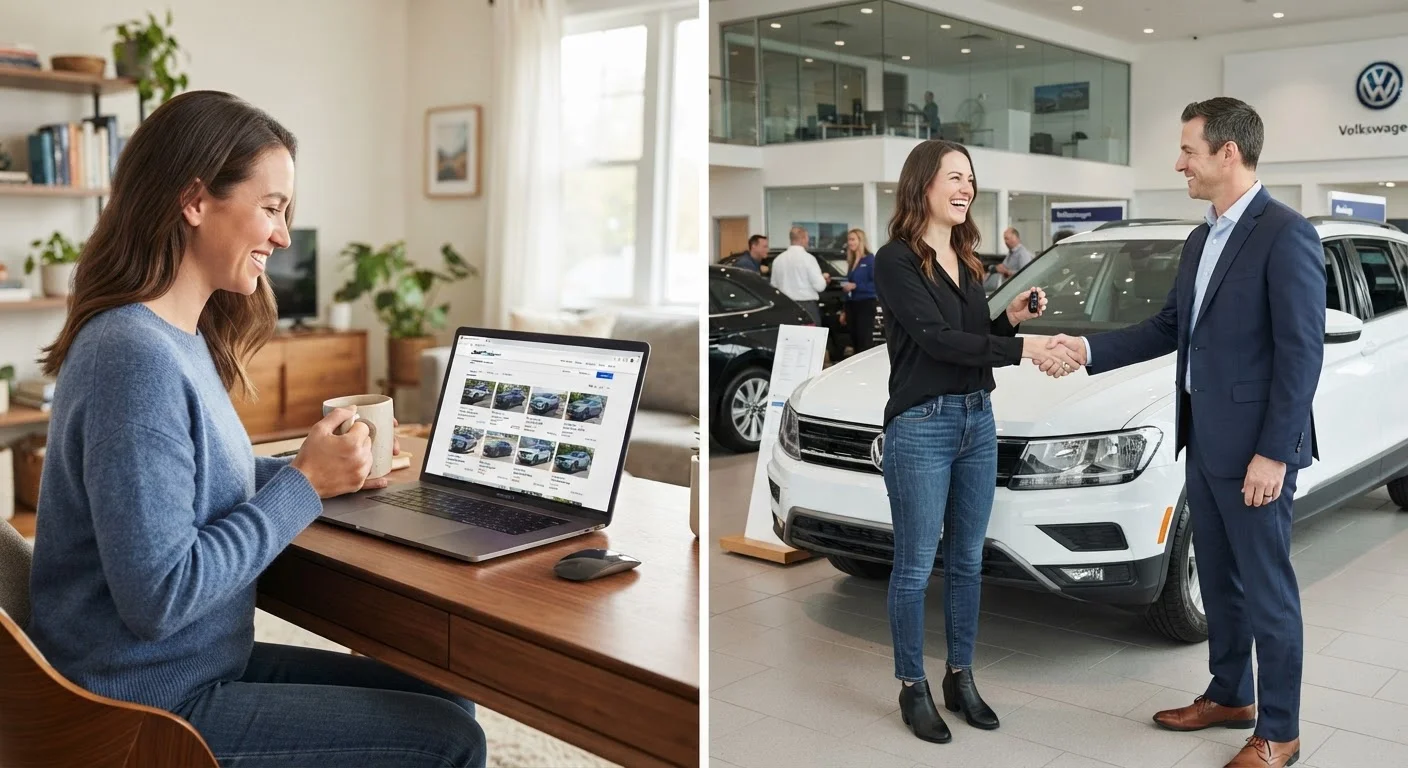
Key Takeaways
Fixed, transparent pricing removes negotiation pressure
Most online platforms display no-haggle prices, making it straightforward to compare costs across vehicles and markets without back-and-forth.
Shop from home on your own schedule
Buyers can browse inventory, review vehicle history reports, and secure financing at any hour without commuting to multiple lots.
Wider geographic inventory access
Online platforms aggregate inventory from across the country, giving buyers access to specific trims, colors, or configurations that may be unavailable locally.
Return windows reduce post-purchase risk
Many online retailers offer short-term return or exchange policies, providing a safety net that traditional dealership sales rarely include.
No test drive before committing
Buyers must make a significant financial decision without experiencing the vehicle's driving feel, cabin noise, or ergonomics firsthand.
Remote trade-in appraisals can shift at delivery
Online estimates are based on self-reported condition; the final value may be revised once the platform physically inspects your vehicle.
Limited financing flexibility for some buyers
Online lender networks may be narrower than a large dealership's, which can be a disadvantage for buyers with non-prime or thin credit profiles.
Delivery delays and logistical complications
Shipping a vehicle can take one to two weeks, and resolving any post-delivery issues - mechanical or cosmetic - may require returning the car remotely.
Our Verdict
Online car buying suits buyers who value price transparency, convenience, and a low-pressure environment - provided they're comfortable committing without an in-person inspection. Traditional dealerships remain the stronger option for anyone who wants a test drive, immediate trade-in appraisal, or face-to-face financing discussions. For most buyers, the sharpest decisions come from combining both: researching and comparing online, then engaging a dealership for final steps.
Online purchasing works best for confident, research-driven buyers with a clear vehicle in mind; traditional dealerships better serve those who want hands-on evaluation, negotiation flexibility, or complex trade-in arrangements.
How Each Channel Actually Works
Online car retail platforms let buyers select a vehicle, review pricing, arrange financing, and schedule delivery - all without visiting a lot. Inventory is typically displayed with detailed photos, vehicle history reports, and fixed no-haggle prices. Once a purchase is confirmed, the car is either shipped to your home or made available at a local hub for pickup.
Traditional dealerships operate through an in-person model: you browse physical inventory, negotiate price with a salesperson, apply for financing through the dealer's lending partners, and often complete a trade-in assessment in the same visit. The process is more variable and can span several hours, but it consolidates multiple steps under one roof.
Understanding both models in full context is worthwhile - see our complete walkthrough of the car-buying process for a stage-by-stage breakdown.
Advantages and Drawbacks of Buying Online
The clearest appeal of online car buying is convenience. Buyers can compare dozens of vehicles across multiple markets without leaving home, and fixed-price listings remove the pressure of negotiation. Return windows - typically seven days offered by major online retailers - provide a degree of post-purchase protection.
Fixed, transparent pricing removes negotiation pressure
Most online platforms display no-haggle prices, making it straightforward to compare costs across vehicles and markets without back-and-forth.
Shop from home on your own schedule
Buyers can browse inventory, review vehicle history reports, and secure financing at any hour without commuting to multiple lots.
Wider geographic inventory access
Online platforms aggregate inventory from across the country, giving buyers access to specific trims, colors, or configurations that may be unavailable locally.
Return windows reduce post-purchase risk
Many online retailers offer short-term return or exchange policies, providing a safety net that traditional dealership sales rarely include.
The limitations are equally real. Without a physical test drive, buyers must rely on descriptions, photos, and third-party reviews to assess a vehicle's condition, driving feel, and fit. Delivery timelines can run one to two weeks, and resolving issues after sale may involve shipping the vehicle back rather than a quick in-person visit.
No test drive before committing
Buyers must make a significant financial decision without experiencing the vehicle's driving feel, cabin noise, or ergonomics firsthand.
Remote trade-in appraisals can shift at delivery
Online estimates are based on self-reported condition; the final value may be revised once the platform physically inspects your vehicle.
Limited financing flexibility for some buyers
Online lender networks may be narrower than a large dealership's, which can be a disadvantage for buyers with non-prime or thin credit profiles.
Delivery delays and logistical complications
Shipping a vehicle can take one to two weeks, and resolving any post-delivery issues - mechanical or cosmetic - may require returning the car remotely.
Financing options through online platforms are often more limited than what a dealership's network of lenders can offer, particularly for buyers with non-prime credit. For a deeper look at how financing channels compare, see our guide on dealer financing vs. bank or credit union loans.
What Traditional Dealerships Still Do Well
Physical dealerships retain clear advantages that digital platforms haven't replicated. A test drive - arguably the single most important step in a vehicle purchase - remains exclusive to in-person transactions. Sitting behind the wheel in traffic, on a highway, and over bumps provides information no listing page can convey.
Test Drives Still Matter for Used Vehicles
For used vehicles in particular, a test drive can surface mechanical issues - unusual sounds, transmission hesitation, brake feel - that no vehicle history report will flag. If you're considering a used car through an online platform, many allow a pre-purchase inspection by an independent mechanic before finalizing the sale. Taking that option adds cost but meaningfully reduces risk.
Trade-in handling is another area where dealerships often hold an edge. A dealer can physically appraise your vehicle, apply its value directly to your purchase, and handle the title transfer in one transaction. Online platforms offer remote appraisals, but values can shift once the car is physically inspected at delivery.
Negotiation also remains a live option at most dealerships, though it requires preparation. Buyers who research market prices in advance are better positioned - our piece on how dealership negotiation actually works separates common misconceptions from the real process. Trade-in expectations specifically are covered in detail in our guide to trade-ins.
Making an Informed Choice
The decision between online and dealership purchasing doesn't have to be binary. Many buyers now use a layered approach: building a shortlist and confirming market pricing online, then visiting a dealership to test drive finalists and complete the transaction. This captures the research efficiency of digital tools while preserving hands-on evaluation.
~30%
U.S. car buyers open to fully online purchase
Cox Automotive research has found roughly three in ten car buyers express willingness to complete an entire vehicle purchase online, a share that has grown since 2020.
4-5 hrs
Average time spent at a dealership to complete purchase
Industry surveys consistently find that completing a purchase at a traditional dealership - including financing and paperwork - averages four to five hours per visit.
If you're weighing a private seller as a third option, our comparison of private seller vs. dealership purchases outlines where each path provides meaningful protections. And if the new-versus-used question is still open, the new car vs. used car trade-offs article covers depreciation, warranty, and financing differences in detail.
Whichever channel you choose, arriving with pre-arranged financing from a bank or credit union - and a clear ceiling on your total purchase price - puts you in the strongest position regardless of where the transaction ultimately takes place.