

Key Takeaways
Start here
Why Fluids Matter More Than Most Drivers Realize
Core knowledge
The Six Essential Car Fluids
Hands-on skills
How to Check and Read Your Fluids
Stay alert
Warning Signs You Should Never Ignore
Next steps
When to DIY and When to See a Mechanic
Why Fluids Matter More Than Most Drivers Realize
Your car is, at its core, a collection of metal parts moving at high speed. Fluids are what keep those parts from grinding, overheating, or seizing. They lubricate, cool, pressurize, and clean - often simultaneously. When a fluid runs low, breaks down, or gets contaminated, the damage it was preventing can happen quickly and expensively.
Yet fluid checks are among the most skipped items in routine maintenance. Many drivers wait until a dashboard warning light appears, by which point a small problem may have already escalated. Understanding what each fluid does and how to spot trouble early is one of the simplest ways to protect your vehicle - and your safety. For a broader view of how fluids fit into your full maintenance picture, see our complete maintenance overview.
The Six Essential Car Fluids
Hydraulic system
A mechanism that uses pressurized fluid to transmit force - in cars, used in braking and some steering systems.
Hygroscopic
A material or fluid that naturally absorbs water from the surrounding air over time, which can change how it performs.
Dipstick
A long, thin metal rod inserted into a fluid reservoir that you pull out to check the fluid level and condition by reading markings on the stick.
Coolant flush
A maintenance service where old coolant is drained from the system and replaced with fresh fluid, removing rust, deposits, and degraded additives.
DOT rating
A classification for brake fluid (e.g., DOT 3, DOT 4, DOT 5) that indicates its boiling point and chemical composition - mixing types can be harmful.
Every passenger vehicle depends on these six fluids:
- Engine Oil
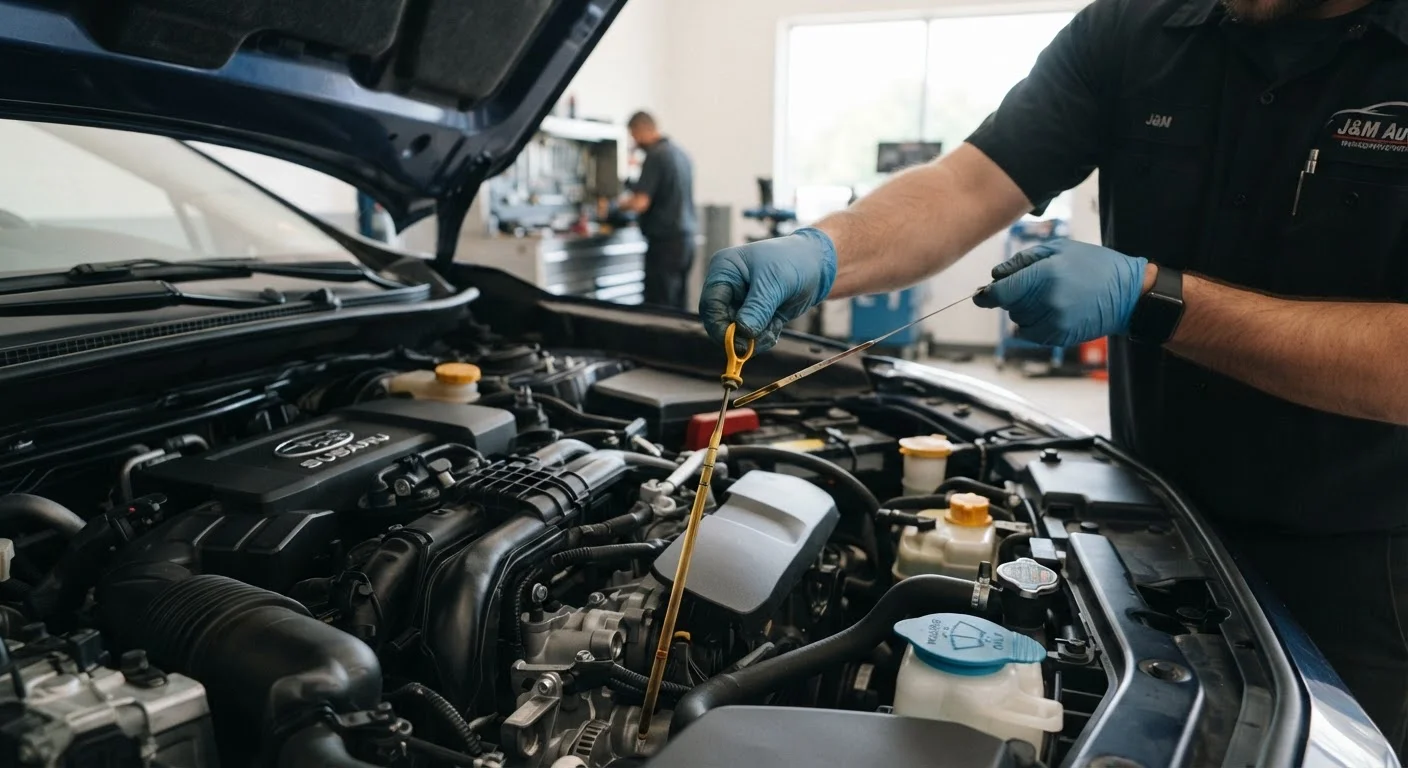
- Lubricates moving engine parts and carries heat and contaminants away. Check with the dipstick when the engine is cold or after sitting for a few minutes. Look for a level between the min and max marks and oil that isn't milky or gritty.
- Coolant (Antifreeze)
- Regulates engine temperature, preventing both overheating in summer and freezing in winter. Found in a translucent reservoir under the hood. Healthy coolant is typically bright green, orange, or pink depending on type - never brown or rusty.
- Brake Fluid
- Transfers the force of your foot on the pedal to the brakes at each wheel via a hydraulic system. It lives in a small reservoir near the firewall. Brake fluid is hygroscopic, meaning it absorbs moisture over time, which lowers its boiling point and reduces braking effectiveness. Most manufacturers recommend changing it every two to three years regardless of mileage.
- Transmission Fluid
- Lubricates and cools the gears in your transmission. Automatic transmissions use a dipstick (on many models) or a sealed system checked by a technician. Healthy fluid is typically red or pink and smells slightly sweet. Dark brown fluid with a burnt odor signals it's overdue for a change.
- Power Steering Fluid
- Pressurizes the power steering system to make turning the wheel effortless. Many newer vehicles use electric power steering and don't require this fluid. Check your owner's manual to confirm your vehicle's setup.
- Windshield Washer Fluid
- The only fluid here with no mechanical consequence if it runs out, but it's critical for visibility. Never substitute plain water - it can freeze and harbor bacteria, and it lacks the cleaning agents needed to clear road grime effectively.
How to Check and Read Your Fluids
Most fluid checks follow the same basic sequence: locate the reservoir or dipstick, wipe clean, reinsert or observe, and read the level and condition. Always check engine oil and transmission fluid (where applicable) on a level surface for an accurate reading.
Color and clarity are your best diagnostic tools. Use this quick reference:
| Fluid | Healthy Appearance | Concerning Appearance |
|---|---|---|
| Engine Oil | Amber to medium brown, clear | Black and gritty, or milky/frothy |
| Coolant | Bright green, orange, or pink | Brown, rusty, or oily |
| Brake Fluid | Clear to light yellow | Dark brown or black |
| Transmission Fluid | Red or pink, slightly translucent | Dark brown, opaque, burnt smell |
| Power Steering Fluid | Clear, red, or amber | Dark brown, foamy, or burnt |
Your owner's manual specifies the exact fluid grades and change intervals your manufacturer recommends - generic timelines are a starting point, not a substitute.
Build a Monthly Under-Hood Habit
Pick one day each month - many drivers use the first of the month - to do a quick walk-around and fluid check before a cold start. It takes about five minutes and catches most problems while they're still minor. Keep a clean rag and a small flashlight in your trunk for better visibility.
Warning Signs You Should Never Ignore
Between checks, your car communicates fluid problems in several ways:
- Dashboard warning lights: Oil pressure, temperature, and brake system lights are direct fluid-related alerts that require prompt attention.
- Puddles under the car: Any consistent spot on your garage floor or parking space warrants investigation. Color and location help narrow the cause.
- Unusual smells: A sweet smell while driving often indicates a coolant leak. A burning smell can signal oil or transmission fluid contacting hot engine parts.
- Spongy or low brake pedal: If the pedal sinks further than usual before the brakes engage, low or degraded brake fluid may be involved - this is a safety-critical issue. See how to read brake warning signs for a deeper look.
- Rough shifting or slipping gears: Transmission fluid issues often manifest as hesitation, hard shifts, or the transmission slipping between gears.
When to DIY and When to See a Mechanic
Checking fluid levels and topping off most fluids is well within the capability of any attentive driver. Tasks like adding washer fluid, topping off coolant in a cold reservoir, or checking oil require no tools and minimal mechanical knowledge.
However, certain situations call for a qualified mechanic:
- Any fluid level that keeps dropping despite being topped off - a persistent drop means a leak that needs diagnosis.
- Brake fluid changes, which may require bleeding the system to remove air bubbles.
- Transmission fluid changes on sealed systems, which require specialized equipment.
- Coolant flushes, which involve draining and disposing of old coolant safely.
- Any time you observe milky engine oil, which can indicate a blown head gasket - a major repair.
Staying on a consistent service schedule is the best defense. Understanding your maintenance schedule helps you anticipate fluid-related services before they become emergencies, and gives you a clearer picture of what routine upkeep typically costs.