

Key Takeaways
Significant savings on routine labor costs
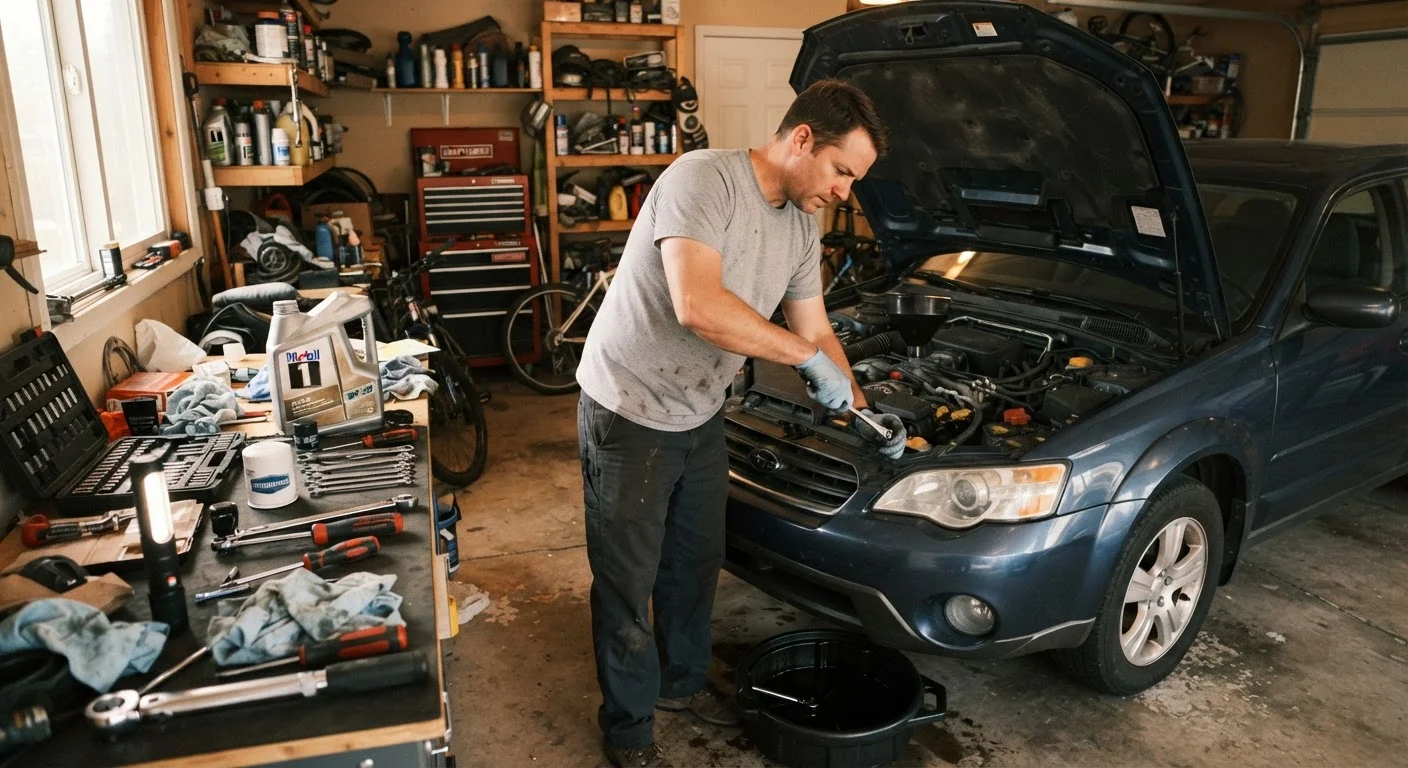
Labor typically makes up 50-70% of a shop invoice for straightforward tasks. Performing basic maintenance yourself eliminates that markup on jobs that don't require specialized equipment.
Greater familiarity with your own vehicle
Hands-on maintenance builds an intuitive understanding of how your car looks and sounds when everything is normal, making it easier to notice early warning signs of developing problems.
Flexible scheduling on your own timeline
You're not dependent on appointment availability or shop hours. Routine tasks can be completed when it suits you, without arranging alternative transportation.
Control over parts quality and sourcing
Home mechanics can research and select components that meet or exceed OEM specifications, rather than relying solely on whatever a shop has in stock.
Risk of serious error on safety-critical systems
Mistakes involving brakes, steering, or suspension can directly compromise vehicle control. Unlike a misinstalled cabin filter, these errors can create road hazards with serious consequences.
Upfront tool investment reduces savings
Specialty tools - torque wrenches, OBD-II scanners, brake bleeder kits - add real cost that can erode the financial case for DIY, particularly for infrequent tasks.
Potential warranty complications
Some repairs, if not documented properly or performed incorrectly, can complicate warranty claims - even if the underlying law protects consumers who perform basic maintenance.
Modern vehicles require specialized diagnostics
Advanced driver assistance systems, hybrid components, and increasingly complex electronics often require manufacturer-specific scan tools and software that are not available to most home mechanics.
Improper disposal of fluids carries legal and environmental risk
Used motor oil, coolant, and brake fluid must be disposed of according to local regulations. Many home mechanics underestimate this responsibility, and improper disposal can carry fines.
Our Verdict
DIY maintenance makes strong sense for straightforward, low-risk tasks where the cost savings are real and the margin for error is forgiving. For safety-critical systems - brakes, steering, suspension, advanced electronics - professional service is usually the wiser investment. Neither approach is universally superior; the right choice depends on the specific job, your tools, your skill level, and your vehicle's requirements.
Drivers who are comfortable with basic mechanical tasks and want to reduce routine maintenance costs, while still relying on professionals for complex or safety-sensitive repairs.
The Real Divide: Low-Risk Tasks vs. Safety-Critical Work
The DIY-versus-shop question isn't binary. It sits on a spectrum defined by the complexity of the job, the tools required, and the consequences of getting it wrong. Understanding that spectrum is the first step toward making smarter decisions about your vehicle.
At one end are genuinely beginner-friendly tasks: replacing cabin air filters, swapping wiper blades, topping off windshield washer fluid, or changing a battery on a straightforward application. These jobs require minimal tools, carry little risk if done carefully, and are well-documented in most owner's manuals. At the other end are jobs that affect whether your vehicle can stop or steer safely - brake caliper replacements, wheel bearing service, and anything involving the supplemental restraint (airbag) system. These demand professional tools, calibrated torque specifications, and experience that most home mechanics simply don't have.
The full picture of what keeps a car road-ready helps illustrate just how many interdependent systems are involved - and why understanding each one's risk profile matters before picking up a wrench.
Significant savings on routine labor costs
Labor typically makes up 50-70% of a shop invoice for straightforward tasks. Performing basic maintenance yourself eliminates that markup on jobs that don't require specialized equipment.
Greater familiarity with your own vehicle
Hands-on maintenance builds an intuitive understanding of how your car looks and sounds when everything is normal, making it easier to notice early warning signs of developing problems.
Flexible scheduling on your own timeline
You're not dependent on appointment availability or shop hours. Routine tasks can be completed when it suits you, without arranging alternative transportation.
Control over parts quality and sourcing
Home mechanics can research and select components that meet or exceed OEM specifications, rather than relying solely on whatever a shop has in stock.
Why DIY Can Make Strong Financial Sense
Labor is typically the largest line item on any shop invoice. Independent garages commonly bill between $80 and $150 per hour, and dealership service departments often charge more. For a task like an engine air filter replacement - a five-minute job - the parts cost a fraction of what you'll pay when labor is added. Over a vehicle's lifetime, consistently handling the easier maintenance yourself can represent meaningful savings.
Beyond cost, there's a knowledge dimension. Drivers who perform their own maintenance tend to develop a clearer sense of how their vehicle behaves, what normal looks and smells like under the hood, and when something is changing. That situational awareness often leads to catching developing problems earlier. For guidance on fluid types, service intervals, and specifications unique to your vehicle, the owner's manual remains an underused but authoritative resource.
50-70%
Share of shop bill typically attributed to labor
Industry estimates suggest labor commonly represents the majority of total repair costs, making it the primary target for DIY savings on simpler jobs.
$80-$150+
Typical hourly labor rate at U.S. repair shops
Rates vary by region, shop type, and vehicle complexity; dealership service departments generally bill at the higher end of this range or above.
Where Professional Service Earns Its Cost
There are maintenance categories where attempting DIY without the right background creates genuine risk. Modern vehicles increasingly rely on electronic systems - adaptive suspension, stability control modules, lane-keeping sensors - that require manufacturer-specific scan tools and software to service correctly. An improperly reset sensor or a miscalibrated system can trigger false warnings or, worse, disable a safety feature without the driver knowing.
Brake jobs illustrate this well. While pad replacement on a straightforward vehicle is within reach for experienced home mechanics, incorrect rotor installation, improper caliper piston compression, or wrong brake fluid type can compromise stopping power. The stakes are high enough that most mechanics - even skilled ones - apply extra caution here. Similarly, any repair that requires lifting the vehicle and working underneath it introduces serious safety considerations; proper jack stands and vehicle positioning are non-negotiable, and the risk of error is real.
For a realistic picture of what professional service typically costs across vehicle types and driving situations, see our coverage of what drivers typically spend on maintenance and why it varies. If you're weighing which type of shop to use, the garage vs. dealership comparison is worth reading alongside this one.
Risk of serious error on safety-critical systems
Mistakes involving brakes, steering, or suspension can directly compromise vehicle control. Unlike a misinstalled cabin filter, these errors can create road hazards with serious consequences.
Upfront tool investment reduces savings
Specialty tools - torque wrenches, OBD-II scanners, brake bleeder kits - add real cost that can erode the financial case for DIY, particularly for infrequent tasks.
Potential warranty complications
Some repairs, if not documented properly or performed incorrectly, can complicate warranty claims - even if the underlying law protects consumers who perform basic maintenance.
Modern vehicles require specialized diagnostics
Advanced driver assistance systems, hybrid components, and increasingly complex electronics often require manufacturer-specific scan tools and software that are not available to most home mechanics.
Improper disposal of fluids carries legal and environmental risk
Used motor oil, coolant, and brake fluid must be disposed of according to local regulations. Many home mechanics underestimate this responsibility, and improper disposal can carry fines.
Making the Call: A Practical Framework
Before deciding on any maintenance task, consider four questions: Do I have the correct tools - not improvised substitutes? Do I understand the consequences if this is done incorrectly? Will this affect a safety-critical system? And will a DIY repair affect my vehicle's warranty or emissions compliance?
For newer vehicles still under warranty, some manufacturer agreements require that service be documented and performed by qualified technicians to preserve coverage - though the Magnuson-Moss Warranty Act generally protects consumers' rights to perform basic maintenance without voiding the warranty. When in doubt, review your warranty documentation carefully.
Magnuson-Moss Warranty Act: What It Does and Doesn't Cover
Federal law generally prohibits manufacturers from voiding a vehicle warranty solely because the owner performed routine maintenance using aftermarket parts. However, if a DIY repair causes or contributes to a specific failure, that damage may not be covered. The law protects informed, careful home maintenance - not mistakes. When warranty coverage is a concern, documenting your work with receipts and dated notes is always advisable.
The pattern of deferred maintenance is also worth understanding - putting off even basic service has compounding effects over time, as detailed in our piece on what happens when scheduled maintenance is skipped. Whether you DIY or use a shop, consistency matters more than method.