

Key Takeaways
Our Verdict
Neither dealerships nor independent garages universally win this comparison - each excels in specific circumstances. For complex, model-specific repairs or recalls on newer vehicles still under warranty, a dealership service center has clear advantages. For routine maintenance and general repairs on out-of-warranty vehicles, a reputable independent shop often delivers comparable quality at a lower cost.
| Best for | Recommended |
|---|---|
| Owners of newer vehicles under an active manufacturer warranty | Dealership Service Center |
| Drivers seeking routine maintenance at lower labor rates | Independent Garage |
| Recall work and technical service bulletins specific to your model | Dealership Service Center |
| Out-of-warranty vehicles needing general repairs | Independent Garage |
What Each Option Actually Offers
When your car needs service, you have two primary choices: return to an authorized dealership service center or take it to an independent repair shop. Both can keep your vehicle running reliably, but they operate very differently.
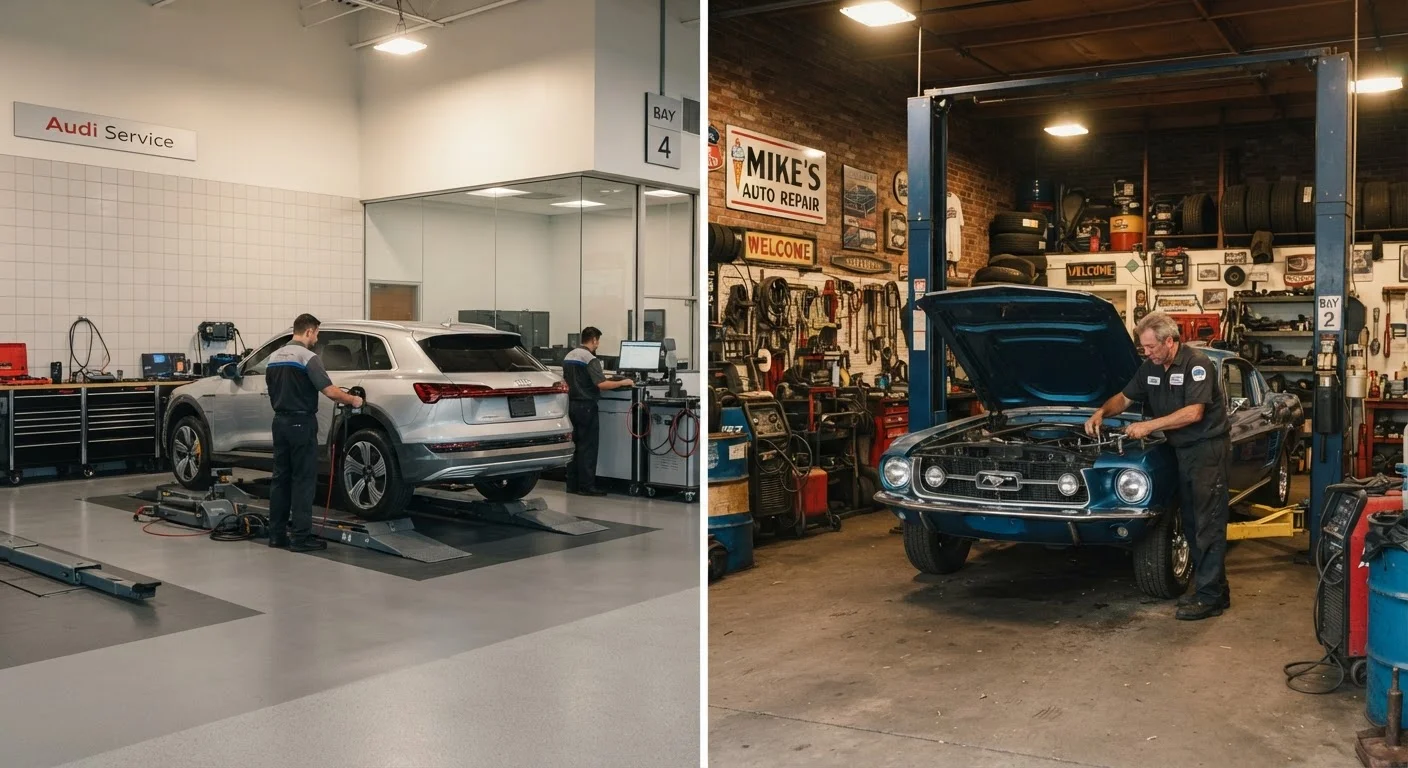
Dealership service centers are factory-authorized facilities staffed by technicians trained specifically on the vehicles that brand sells. They receive ongoing manufacturer training, use original equipment manufacturer (OEM) parts by default, and have direct access to proprietary diagnostic software and technical service bulletins (TSBs) - manufacturer-issued guidance on known issues. Recall work is performed exclusively at dealerships at no charge to the owner.
Independent garages are privately owned shops not affiliated with any manufacturer. Many employ ASE-certified (Automotive Service Excellence) technicians capable of working on multiple makes and models. They typically have access to aftermarket and quality remanufactured parts, and many invest in professional-grade diagnostic equipment that can handle the vast majority of modern vehicles. For everyday drivers without complex model-specific issues, a well-regarded independent shop often provides excellent value.
For a broader look at how dealer relationships work across the car-ownership experience, the Buying a Car hub covers the full picture from purchase through ownership.
Cost and Labor Rate Differences
Labor rates are typically the sharpest point of contrast. Dealership service departments generally carry higher hourly labor rates than independent shops, reflecting their overhead, specialized training programs, and facility costs. That gap can be meaningful over the life of a vehicle.
Parts pricing also differs. Dealerships default to OEM parts, which are manufactured to the automaker's exact specifications but often priced at a premium. Independent shops can source OEM parts when needed but also offer quality aftermarket alternatives at lower price points - a reasonable option for many standard repairs.
| Dealership Service Center | Independent Garage | |
|---|---|---|
| Labor rates | Generally higher | Often lower |
| Parts used | OEM by default | OEM or quality aftermarket |
| Technician specialization | Brand-specific training | Multi-make, ASE-certified |
| Recall repairs | Yes, required and free | Not authorized to perform |
| Diagnostic software access | Full proprietary access | Professional aftermarket tools |
| Warranty risk | Zero ambiguity | Protected by law if done correctly |
| Convenience | Tied to brand locations | More locations, flexible hours |
It is worth noting that some dealerships offer competitive pricing on common services like oil changes or tire rotations as loss leaders to bring customers into the service lane. Always request a written estimate before authorizing any work, regardless of where you go.
Warranty Considerations You Should Know
One of the most persistent misconceptions in auto service is that taking your car to an independent shop will void your new-vehicle warranty. This is generally not accurate under U.S. federal law.
The Magnuson-Moss Warranty Act prohibits manufacturers from voiding a warranty solely because a consumer used an independent service provider for routine maintenance - provided the work was performed correctly and the appropriate parts (meeting OEM specifications) were used. The burden generally falls on the manufacturer to demonstrate that independent service caused the specific problem being claimed.
Keep Your Service Records Organized
Whether you use a dealership or an independent shop, maintain dated, itemized receipts for every service visit. If a warranty claim is ever disputed, your documentation is your primary defense. A simple folder - physical or digital - organized by date and mileage is all you need.
That said, certain situations do involve dealership-only requirements. Recall repairs must be performed at an authorized dealership. Some extended warranties or certified pre-owned (CPO) programs may have their own network restrictions - always read the specific terms of your coverage before making service decisions.
Keeping dated, itemized service records is essential under either scenario. Documentation protects you if a warranty dispute ever arises.
When Dealership Service Makes Clear Sense
There are scenarios where routing your vehicle back to the dealership is genuinely the smarter call:
- Recall repairs: Only authorized dealerships perform recall work, and it is always free to the vehicle owner.
- Model-specific technical issues: For unusual problems tied to a known defect or a TSB, dealer technicians with brand-specific training and software have a diagnostic edge.
- Vehicles still under the factory powertrain warranty: While the law protects you when using independent shops, some owners prefer to eliminate any ambiguity during a new vehicle's warranty period.
- Complex software updates: Modern vehicles with advanced driver-assistance systems (ADAS) often require manufacturer-proprietary software for calibrations after certain repairs.
If you're also evaluating broader dealership interactions - including financing - our comparison of dealer financing vs. bank or credit union loans explores another dimension of that relationship.
Choosing and Vetting an Independent Shop
Not all independent garages are equal. Due diligence matters before entrusting your vehicle to any shop. Look for ASE-certified technicians, which signals a standardized level of tested competency. Ask whether the shop has experience with your specific make and model, and whether they have the diagnostic equipment your vehicle requires.
Customer reviews, word-of-mouth referrals from other owners of the same make, and shop affiliations with recognized industry organizations can all help you assess reliability. A trustworthy shop will provide a written estimate, explain the work clearly, and return replaced parts on request.
For those also weighing whether some maintenance tasks are appropriate to handle personally, our article on DIY car maintenance vs. taking it to a shop offers a grounded look at where the line falls between reasonable home tasks and work that warrants professional attention.
This article is for general informational purposes. Warranty terms vary by manufacturer and coverage type - always review your specific warranty documentation and consult a qualified professional for questions about your individual vehicle or coverage.