

Key Takeaways
Check Engine Light
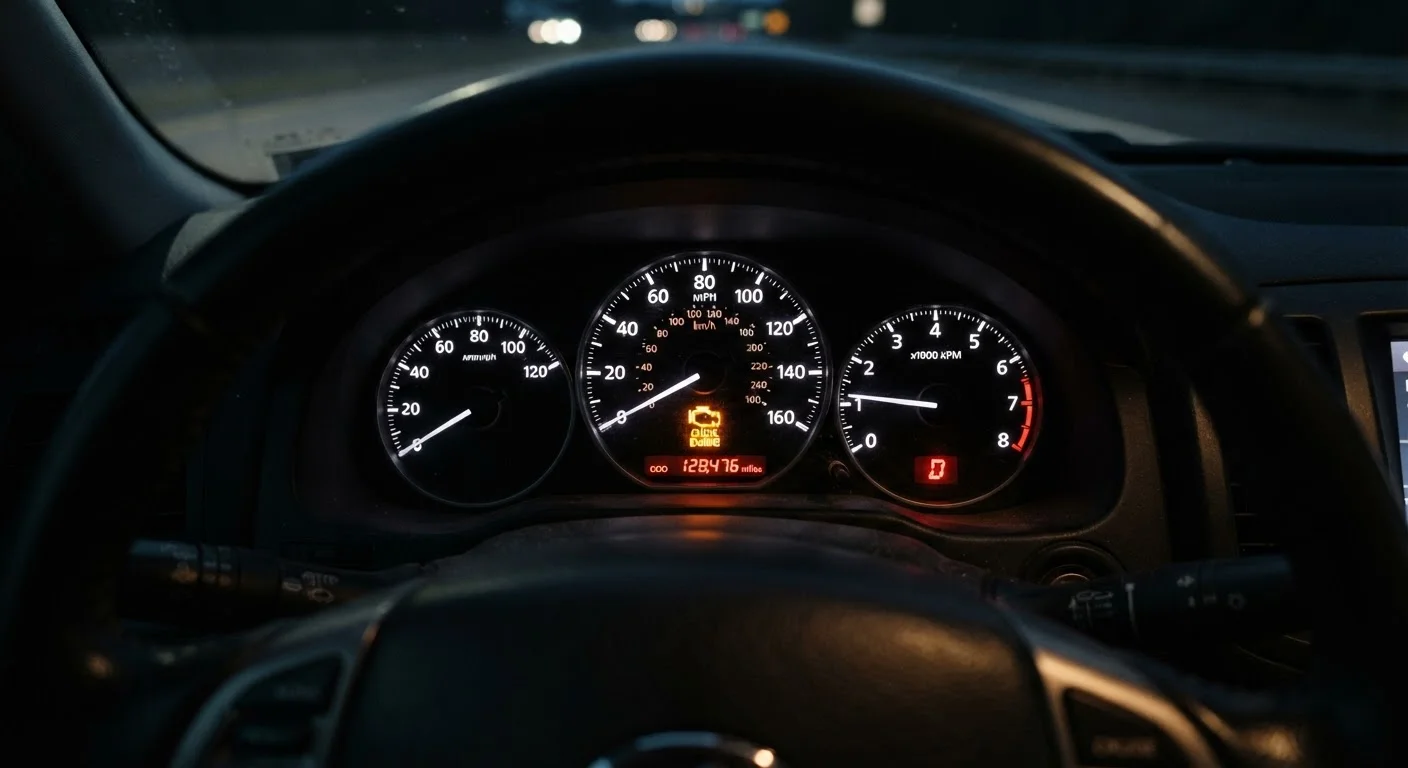
The check engine light-formally called the Malfunction Indicator Lamp (MIL)-is a dashboard warning that your vehicle's onboard diagnostics system (OBD-II) has detected a fault somewhere in the engine, emissions, or drivetrain. It does not identify the specific problem on its own; it simply signals that a diagnostic trouble code (DTC) has been stored in the vehicle's computer. The light can indicate anything from a loose gas cap to a misfiring engine.
All cars and light trucks sold in the U.S. after 1996 are required to have a standardized OBD-II port, allowing any compatible scan tool to read stored fault codes.
What the Check Engine Light Is Actually Telling You
Your car's onboard diagnostics system continuously monitors dozens of sensors and systems. When a reading falls outside the expected range, the computer logs a diagnostic trouble code (DTC) and illuminates the check engine light. Crucially, that light is a messenger-not a diagnosis. The same light might appear for a $10 fix or a $1,000 repair, which is why reading the code is always the first step.
The light operates in two modes that carry different urgency levels:
- Steady light: A fault has been detected. Schedule service soon, but you can typically drive carefully to a shop.
- Flashing or blinking light: An active, potentially damaging condition-most commonly a severe engine misfire. Reduce speed, avoid heavy acceleration, and seek service promptly.
Understanding these two states helps you calibrate your response rather than either panicking or brushing it off entirely. For a broader look at how your vehicle's systems connect, see everything that goes into keeping a car road-ready.
The Most Common Triggers
While there are hundreds of possible fault codes, a handful of issues account for a significant share of check engine light occurrences:
~40%
Of check engine lights tied to O2 sensor or gas cap issues
Industry technician surveys consistently identify oxygen sensors and loose gas caps among the most frequently diagnosed check engine light causes.
Hundreds of
Possible OBD-II diagnostic trouble codes
The OBD-II standard defines a broad library of fault codes spanning engine, transmission, emissions, and sensor systems across all vehicle makes.
1996
Year OBD-II became mandatory in U.S. vehicles
The EPA and NHTSA required all cars and light trucks sold in the United States from model year 1996 onward to include a standardized OBD-II diagnostic system.
- Loose or faulty gas cap: The evaporative emissions system detects vapor leaks. Check and tighten your cap first before assuming anything more serious.
- Failing oxygen (O2) sensor: These sensors monitor exhaust gases to help optimize fuel delivery. A degraded sensor can reduce fuel economy and, if ignored long enough, damage the catalytic converter.
- Catalytic converter failure: Often a downstream consequence of neglected O2 sensors or misfires. Catalytic converter replacement is one of the more expensive check engine repairs.
- Mass airflow (MAF) sensor: Measures the air entering the engine. A dirty or failing MAF sensor causes rough idling and poor fuel economy.
- Engine misfire: Misfires-caused by worn spark plugs, failing ignition coils, or fuel delivery problems-are the primary cause of a flashing check engine light and can rapidly damage the catalytic converter.
- Thermostat issues: A stuck thermostat can trigger codes and lead to overheating or inefficient engine operation.
Keeping up with scheduled service intervals-including spark plug and sensor replacements-reduces the odds of many of these faults. Our guide to your car's maintenance schedule explains what those intervals mean for long-term engine health.
How to Read the Situation and Respond
When the light comes on, context matters. Ask yourself a few quick questions:
- Is the light flashing? If yes, back off the throttle and head to a mechanic as soon as practical-do not continue driving aggressively.
- Are there other symptoms? Rough idling, smoke, a burning smell, loss of power, or unusual noises alongside the check engine light elevate the urgency significantly. Some of these can overlap with other warning systems-for example, brake-related symptoms covered in brake wear warning signs are separate from the check engine light but equally worth addressing promptly.
- Is it a steady, isolated light? Get the code read. Many auto parts retailers offer free OBD-II scanning. The code narrows the field considerably before you speak with a mechanic.
Get the Code Read First-It's Free
Before heading to a repair shop, stop at a local auto parts retailer. Most offer complimentary OBD-II scanning in their parking lot. Knowing the specific fault code gives you a starting point for the conversation with your mechanic and helps you avoid paying a diagnostic fee for something you already have part of the answer to.
For owners of higher-mileage vehicles, check engine lights deserve extra attention. Components like oxygen sensors and catalytic converters degrade with age, and the consequences of ignoring faults compound over time. See how maintenance priorities shift after 100,000 miles for guidance specific to older vehicles.
If you're weighing whether to address a repair yourself, DIY car maintenance vs. taking it to a shop offers a balanced breakdown of when each approach makes sense. Some check engine causes-like replacing a gas cap or a spark plug-are within reach of confident home mechanics; others, like catalytic converter replacement, are best left to professionals.