

Key Takeaways
Why Nighttime Driving Is Riskier Than It Feels
Most drivers feel equally confident behind the wheel at 2 p.m. and 2 a.m. - and that confidence gap is part of the problem. According to the National Highway Traffic Safety Administration (NHTSA), roughly half of all traffic fatalities occur at night, even though nighttime accounts for a much smaller share of total miles driven. The risk per mile driven after dark is dramatically higher than during daylight hours.
Several factors converge after sunset. Human vision deteriorates sharply in low light - peripheral vision narrows, color recognition weakens, and depth perception becomes less reliable. Pedestrians and cyclists are far harder to detect, especially those not wearing reflective clothing. At the same time, driver fatigue tends to peak during late-night hours, slowing reaction times in ways that rival the impairment from alcohol. Our guide on drowsy driving and reaction time explains how dramatically fatigue degrades driving performance.
Overconfidence is the compounding factor. Drivers who have traveled the same road dozens of times at night often rely on memory rather than active observation - a dangerous habit when hazards like debris, animals, or pedestrians appear without warning.
Core Night Driving Practices That Make a Real Difference
Never overdrive your headlights - match your speed to your actual stopping distance
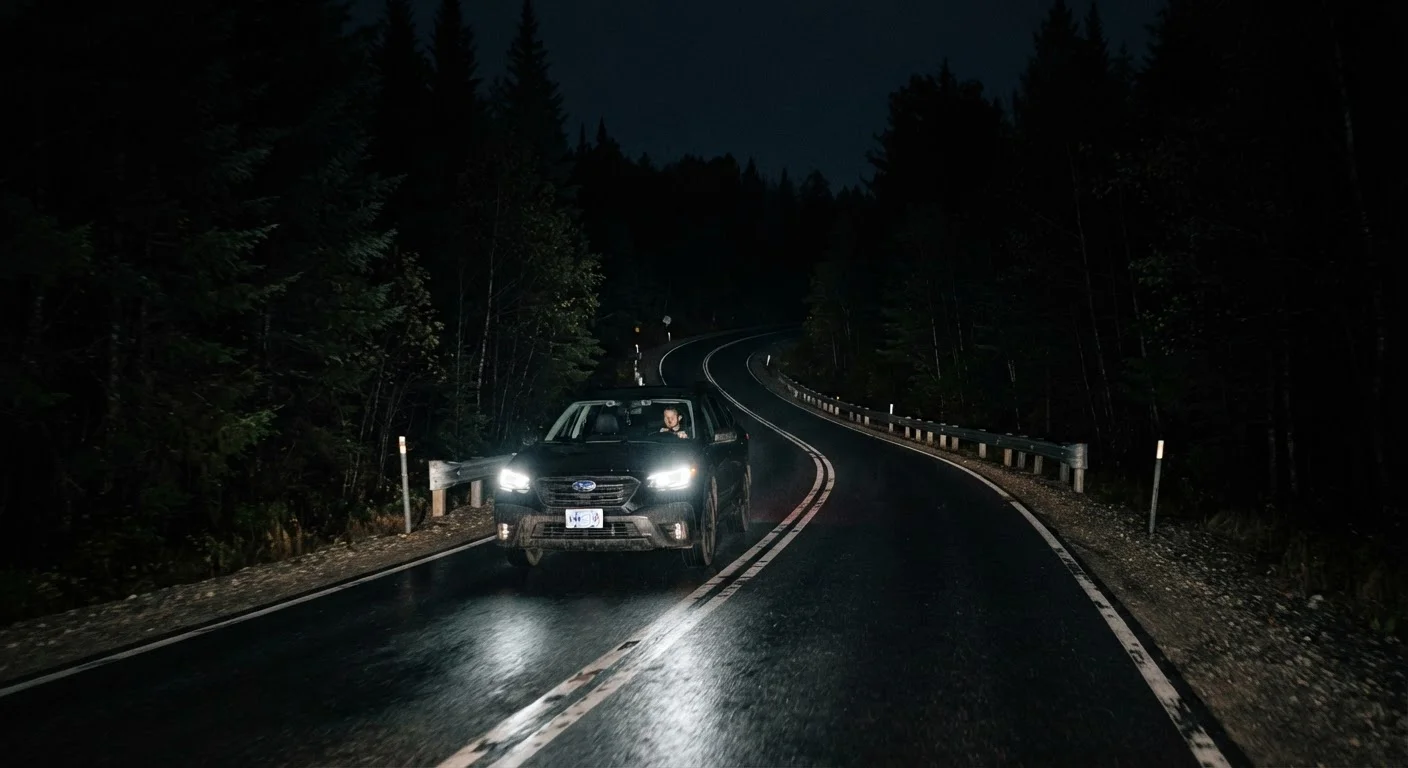
Standard low-beam headlights illuminate roughly 160-200 feet ahead. At 60 mph, a typical vehicle needs more than 200 feet to stop. This means many drivers are regularly traveling faster than their ability to stop within the visible road ahead. Slowing down on unlit roads closes this gap.
Increase your following distance to at least four seconds after dark
The standard three-second following distance is calibrated for daytime conditions with good visibility. At night, reaction time to unexpected hazards requires additional buffer. Four to five seconds of following distance gives you meaningful extra stopping room.
Scan actively for pedestrians and cyclists well beyond your headlight beam
Pedestrians on unlit roads are frequently visible only at the outer edge of headlight range, giving drivers very little time to react. Cyclists without lights or reflective gear can appear almost without warning. Active, wide-field scanning - not just following the center line - catches these hazards earlier.
Recognize and act on fatigue before it becomes dangerous
Driver fatigue peaks between midnight and 6 a.m. and again in the mid-afternoon, but nighttime driving compounds the effect of any accumulated tiredness. Microsleep episodes - brief involuntary lapses lasting a few seconds - can occur without the driver being aware. If you notice repeated yawning, difficulty focusing, or lane drift, pull over safely.
Use high beams correctly on open, unlit roads
Many drivers default to low beams at all times out of habit or uncertainty about when high beams are appropriate. On unlit rural or suburban roads with no oncoming or leading traffic, high beams roughly double your visible range, giving you substantially more time to detect and react to hazards.
Check and maintain headlight lenses and alignment regularly
Headlight effectiveness degrades quietly over time. Oxidized plastic lenses scatter light instead of projecting it forward; misaligned headlights may illuminate the ditch rather than the road. Neither is obvious from the driver's seat, making periodic inspection essential.
These practices address the specific risks that darkness introduces. They are not substitutes for general safe-driving habits but additions to them. For a broader pre-drive checklist - including verifying that your headlights are aimed correctly - see our pre-trip safety walkthrough.
Headlights, Vision Adaptation, and What Drivers Get Wrong
One of the most overlooked nighttime habits involves how drivers use - and misuse - their headlights. Yellowed or cloudy headlight lenses can reduce light output by as much as 80%, yet many drivers don't notice the degradation because it happens gradually. Keeping lenses clean and clear is basic car maintenance with a direct safety payoff.
High beams are underused on open roads and overused around other drivers. The correct practice is to engage high beams on unlit roads whenever no oncoming traffic or leading vehicles are within roughly 500 feet - and to switch back to low beams promptly when they are. Failing to dim for oncoming drivers doesn't just create discomfort; it can temporarily blind them during the critical moments their vehicles pass yours.
Eye adaptation also matters more than most drivers realize. When you move from a brightly lit gas station or restaurant back into your car, your eyes need time - sometimes several minutes - to readjust to the dark. Avoiding staring directly into oncoming headlights and using the night setting on your rearview mirror (the tab on the bottom of most standard mirrors) can preserve your night-adapted vision during a drive.
A Note on Vision and Age
Night vision naturally declines with age, and many drivers over 50 experience increased glare sensitivity, slower adaptation to darkness, and reduced contrast perception. These changes don't disqualify anyone from driving, but they do warrant extra awareness. If night driving feels noticeably harder than it used to, an eye exam is a worthwhile step - and adjusting habits like speed and following distance can meaningfully compensate for reduced visual acuity.
Start Now: Quick Habits You Can Build Tonight
Night driving risk is real, but it's also manageable. Drivers who treat nighttime conditions with appropriate caution - rather than assuming the road is just a darker version of daytime - consistently demonstrate lower crash involvement. Revisit your habits around following distance as well; our coverage of why tailgating is more dangerous than most drivers realize is especially relevant after dark, when stopping distances are already challenged by reduced visibility.