

Key Takeaways
Option A
Fixed Expenses
The predictable, non-negotiable costs you plan around.
Best for: Anchoring your budget baseline - these amounts stay the same each month regardless of your behavior.
Option B
Variable Expenses
The flexible costs you actively manage month to month.
Best for: Finding room to adjust spending when income dips or savings goals need a boost.
If you're building your first budget from scratch
Fixed Expenses
Start by cataloguing every fixed cost so you know the non-negotiable floor your income must cover before anything else is allocated.
If you need to find spending cuts quickly
Variable Expenses
Variable costs are where immediate savings live - groceries, dining, subscriptions, and entertainment can all be trimmed without breaking a contract.
If your income changes month to month
Fixed Expenses
Keeping fixed expenses as low as possible creates breathing room when a slow month hits - high fixed costs with irregular income is a risky combination.
If you want to build a savings habit
Fixed Expenses
Treating a savings contribution as a fixed expense - same amount, same date each month - removes the temptation to skip it when variable spending runs high.
What Makes an Expense 'Fixed' or 'Variable'?
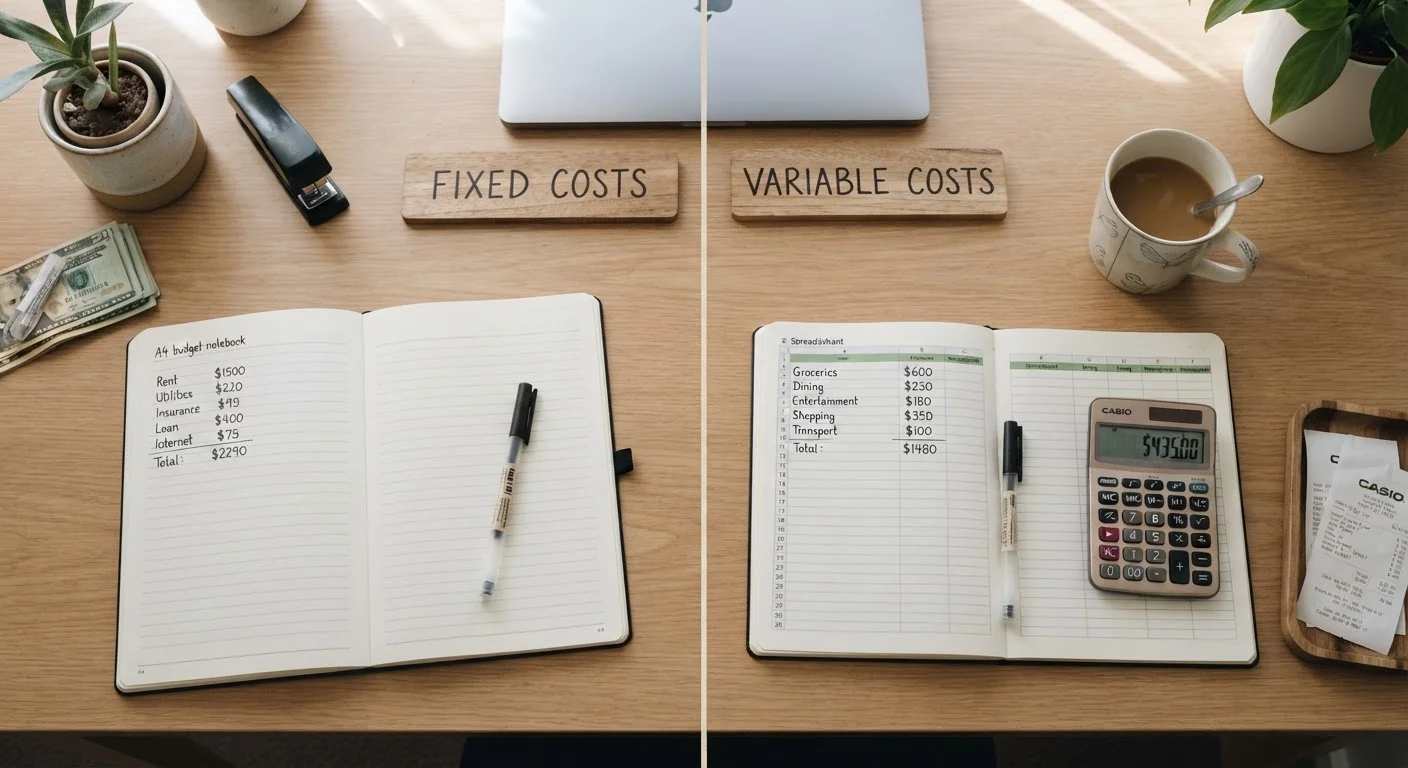
At its core, the distinction is about predictability. A fixed expense is one where the dollar amount stays constant from month to month - your rent or mortgage payment, a car loan installment, or a health insurance premium. You owe the same amount whether you had a great month or a rough one. These costs are largely outside your day-to-day control.
A variable expense is one that changes based on how much of something you consume or choose to spend. Groceries, gas, utility bills, dining out, and clothing are all classic examples. The category stays the same month to month; the amount does not.
This distinction matters because it shapes how you build and manage a budget. Fixed expenses set the floor - you need to cover them no matter what. Variable expenses are where your behavioral choices live, which makes them the primary source of financial flexibility. For a deeper look at how these two expense types fit into a broader financial picture, see The Complete Guide to Building and Sustaining a Personal Budget.
Fixed vs. Variable: A Side-by-Side Look
The table below illustrates common examples of each type and the key differences in how they behave. Notice that neither category is automatically a "need" or a "want" - that's a separate question worth exploring in Needs vs. Wants: Why the Line Is Blurrier Than You Think.
| Criterion | Fixed Expenses | Variable Expenses |
|---|---|---|
| Amount each month | Stays the same | Changes based on usage or choices |
| Predictability | High - easy to plan around | Low to moderate - requires tracking |
| Examples | Rent, mortgage, car loan, insurance | Groceries, gas, dining, utilities |
| Control level | Low - often contractual | High - driven by daily decisions |
| Where to cut first | Rarely; requires renegotiation or life change | Yes - primary target for short-term savings |
| Budget role | Sets the non-negotiable floor | Fills the remaining flexible allocation |
One nuance worth knowing: semi-variable expenses blend both types. A cell phone plan, for example, may have a fixed base charge plus variable overage fees. Utilities often work the same way. Budget for the predictable base as if it's fixed, and track the variable portion separately.
Why This Distinction Makes Budgeting Click
Most people who struggle with budgets don't fail because of math - they fail because they treat all expenses as roughly equal. When an unexpected shortfall hits, they don't know which costs are cuttable and which are contractually locked in.
Separating fixed from variable expenses solves that. It gives you an immediate, honest picture of your minimum monthly obligation - the amount your income must cover before any discretionary spending begins. Everything above that floor is, in principle, negotiable.
Don't Overlook Annual Fixed Costs
Some fixed expenses don't appear every month - think annual insurance renewals, vehicle registration fees, or subscription services billed yearly. These are still fixed in amount, just irregular in timing. Divide each annual cost by 12 and treat that monthly share as a fixed line item so the payment never catches you off guard.
This framing is particularly powerful if your income varies. Freelancers and gig workers, for instance, are especially exposed when fixed expenses are high relative to a slow-income month. Budgeting on an Irregular Income covers strategies built specifically for that reality.
Fixed expenses also connect to larger financial decisions. A mortgage is a fixed expense, and the choice between a fixed-rate loan and an adjustable-rate one determines how stable that fixed cost actually is over time - see Fixed-Rate vs. Adjustable-Rate Mortgages for more on that tradeoff.
Putting It Into Practice
Here's a straightforward way to apply this framework to your own finances:
- List every fixed expense with its exact monthly amount. Include rent or mortgage, loan payments, insurance premiums, and any subscription billed at a flat rate.
- Estimate your variable expenses by reviewing two to three months of bank or credit card statements. Use an average, not your best month.
- Subtract both totals from your net income. What remains is your discretionary buffer - and a realistic signal of whether your current spending is sustainable.
- Identify which variable expenses you're willing to reduce if income drops or a savings goal demands it. Having this list ready in advance removes the stress of making decisions under pressure.
Once you understand the fixed/variable split, you're ready to explore structured budgeting methods that build on it. Zero-Based, 50/30/20, Envelope: Which Budgeting Method Fits Your Life? each use this distinction differently, and choosing the right framework depends on your income pattern, financial goals, and how much structure you want.
This article is for general informational and educational purposes only and does not constitute personalized financial or investment advice. Consult a qualified financial professional for guidance specific to your situation.