

Key Takeaways
A Balanced Plate
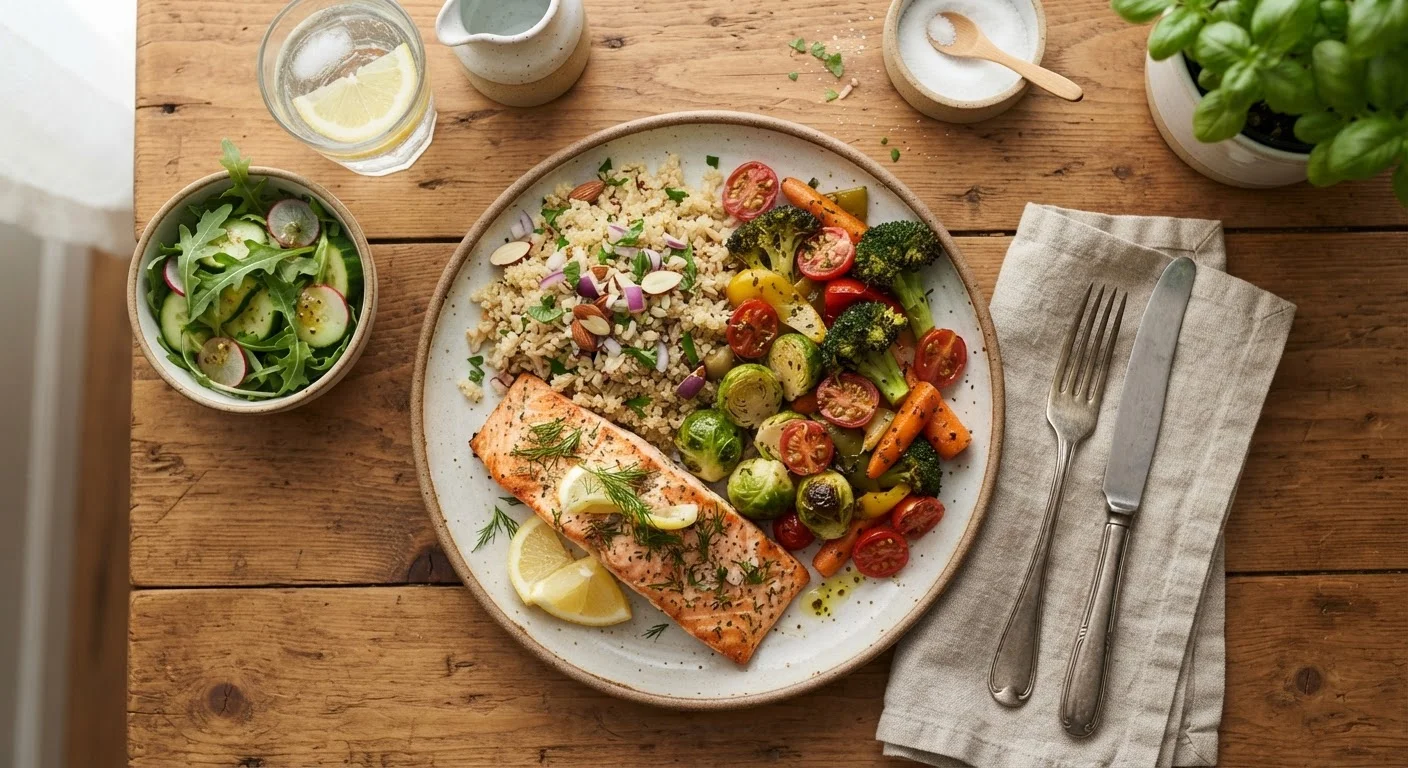
A balanced plate is a meal that includes appropriate proportions of vegetables, protein, carbohydrates, and healthy fats - providing the body with a broad range of nutrients it needs to function well. It's less about hitting exact numbers and more about consistent, reasonable food variety across meals. No single meal needs to be perfect, but most meals should reflect a general mix of these categories.
Dietary guidelines from organizations like the USDA suggest that roughly half a plate should be fruits and vegetables, one quarter lean or plant-based protein, and one quarter whole grains or starchy foods - with small amounts of healthy fats incorporated.
The Problem With Rigid Meal Rules
Most nutrition confusion stems from an overcomplicated food culture - one that swings between extreme restriction and wholesale permissiveness. Fad diets cut entire food groups. Wellness trends moralize eating. The result is that many people have lost the ability to recognize what a reasonable, nourishing meal actually looks like.
The concept of a balanced plate deliberately sidesteps all of that. It's a practical framework, not a strict prescription. Rather than counting calories or following rigid meal plans, it asks a simpler question: does this meal include a reasonable variety of the foods my body needs? That's a standard most people can meet without professional intervention or dietary overhaul. See our common ways good nutrition intentions backfire if you're curious why overly restrictive approaches often do more harm than good.
Breaking Down the Four Zones of a Balanced Plate
Visualizing your plate divided into sections is one of the most accessible tools in mainstream nutrition guidance. Here's what each zone generally contributes:
Vegetables and Fruits - Half the Plate
The largest portion of a balanced meal should be non-starchy vegetables, with fruit included where appropriate. This half delivers fiber, vitamins, minerals, and antioxidants at relatively low caloric density. Variety matters here: different colors generally signal different nutrients, so rotating your choices pays off over time.
Protein - One Quarter of the Plate
Protein supports muscle maintenance, immune function, and satiety. This section can include animal proteins like poultry, fish, eggs, or dairy, or plant-based sources such as beans, lentils, tofu, or edamame. For a deeper look at how different protein sources compare, see our guide on protein sources across eating patterns.
Whole Grains and Starchy Foods - One Quarter of the Plate
Brown rice, quinoa, whole-wheat bread, oats, and starchy vegetables like sweet potato all qualify here. These complex carbohydrates digest more slowly than refined grains, providing steadier energy and contributing additional fiber.
Healthy Fats - A Small but Important Addition
Fats don't occupy a formal zone on the plate, but they belong in the meal. A drizzle of olive oil, a handful of nuts, sliced avocado, or fatty fish in the protein section all contribute essential fatty acids and help the body absorb fat-soluble vitamins like A, D, E, and K.
9 in 10
Americans fall short on vegetable intake
According to CDC data, only about 10% of U.S. adults meet federal fruit and vegetable recommendations - underscoring why the vegetable-heavy plate model is particularly relevant.
~25g
Daily fiber intake recommended for adults
The Dietary Guidelines for Americans identify fiber as a nutrient of public health concern, with most Americans consuming well below the recommended daily amount.
2x
Whole grains recommended over refined grains
U.S. dietary guidelines suggest that at least half of all grain servings come from whole grains, which retain fiber and nutrients stripped away during refining.
Balance Is a Pattern, Not a Single Meal
One of the most liberating insights in nutrition science is that balance operates over time, not meal-to-meal. A lunch that skews heavy on carbohydrates can be complemented by a protein-rich dinner. A meal eaten on the go without vegetables can be offset by choices later in the day.
This means there's room for flexibility without abandoning the framework altogether. The goal is that most meals, most of the time, reflect a reasonable mix - not that every plate is nutritionally flawless. Small, consistent changes tend to outlast dramatic overhauls when it comes to sustainable nutrition habits.
Use Your Plate as a Visual Guide
You don't need a food scale or app to eat more balanced meals. At your next meal, simply scan your plate: Is more than half of it vegetables or fruit? Is there a quality protein source? Are there whole grains or complex carbs represented? That quick mental check is often enough to nudge choices in a better direction without any tracking burden.
If you're ready to put this into practice week by week, our practical guide to meal planning covers pantry staples, portion thinking, and common pitfalls without the overwhelm.
This article is for general informational and educational purposes only and is not a substitute for professional medical or nutritional advice. Consult a qualified healthcare provider or registered dietitian for guidance tailored to your individual health needs.