

Key Takeaways
Reduces fall risk before a crisis occurs
Grab bars, non-slip flooring, and improved lighting address the most common causes of residential falls. Installing these proactively means they're already integrated before they're urgently needed.
Supports independence and reduces caregiver burden
Modifications that allow a person to bathe, cook, and move through their home safely can delay or reduce the need for in-home aides or facility care - outcomes that matter both personally and financially.
Many upgrades are genuinely low-cost
Lever handles, rocker switches, handheld showerheads, and grab bars are inexpensive materials. For homeowners with basic DIY skills, installation costs can be minimal.
Broadens resale appeal across buyer demographics
Universal design features are increasingly sought by a wide range of buyers, from multigenerational families to buyers with disabilities, giving these modifications practical market value.
Improves everyday usability for all household members
Features like lever handles, better task lighting, and no-threshold showers are simply more convenient for anyone - not just older or mobility-limited residents.
Structural changes are expensive and disruptive
Widening doorways, installing a curbless shower, or adding a stair lift involves demolition, permitting, and professional labor. Costs can range from several hundred to many thousands of dollars depending on scope.
Some homes have architectural constraints
Older homes with narrow hallways, tight bathroom layouts, or slab foundations may make certain modifications impractical or disproportionately expensive without a full renovation.
Permit and code requirements add complexity
Structural and plumbing modifications typically require permits and inspections. Skipping this step can create liability issues and complications at resale.
ROI is difficult to predict at resale
While universal design features have broad appeal, the financial return on major modifications depends heavily on local market conditions and buyer demographics - no specific outcome can be guaranteed.
Risk of poor installation for safety-critical features
A grab bar anchored improperly into drywall rather than framing can fail under load - exactly the situation it's meant to prevent. Safety-critical installations need to be done correctly, which may require a professional.
Our Verdict
Aging-in-place modifications are a practical, forward-thinking investment for most homeowners - not just those currently facing mobility challenges. The most impactful changes are often modest in cost but significant in daily safety and comfort. Major structural work requires more planning and professional involvement, but the long-term payoff in independence and reduced injury risk is well-documented.
Homeowners in their 50s and beyond, caregivers planning for a family member's changing needs, or anyone who wants a safer, more universally accessible home without relocating.
Why Plan Ahead Rather Than React
Most aging-in-place modifications happen after a fall, a hospital discharge, or a mobility diagnosis - situations where decisions get made quickly and under pressure. Planning earlier gives homeowners time to choose quality materials, compare contractor bids, and phase the work to fit their budget. It also avoids the rushed, utilitarian look that can result from emergency installs.
The home maintenance mindset applies here too: small, proactive investments prevent larger, costlier interventions down the road. A grab bar installed before a fall costs a fraction of the medical and remodeling expenses that often follow one. According to the Centers for Disease Control and Prevention, falls are the leading cause of injury-related deaths among adults 65 and older - a statistic that makes preventive home adaptation a genuinely meaningful decision.
Universal design - the principle of building spaces usable by people of all ages and abilities - is increasingly mainstream in American residential construction. Many of its features, like lever-style door handles and rocker light switches, improve everyday convenience for everyone in the household, not just older or disabled residents.
The Real Advantages of Aging-in-Place Upgrades
Reduces fall risk before a crisis occurs
Grab bars, non-slip flooring, and improved lighting address the most common causes of residential falls. Installing these proactively means they're already integrated before they're urgently needed.
Supports independence and reduces caregiver burden
Modifications that allow a person to bathe, cook, and move through their home safely can delay or reduce the need for in-home aides or facility care - outcomes that matter both personally and financially.
Many upgrades are genuinely low-cost
Lever handles, rocker switches, handheld showerheads, and grab bars are inexpensive materials. For homeowners with basic DIY skills, installation costs can be minimal.
Broadens resale appeal across buyer demographics
Universal design features are increasingly sought by a wide range of buyers, from multigenerational families to buyers with disabilities, giving these modifications practical market value.
Improves everyday usability for all household members
Features like lever handles, better task lighting, and no-threshold showers are simply more convenient for anyone - not just older or mobility-limited residents.
Beyond personal safety, these modifications can meaningfully affect a home's marketability. A zero-threshold shower or a first-floor bedroom suite appeals to a wide range of buyers, including those with young children, temporary injuries, or aging parents moving in. While no modification guarantees a higher sale price, features aligned with universal design principles are increasingly valued in residential real estate.
Many changes are also far more affordable than homeowners expect. Installing grab bars in a tub surround, for example, is a project many experienced DIYers can complete in an afternoon if the wall framing supports it. Lever-handle hardware, rocker switches, and improved task lighting throughout hallways and kitchens are similarly accessible upgrades. See our guide to structural home changes for context on when a project crosses into professional territory.
The Honest Drawbacks to Consider
Structural changes are expensive and disruptive
Widening doorways, installing a curbless shower, or adding a stair lift involves demolition, permitting, and professional labor. Costs can range from several hundred to many thousands of dollars depending on scope.
Some homes have architectural constraints
Older homes with narrow hallways, tight bathroom layouts, or slab foundations may make certain modifications impractical or disproportionately expensive without a full renovation.
Permit and code requirements add complexity
Structural and plumbing modifications typically require permits and inspections. Skipping this step can create liability issues and complications at resale.
ROI is difficult to predict at resale
While universal design features have broad appeal, the financial return on major modifications depends heavily on local market conditions and buyer demographics - no specific outcome can be guaranteed.
Risk of poor installation for safety-critical features
A grab bar anchored improperly into drywall rather than framing can fail under load - exactly the situation it's meant to prevent. Safety-critical installations need to be done correctly, which may require a professional.
Structural modifications - widening doorways to the 36-inch minimum recommended for wheelchair clearance, reconfiguring a bathroom, or installing a residential elevator or stair lift - involve significant cost, permitting, and contractor coordination. Depending on your home's layout, some changes may also be architecturally difficult or even impractical without major renovation. If you're evaluating whether to modify a current home versus another path, our article on home additions vs. ADUs covers how supplemental spaces can also serve multigenerational living needs.
Financing and Assistance Programs
Some state and local governments offer grants or low-interest loan programs specifically for accessibility modifications, and certain tax credits may apply for medically necessary home improvements - but eligibility and availability vary widely by location. Your local Area Agency on Aging (AAA) is a good first contact for learning what programs exist in your area. Consult a licensed financial adviser before making decisions based on potential tax treatment.
Financing aging-in-place work can be complex. Some state and local governments offer grants or low-interest loan programs for accessibility modifications, and certain tax credits may apply for medically necessary improvements - but eligibility varies widely. Consult a licensed financial adviser or your local Area Agency on Aging for guidance specific to your situation.
Where to Start: A Room-by-Room Priority Framework
A structured walk-through of your home, ideally with an occupational therapist or certified aging-in-place specialist (CAPS), is the most reliable starting point. These professionals are trained to assess fall risk, mobility limitations, and functional workflow in residential spaces. That said, most homeowners can begin their own assessment using a few consistent criteria: trip hazards, lighting adequacy, grab-point availability, and fixture heights.
36 million
Falls reported among U.S. older adults annually
According to the CDC, approximately 36 million falls are reported among older adults in the U.S. each year, making home fall prevention a significant public health priority.
~90%
Older adults who prefer to age in their own home
AARP surveys have consistently found that roughly 9 in 10 adults over 50 prefer to remain in their current home as they age rather than move to a care facility.
$30-$200
Typical cost range for a single grab bar installed
Material and basic installation costs for a properly anchored grab bar vary widely based on style and wall construction, but remain among the most cost-effective safety upgrades available.
Bathroom
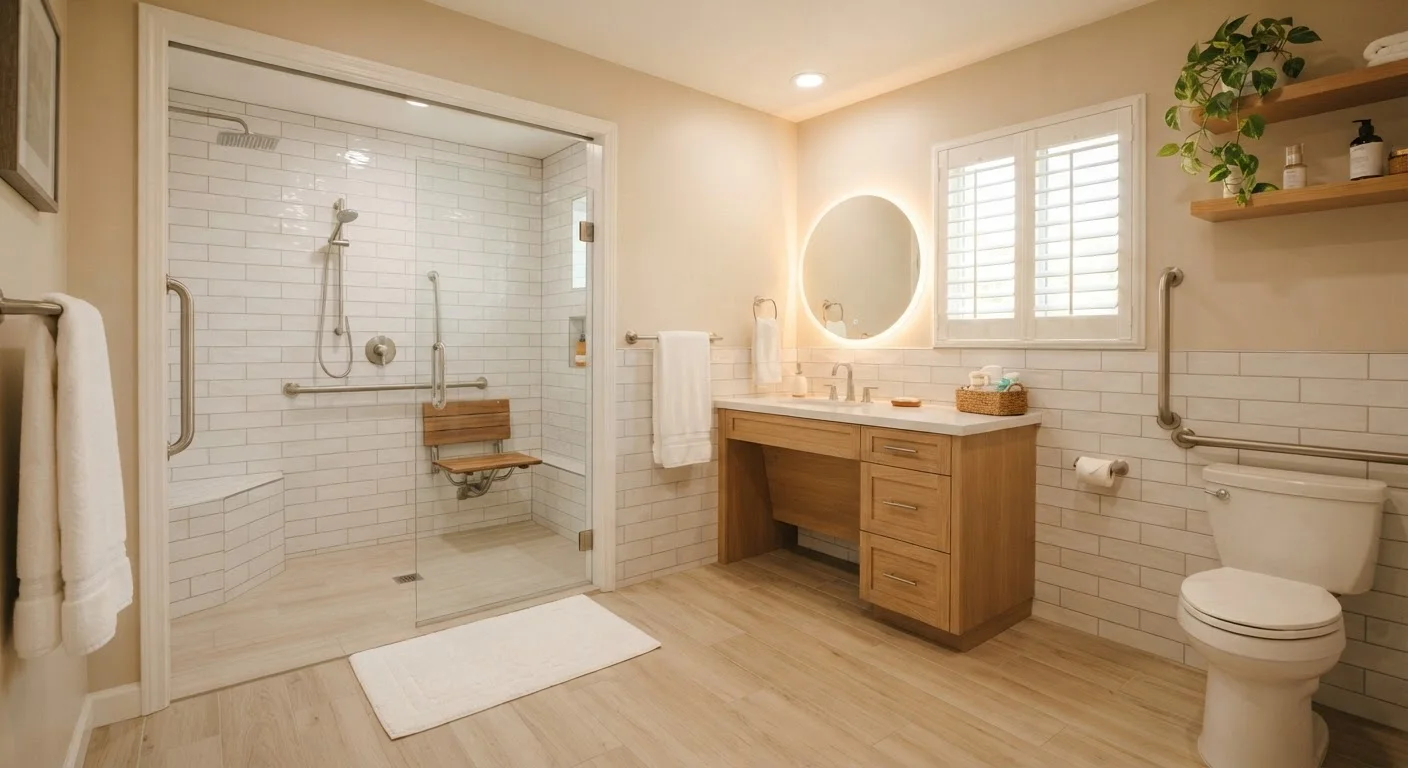
The bathroom is consistently the highest-priority room. A zero-threshold (curbless) shower removes the single most common trip point in the home. Grab bars beside the toilet and inside the shower should be anchored into wall studs or blocking - not just drywall. A handheld showerhead on an adjustable slide bar adds flexibility for seated bathing.
Entryways and Hallways
A no-step entry is a significant structural change but among the most impactful for wheelchair and walker access. Short of a full ramp, a small threshold ramp and lever-handled exterior lock are practical interim steps. Interior hallways should have continuous handrails on both sides of any staircase, and nightlights or motion-sensor lighting at floor level throughout.
Kitchen
Pull-out shelving in lower cabinets, D-ring drawer pulls (easier to grip than knobs), and a varied counter height that accommodates seated work are all relatively low-disruption upgrades. Induction cooktops, which eliminate an open flame and stay cool to the touch on unused surfaces, are worth considering when it's time to replace appliances.
For broader context on how room layout decisions interact with these goals, see our open-concept layout considerations article.