

Key Takeaways
Lower monthly energy bills over time
A well-maintained system runs at closer to its rated efficiency. The U.S. Department of Energy has noted that neglected heating and cooling equipment can consume significantly more energy than properly serviced units performing the same work.
Extended equipment lifespan
Central air conditioners and furnaces are designed to last 15-20 years with proper care. Regular maintenance helps systems reach - and sometimes exceed - those benchmarks, delaying a replacement that can cost several thousand dollars.
Fewer emergency repairs and mid-season failures
Tune-ups allow technicians to catch worn belts, low refrigerant, and corroded contacts before they trigger a full breakdown, often at the worst possible time - the hottest week of summer or a winter cold snap.
Better indoor air quality
Clean filters and coils reduce the circulation of dust, allergens, and mold spores through your home's ductwork, which can matter considerably for household members with asthma or seasonal allergies.
Maintained manufacturer warranty coverage
Many HVAC manufacturers require documented proof of regular professional maintenance to honor warranty claims. Skipping service can inadvertently void coverage on expensive components like compressors.
Annual service calls cost money upfront
Scheduling one or two professional tune-ups per year represents a recurring expense, typically ranging from around $75 to $200 per visit depending on location and service scope - a real consideration for budget-conscious homeowners.
Maintenance doesn't prevent all failures
Even a consistently serviced system can experience unexpected component failures. Maintenance reduces risk substantially but does not eliminate it, so homeowners should still plan for occasional repair costs.
Finding a reliable technician takes effort
Not all HVAC service providers deliver the same quality of work. Vetting technicians for proper licensing and honest pricing requires research, and service quality can vary significantly by region and company.
Short-term disruption to schedule
Arranging access for a technician, coordinating appointment windows, and being home during the visit requires planning - a friction point that leads many homeowners to postpone service indefinitely.
Our Verdict
Routine HVAC maintenance is one of the more cost-effective habits a homeowner can establish. The upfront investment in annual service calls is modest compared to the cumulative cost of higher energy bills, premature system failure, and emergency repairs. While no maintenance plan eliminates all risk, the evidence consistently points in one direction: deferred care compounds into larger, more disruptive expenses.
Any homeowner who wants to protect a significant mechanical investment, keep energy bills predictable, and avoid mid-season system failures will benefit from committing to a regular HVAC maintenance schedule.
Why HVAC Maintenance Gets Skipped - and Why That's a Problem
Heating and cooling systems tend to be out of sight and out of mind. Unlike a leaky faucet or a cracked window, a struggling HVAC unit rarely announces itself dramatically - it just quietly becomes less efficient, month after month. That gradual decline is exactly why so many homeowners defer service until something breaks.
The logic of skipping routine maintenance often feels sound in the short term: the system is still running, the bill feels manageable, and scheduling a technician takes effort. But as deferred maintenance compounds, what begins as a modest savings quickly reverses itself. Understanding both sides of the maintenance decision - the genuine benefits of keeping up with service and the real costs of letting it slide - helps homeowners make a more informed choice.
Lower monthly energy bills over time
A well-maintained system runs at closer to its rated efficiency. The U.S. Department of Energy has noted that neglected heating and cooling equipment can consume significantly more energy than properly serviced units performing the same work.
Extended equipment lifespan
Central air conditioners and furnaces are designed to last 15-20 years with proper care. Regular maintenance helps systems reach - and sometimes exceed - those benchmarks, delaying a replacement that can cost several thousand dollars.
Fewer emergency repairs and mid-season failures
Tune-ups allow technicians to catch worn belts, low refrigerant, and corroded contacts before they trigger a full breakdown, often at the worst possible time - the hottest week of summer or a winter cold snap.
Better indoor air quality
Clean filters and coils reduce the circulation of dust, allergens, and mold spores through your home's ductwork, which can matter considerably for household members with asthma or seasonal allergies.
Maintained manufacturer warranty coverage
Many HVAC manufacturers require documented proof of regular professional maintenance to honor warranty claims. Skipping service can inadvertently void coverage on expensive components like compressors.
The Real Costs of Skipping Service
The downsides of neglecting HVAC maintenance are interconnected. One skipped tune-up rarely causes disaster, but a pattern of inaction creates cascading problems - a dynamic familiar to anyone who has read about what happens when vehicle maintenance is deferred.
Annual service calls cost money upfront
Scheduling one or two professional tune-ups per year represents a recurring expense, typically ranging from around $75 to $200 per visit depending on location and service scope - a real consideration for budget-conscious homeowners.
Maintenance doesn't prevent all failures
Even a consistently serviced system can experience unexpected component failures. Maintenance reduces risk substantially but does not eliminate it, so homeowners should still plan for occasional repair costs.
Finding a reliable technician takes effort
Not all HVAC service providers deliver the same quality of work. Vetting technicians for proper licensing and honest pricing requires research, and service quality can vary significantly by region and company.
Short-term disruption to schedule
Arranging access for a technician, coordinating appointment windows, and being home during the visit requires planning - a friction point that leads many homeowners to postpone service indefinitely.
~15%
Potential efficiency loss from dirty filters alone
The U.S. Department of Energy estimates that replacing a clogged filter with a clean one can lower an air conditioner's energy consumption by 5-15%.
15-20 years
Expected lifespan with proper maintenance
Industry guidance generally places the functional lifespan of a well-maintained central HVAC system at 15-20 years; neglected systems often fail well before that range.
Dirty evaporator and condenser coils force the compressor - the most expensive component in a central air system - to work harder and run longer. Over time, that extra strain shortens its operational life. Similarly, a clogged air filter doesn't just reduce airflow; it can cause the heat exchanger to overheat, potentially leading to cracks that allow combustion gases to enter living spaces. That's a safety concern, not just a performance issue.
Indoor air quality is another often-overlooked casualty. Dust, mold spores, and allergens accumulate in uncleaned systems and circulate through the home with every cycle. Homeowners dealing with respiratory sensitivities are particularly vulnerable. For a broader view of how home systems interact with energy efficiency, attic insulation and ventilation play a complementary role worth understanding.
What Routine Maintenance Actually Covers
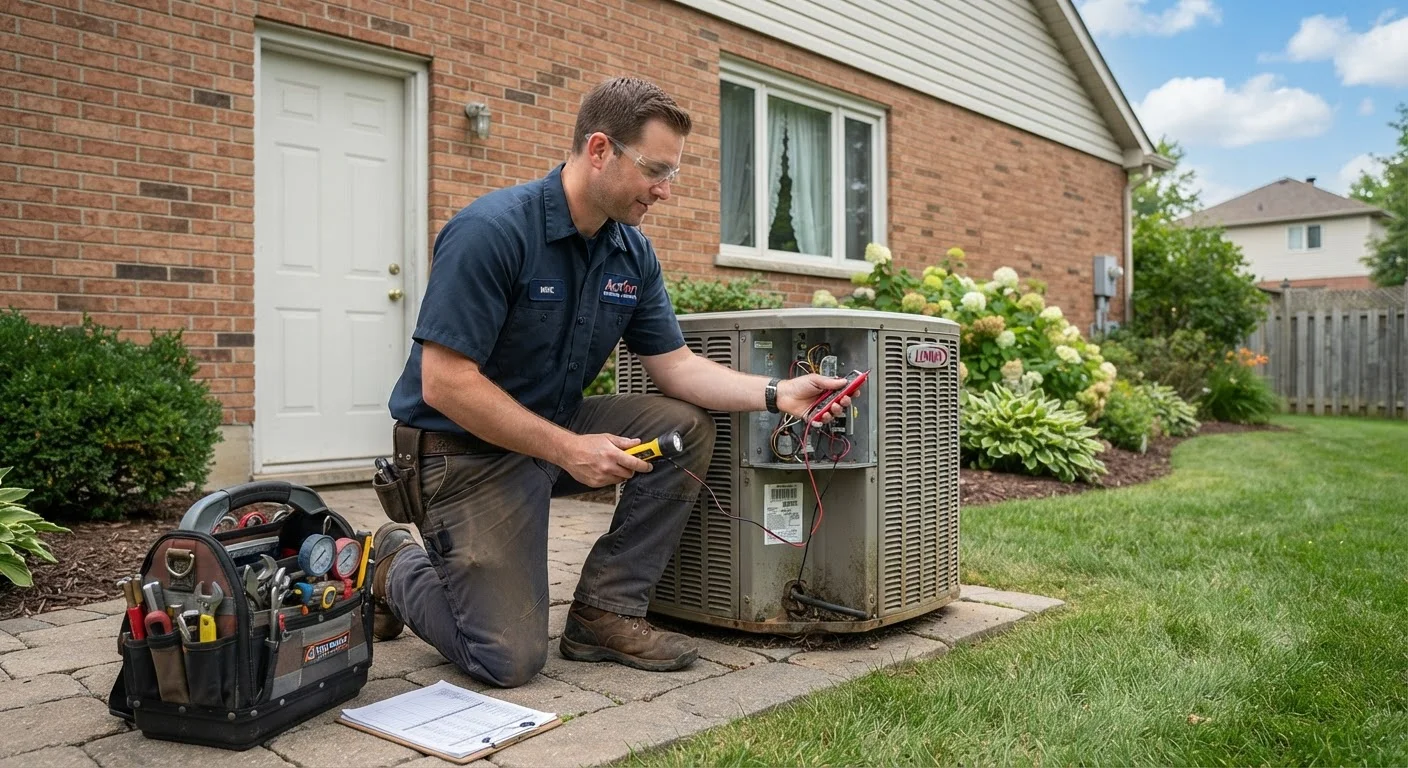
A standard annual HVAC tune-up - typically one in spring for cooling systems and one in fall for heating - generally includes inspection of electrical connections, lubrication of moving parts, thermostat calibration, refrigerant level checks, coil cleaning, and filter replacement. These are preventive steps designed to catch small issues before they become failures.
When to Call a Professional vs. DIY
Filter changes, thermostat battery replacements, and clearing debris from outdoor units are reasonable homeowner tasks. However, work involving refrigerant handling, electrical components, gas lines, or ductwork should always be performed by a licensed HVAC technician. In many jurisdictions, refrigerant handling legally requires EPA Section 608 certification. When in doubt about the scope of a repair, err toward professional evaluation rather than attempting it yourself.
Homeowners can also take meaningful action between professional visits: replacing air filters every one to three months (depending on filter type and household conditions), keeping outdoor condenser units clear of debris, and listening for unusual sounds during operation. These habits complement professional service rather than replace it. For a season-by-season breakdown of when to schedule these tasks, a home maintenance calendar is a practical reference.
It's also worth noting that HVAC neglect is one of the hidden costs that catches homeowners off guard - alongside property taxes, insurance adjustments, and other ongoing expenses that buyers often underestimate before purchasing a home.