

Key Takeaways
How Neglect Compounds: The Basic Mechanism
Deferred maintenance - the practice of postponing repairs that are needed now - is one of the most common and costly habits among homeowners. What often starts as a small crack, a slow drip, or a slightly soft floor board can quietly evolve into structural damage, mold, or system failure if left unaddressed long enough.
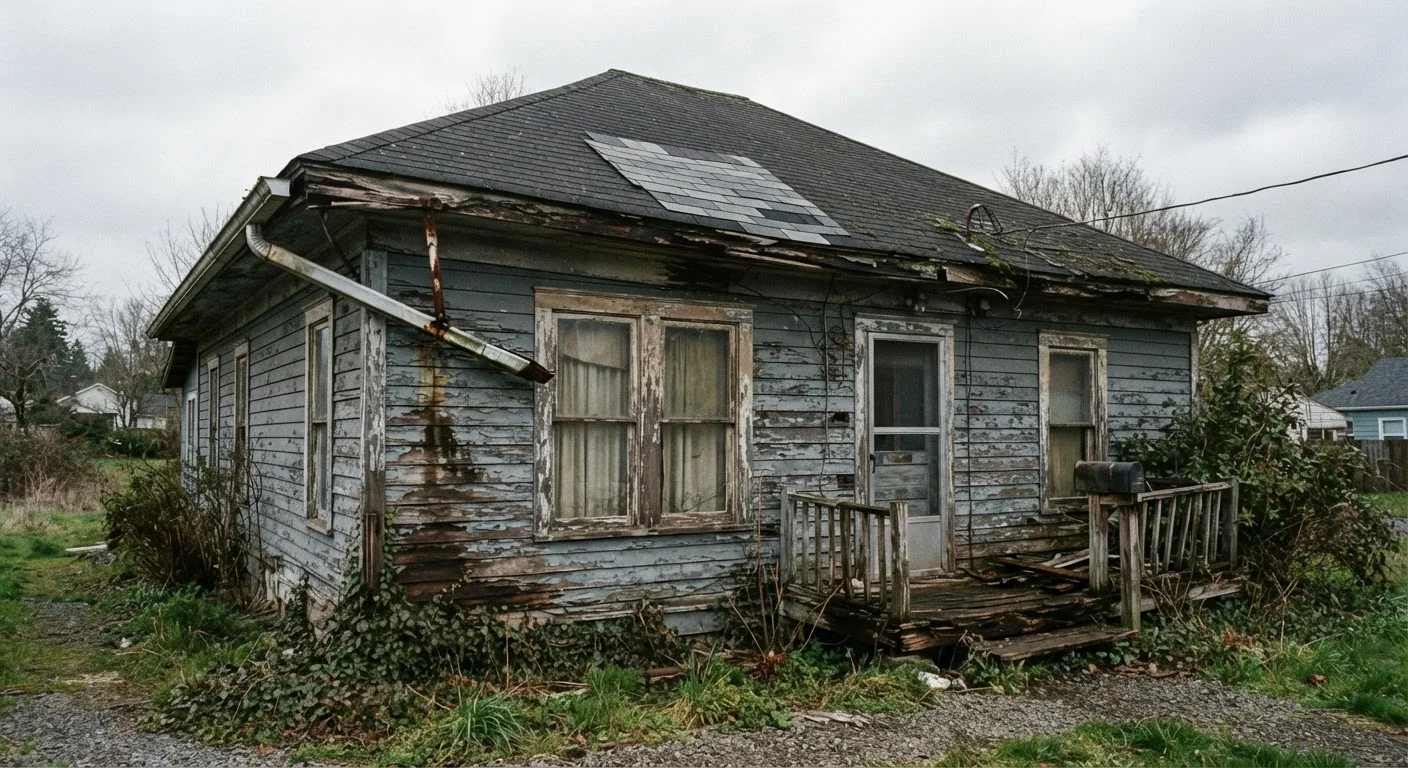
The core problem is compounding deterioration. A missing roof shingle exposes underlayment to UV and moisture. Within one or two seasons, the decking beneath can rot, insulation can become saturated, and ceiling drywall can stain or buckle. A repair that might have cost a few hundred dollars becomes a multi-thousand-dollar project. The same pattern applies across virtually every system in a home - plumbing, HVAC, electrical, and foundation.
Homeowners frequently underestimate this progression because damage often isn't visible until it's advanced. Out of sight, out of mind is a reliable path to a large, unplanned repair bill. Routine home maintenance guidance consistently emphasizes early detection as the most effective cost-control strategy.
1-2%
Recommended annual home maintenance budget
Industry and financial planning guidance commonly cites setting aside 1-2% of a home's value each year as a baseline for covering routine upkeep and unexpected repairs.
10x
Potential cost multiplier of delayed water damage repair
Home inspection and restoration professionals widely note that water damage addressed early may cost hundreds of dollars, while the same issue left to progress can reach tens of thousands once structural or mold remediation is involved.
Common Mistakes That Lead to Expensive Repairs
Understanding where homeowners most often go wrong helps break the cycle of deferred maintenance. The mistakes below represent the most financially damaging patterns seen across the housing lifecycle.
Ignoring small roof damage because the interior appears dry.
Why it happens: Homeowners often assume that if no water is visibly dripping inside, the roof is fine. Minor damage - missing shingles, cracked flashing - may not produce immediate leaks.
Letting a slow plumbing leak persist because it seems minor.
Why it happens: A dripping faucet or slow seep under a sink feels more like a nuisance than a crisis, and repair often gets bumped in favor of more visible projects.
Skipping annual HVAC service to save on maintenance costs.
Why it happens: When a system appears to be running, homeowners may skip professional servicing to avoid the upfront cost, not realizing efficiency and longevity are quietly eroding.
Neglecting grading and drainage around the home's foundation.
Why it happens: Soil settling and landscape changes that direct water toward the foundation happen gradually and are easy to overlook during routine yard maintenance.
Postponing caulking and weatherstripping replacement on windows and doors.
Why it happens: Failed caulk and worn weatherstripping feel cosmetic rather than structural, so repairs tend to be pushed back indefinitely.
What to Prioritize When You Can't Do Everything at Once
Budget constraints are real, and not every repair can happen immediately. The key is triage - addressing issues by the severity of their compounding risk rather than their immediate visibility or annoyance.
Water and moisture issues should always rank first. Whether it's a leaking roof, a failing sump pump, or a dripping pipe inside a wall, moisture accelerates damage faster than almost anything else. Plumbing issues homeowners commonly delay illustrate how quickly a slow leak can escalate into water damage and mold remediation costs.
HVAC systems rank second. A neglected heating or cooling system doesn't just risk a breakdown - it quietly raises monthly energy bills and shortens equipment life. The hidden costs of skipping HVAC maintenance are often invisible until a system fails entirely, typically at the worst possible time of year.
Structural and exterior envelope repairs come third - roofing, siding, windows, and grading around the foundation. These are your home's first line of defense against the elements.
Don't Let Deferred Repairs Hurt Your Home's Value
Buyers and their inspectors will identify deferred maintenance during a home sale, often using it to negotiate significant price reductions or repairs. In some cases, lenders may decline financing if deficiencies are severe enough. Staying current on upkeep protects both your equity and your exit options when you eventually sell.
A practical budgeting benchmark: setting aside 1-2% of your home's current value each year for maintenance and repairs gives most homeowners a workable cushion for routine upkeep and minor emergencies. Older homes or those in harsh climates may require closer to 2-3%.
This article is for general informational purposes only and is not a substitute for advice from a licensed contractor, home inspector, or financial professional. Costs and conditions vary significantly by region, home age, and specific circumstances.