

Key Takeaways
Why Homeowners Put Off Plumbing Repairs
Plumbing problems rarely announce themselves with fanfare. A faucet drips at night. A drain takes a few extra seconds to clear. The toilet runs for a moment longer than it should. These small inconveniences feel easy to tolerate - and that's precisely why so many homeowners put them off.
The reasoning is understandable: repairs cost money upfront, life is busy, and nothing seems to be urgently wrong. But water is patient. Behind walls, under floors, and inside supply lines, minor plumbing issues compound silently over weeks and months. As we explore in our article on why deferred maintenance costs more in the long run, small neglected repairs reliably become larger, more expensive ones. Plumbing is one of the clearest examples of that principle in action.
Below are the most common plumbing repairs homeowners delay - and what each one quietly costs when ignored.
Ignoring a dripping faucet because it seems minor.
Why it happens: A slow drip doesn't feel urgent, and homeowners often assume the water waste is negligible. The sound becomes background noise.
Living with a slow-draining sink or tub instead of clearing the blockage.
Why it happens: Slow drains are easy to dismiss as a minor inconvenience. Homeowners often add a bottle of drain cleaner and consider the issue resolved.
Tolerating a running toilet for weeks or months.
Why it happens: A running toilet is audible only intermittently, and many homeowners assume it's a minor quirk rather than a meaningful problem.
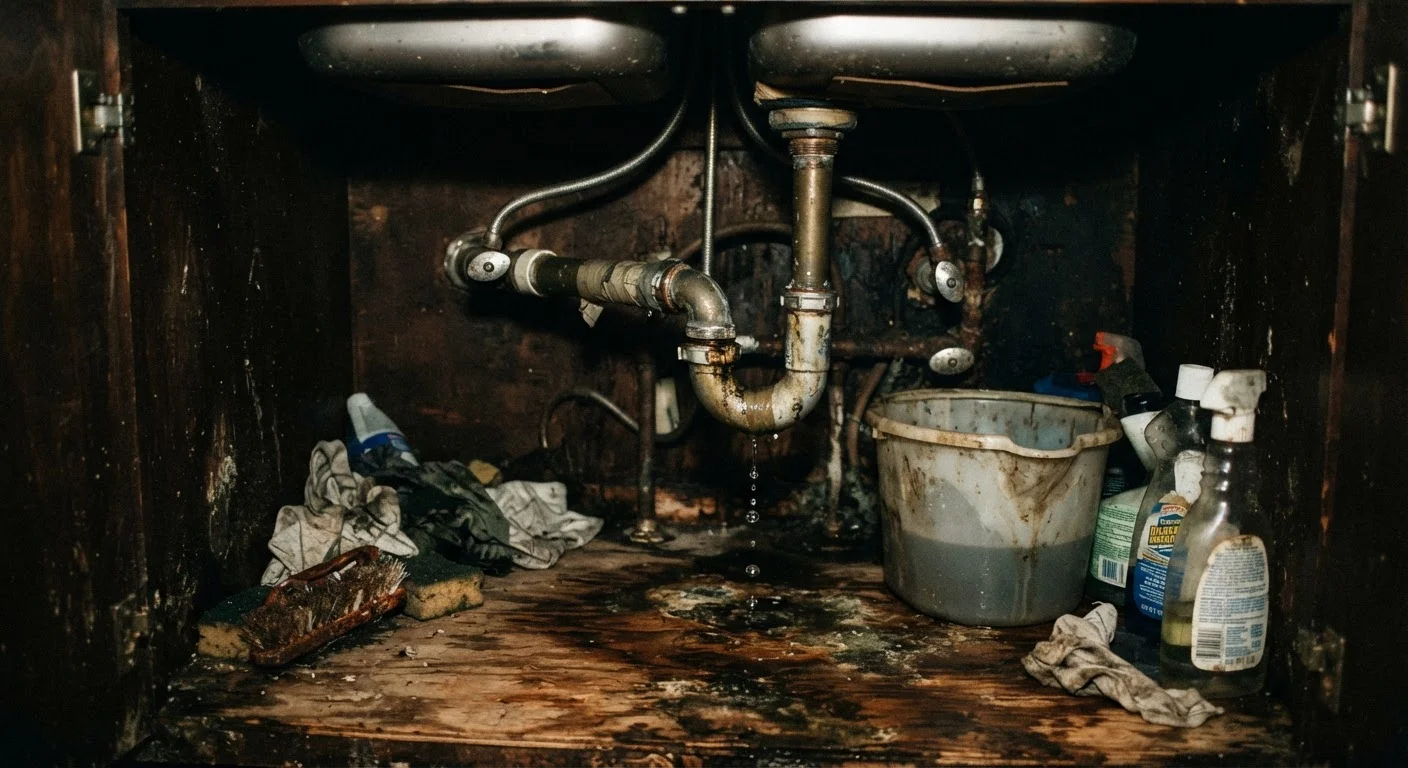
Leaving a small leak under the sink unaddressed.
Why it happens: Under-sink leaks are hidden inside cabinets and easy to overlook, especially if the homeowner rarely stores items there or doesn't notice the dampness.
Delaying repair of low water pressure throughout the home.
Why it happens: Low pressure develops gradually, so homeowners adapt to it without recognizing it as a symptom worth addressing.
Postponing water heater maintenance or early warning sign repairs.
Why it happens: Water heaters are out of sight in utility closets or basements, and homeowners rarely think about them until hot water disappears entirely.
The Real Price of Waiting
Each of the mistakes above follows a similar pattern: a small, manageable issue becomes a large, structural one because the early warning signals were ignored or tolerated. The financial math rarely favors delay.
10,000 gal
Water wasted annually by household leaks
According to the U.S. Environmental Protection Agency, the average American home loses approximately 10,000 gallons of water per year to leaks - equivalent to 270 loads of laundry.
$1,000+
Typical cost of water damage repair
Industry estimates from restoration professionals suggest that water damage remediation - depending on scope - can range from several hundred to tens of thousands of dollars, far exceeding most early plumbing repair costs.
10%
Homes with leaks wasting 90+ gallons daily
The EPA estimates that roughly 10 percent of U.S. homes have leaks that waste 90 gallons or more per day - most of which go undetected or unaddressed for extended periods.
Water damage is particularly insidious because it hides. A slow leak inside a cabinet or inside a wall can saturate wood framing and insulation for months before it's visible. By that point, mold remediation and structural repairs may be required - costs that dwarf the original fix. If you're tracking the full picture of what homeownership requires financially, the hidden costs of owning a home article offers useful context alongside plumbing considerations.
Bathrooms deserve particular attention. Failing caulk and cracked grout around tubs and showers are often dismissed as cosmetic issues, but they allow water to migrate into wall cavities and subfloors. Our guide on when grout and caulk need replacing explains how to identify when a simple refresh is overdue before moisture causes serious damage.
When to Call a Licensed Plumber Immediately
Any leak involving supply lines behind walls, sewage odors, water discoloration, or sudden drops in water pressure across the whole home warrants a prompt call to a licensed plumber - not a wait-and-see approach. These symptoms can indicate pipe corrosion, main line damage, or contamination issues that worsen rapidly. Attempting to diagnose or repair hidden supply or drain line problems without professional expertise can cause additional damage and may run afoul of local building codes.
Water heaters are another commonly delayed repair area. Rumbling sounds, inconsistent hot water, or rust-tinted supply are signals worth acting on promptly. The warning signs your water heater sends before it fails article walks through what those signals mean and when replacement is the wiser choice over continued repair.
The bottom line: plumbing issues are among the most predictable and preventable causes of expensive home repairs. Scheduling a plumber at the first sign of trouble - rather than the second or third - is almost always the more economical path. A licensed plumber can also identify related issues in the same visit, making early intervention doubly worthwhile.