

Key Takeaways
Phone Plan Components
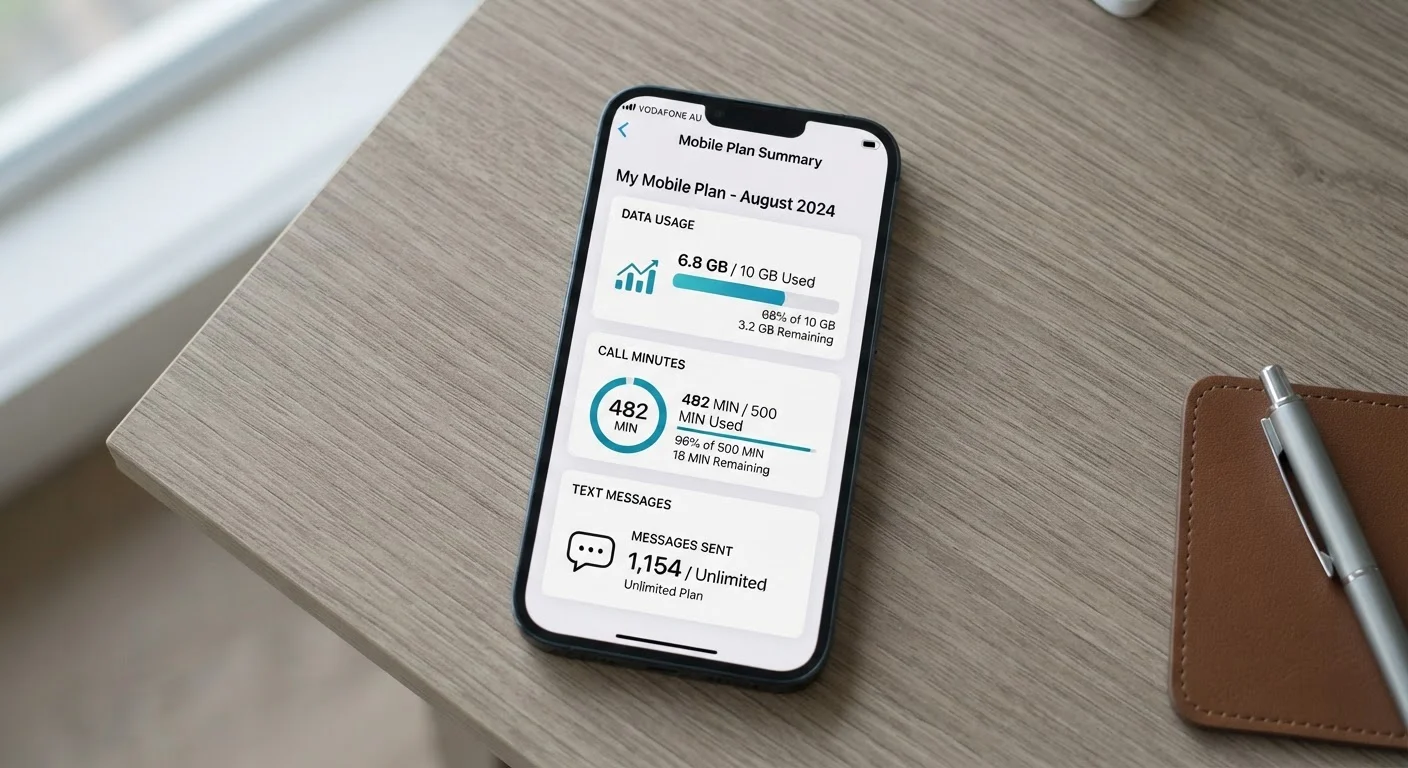
A phone plan is a service agreement that bundles three core elements: mobile data (internet access), talk minutes (voice calls), and messages (SMS/MMS texts). Each element may be offered in a fixed allowance or marketed as unlimited, but the real-world rules governing each differ significantly. Reading the fine print reveals how much you actually get - and what happens when you exceed it.
Carriers provision these three services over distinct network channels: voice calls traditionally run over circuit-switched or VoLTE (Voice over LTE) connections, SMS travels over a signaling channel, and data uses packet-switched LTE or 5G radio channels - meaning their capacity and throttling rules operate independently.
The Three Building Blocks of Any Phone Plan
Every consumer phone plan - from a budget prepaid option to a premium postpaid tier - is built on the same three pillars: mobile data, talk minutes, and messages. Carriers package these together, but they operate under distinct rules that aren't always obvious from the headline price or marketing language.
Understanding each component on its own terms is the fastest way to evaluate whether a plan fits your habits. The sections below break down how each one actually works, what the common gotchas are, and what questions to ask before committing.
15 GB
Typical entry-level hotspot allotment on unlimited plans
Many carriers offer tiered unlimited plans where hotspot data at full speed is capped, even when phone data is deprioritized rather than hard-limited.
~7 GB
Average monthly mobile data used per U.S. smartphone user
According to Ericsson's Mobility Report, average per-user monthly mobile data consumption in North America has grown steadily year over year.
22-100 GB
Range of deprioritization thresholds across major U.S. carriers
Where deprioritization kicks in varies widely by plan tier - budget tiers tend to have lower thresholds than premium unlimited offerings.
Mobile Data: Allowances, Throttling, and Hotspots
Mobile data is what powers browsing, streaming, navigation, app updates, and virtually every internet-dependent task on your phone. Plans describe data in gigabytes (GB), and how a carrier handles that allowance after you reach it is where plans diverge most sharply.
Tiered plans give you a fixed GB amount. Once you hit it, you're either charged for additional gigabytes or throttled to very slow speeds. Unlimited plans remove overage charges but almost always include a deprioritization threshold - a data amount (commonly between 22 GB and 100 GB depending on the tier) above which your speeds may be reduced during network congestion.
Hotspot access - using your phone as a Wi-Fi router for other devices - is frequently governed by a separate, smaller data pool. A plan might advertise unlimited data while offering only 15 GB of hotspot at full speed. For a deeper look at how data caps function across different service types, see our explainer on data caps on home internet.
Check your actual data usage before choosing a plan
Your phone's settings menu shows a breakdown of data used by each app over the current billing period. Reviewing one or two months of real usage removes guesswork and helps you match your habits to the right plan tier - avoiding both overpaying for data you don't use and throttling you didn't expect.
Network technology also shapes data performance. The 5G or LTE icon on your status bar reflects which network generation you're connected to - but that doesn't tell the full story about actual speeds. Our article on what 5G on your status bar actually means explains the difference.
Talk Minutes: When "Unlimited" Has Edges
The vast majority of mainstream phone plans in the U.S. now include unlimited domestic talk - meaning calls within the country don't count toward a minute limit. This was not always the case; minute-based buckets were standard through much of the 2000s and early 2010s.
Today, the meaningful exceptions are international calling and, on some budget plans, calls to toll-free numbers or operator-assisted calls. International calls to most countries require either a separate international calling plan, per-minute add-on rates, or a compatible VoIP app over data.
Voice call quality itself is increasingly delivered via VoLTE (Voice over LTE), which transmits calls as data packets rather than over traditional circuit-switched channels. This generally improves clarity but requires both your phone and the recipient's carrier to support it. When VoLTE isn't available - in areas with older infrastructure or during roaming - calls may fall back to older standards.
Messages: SMS, MMS, and the App-Based Difference
Standard SMS (Short Message Service) texts are nearly universally unlimited on current U.S. plans. They travel over a separate signaling channel and don't touch your data allowance. MMS - picture messages, videos, and group chats using the native Messages app - is also widely included as unlimited, but it does consume a small amount of mobile data to transmit media files.
The more significant distinction is between carrier-based messaging (SMS/MMS) and app-based messaging (iMessage, WhatsApp, Signal, Google Messages via RCS). App-based services route entirely over your data connection. If you're on a limited data plan, heavy use of video sharing through messaging apps adds to your data consumption in a way that traditional SMS never would.
RCS Is Changing the Messaging Landscape
RCS (Rich Communication Services) is a carrier-supported messaging standard that upgrades SMS with features like read receipts, typing indicators, and high-resolution media sharing. It runs over your data connection rather than the traditional SMS channel. As of recent years, RCS support has expanded across major U.S. carriers and both major mobile operating systems, but interoperability between platforms and carriers is still evolving.
For a broader look at where unlimited plans can mislead, the article on common misconceptions about unlimited data plans is worth reviewing before choosing a plan.
Reading a Plan Summary Without Getting Misled
When you're comparing plans, the advertised price and the phrase "unlimited" cover only part of the picture. Here are the specific questions to answer for any plan you're considering:
- Data: What is the full-speed data allotment? At what point does deprioritization apply, and what speeds can you expect afterward?
- Hotspot: How much hotspot data is included, and at what speed?
- Talk: Does unlimited calling cover Canada and Mexico? What are international rates for other countries?
- Messages: Are MMS messages included? Does the plan distinguish between SMS and app-based messaging in any way?
- Roaming: What happens to data, calls, and texts when you travel outside covered areas?
If you're weighing a plan from a smaller provider, understanding who owns the underlying network matters too. Our guide on major carriers vs. MVNOs explains how network leasing arrangements affect the service you receive. For more plain-language coverage of everyday technology decisions, visit the Everyday Tech hub.